Agent2World: Now the World Can Be Compiled Like Ordinary Software
Проект Agent2World меняет правила игры в создании мировых моделей. Вместо того чтобы просто генерировать видеоряд, как это делают Sora или Runway, система строи
AI-processed from Jiqizhixin (机器之心); edited by Hamidun News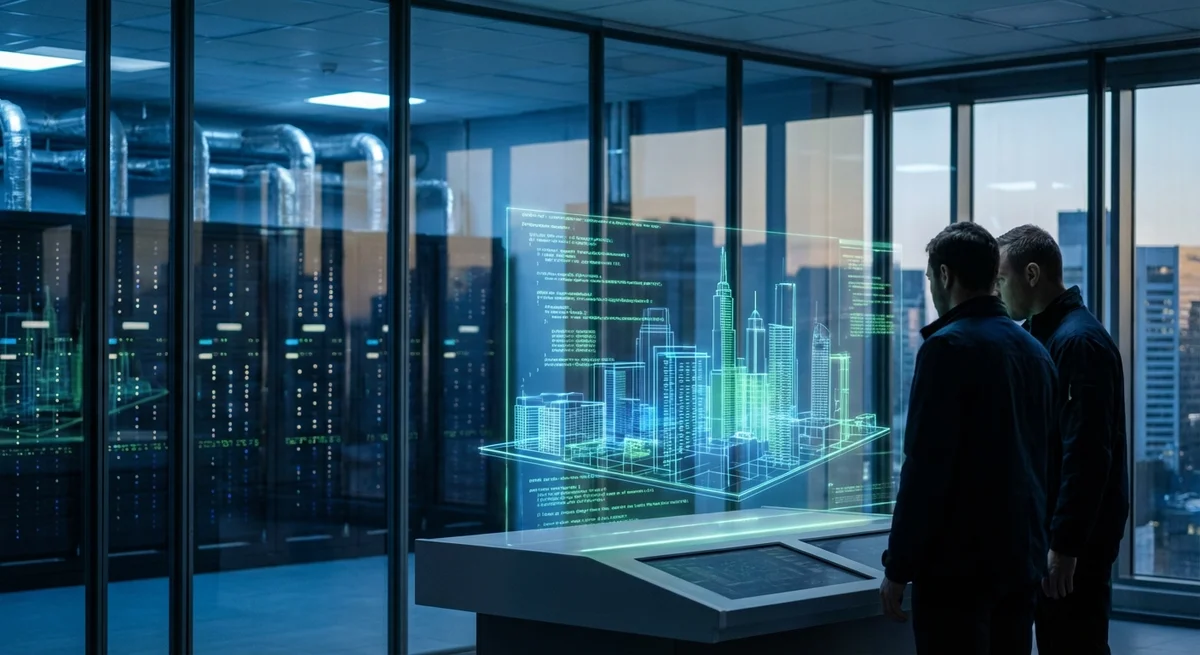
Remember how everyone admired Sora, calling it the first sign of true world models? Beautiful videos, realistic cat fur, and nearly physically correct waves. But there was one problem: you couldn't enter this world and change something in it.
It was beautiful, but completely static scenery. Researchers presented Agent2World, and this is perhaps the most important paradigm shift in creating digital realities over the past year. If before we tried to teach neural networks to "draw" physics, now we teach them to write its code.
The essence of the Agent2World concept lies in transforming world models into what the authors call an executable symbolic environment. Imagine that instead of guessing which pixel should stand next to another, the model generates the logical structure of the world, the rules of object interaction, and their states. This is very similar to how modern game engines like Unreal Engine work, but with one important detail: the world is created and compiled "on the fly" for a specific AI agent's task.
We're moving from passive observation to active construction. Why is this needed if we already have excellent simulators? The problem with old methods is their monstrous inflexibility.
To train a robot to serve coffee, you need to manually draw a kitchen, prescribe collision physics, and set thousands of parameters. Agent2World makes this process automatic. It uses the power of large language models to interpret intentions and turns them into working program code of the environment.
This removes the "curse of dimensionality" that has hampered agent training in complex conditions for decades. Now an agent can order itself a training ground, and the system will "grow" it in a matter of seconds. The critical difference here is in feedback.
In ordinary generative models, an agent is a viewer. In Agent2World, an agent is a full participant. If it performs an action, the symbolic environment calculates the result according to logical rules, not by statistical probability of the next frame appearing.
This solves the main problem of modern LLMs — hallucinations. In a symbolic world, you can't simply walk through a wall if the code doesn't allow it. This gives us that very "grounding" or grounding of intelligence that Yann LeCun and other advocates of common sense in AI have been insisting on for so long.
What does this mean for the industry as a whole? We're on the threshold of the emergence of infinite, procedurally generated training sandboxes. This is a direct path to accelerating robotics development.
If before data collection required thousands of hours of real-world testing or years of manual modeling, now we can run millions of iterations in virtual worlds that build and rebuild themselves. This makes Agent2World not just another framework, but a full-fledged reality compiler for artificial intelligence. It seems that the era when we trained AI on internet texts is finally giving way to the era where AI learns from its own experience in worlds that it codes itself.
The main question: will the transition to symbolic environments solve the problem of insufficient data for robot training, or will we just replace image hallucinations with bugs in world code?
Want to stop reading about AI and start using it?
AI News is a curated feed of AI/tech news. Hamidun Academy teaches you to use AI systematically in your work.