Chinese Chip Failure: Why Shanghai Index Dragged AI Sector Down
You know, when charts start turning red on the Shanghai stock exchange, it rarely affects only oil or metals. Today's situation with the Shanghai Index…
AI-processed from 36Kr (36氪); edited by Hamidun News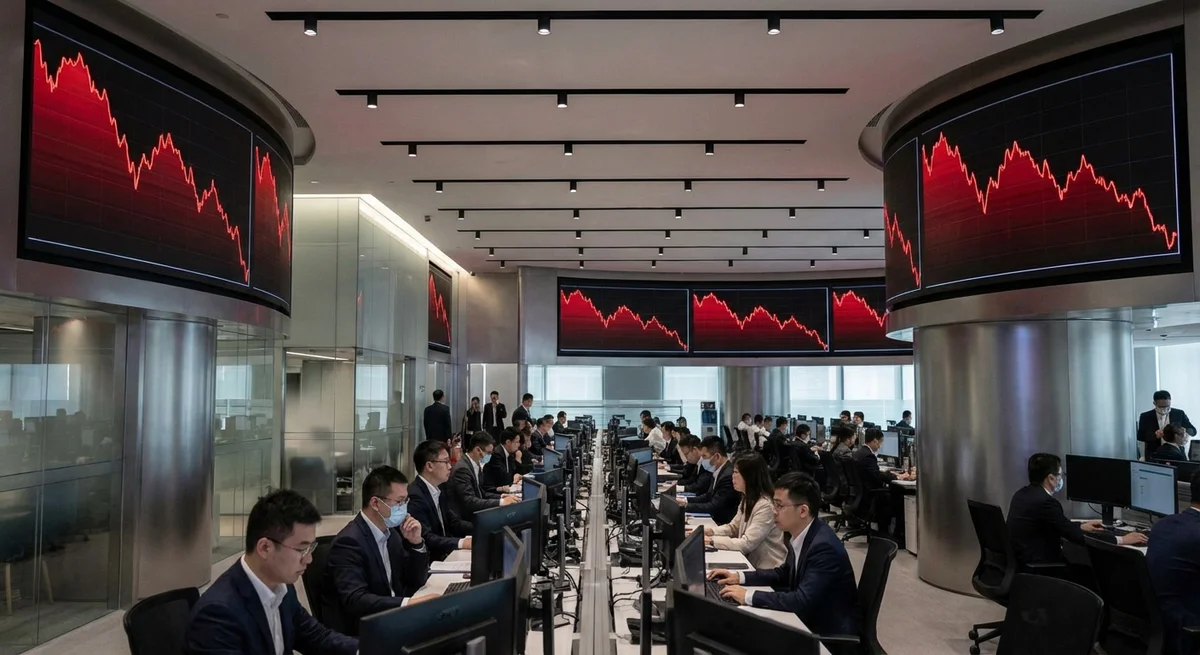
You know, when charts start turning red on the Shanghai stock exchange, it rarely affects only oil or metals. Today's situation with the Shanghai Index, which dropped 2% in the afternoon, is a vivid illustration of how nervously the market reacts to any shocks in the technology sector. Semiconductors took the hardest hit—they mean roughly everything for today's AI race. If you don't have your own chips, your neural networks remain just beautiful code on paper. Let's break down the context.
China is currently in a state of permanent technological mobilization. After the US cut off access to top NVIDIA accelerators, Beijing has bet on domestic production. The semiconductor sector became a sacred cow, with billions being pumped in through state funds. But the market is a cynical thing. When overall economic confidence falls, investors begin exiting risky assets. And chip development is the riskiest and most capital-intensive asset imaginable.
The decline affected more than 3,700 companies. This is not a local correction, but a massive exodus. Beyond chipmakers, commodities and cyclical stocks took hits: metallurgy, oil and gas, chemicals. One might ask: what does this have to do with AI? The connection is direct. Microelectronics manufacturing requires a colossal amount of specific materials and energy. When the raw materials sector begins storming, it inevitably hits the cost base and logistics of high-tech manufacturing. We're seeing a chain reaction where weakness in the real sector undermines the ambitions of the digital future.
Why does this matter right now? The whole world is waiting to see if China can present a real alternative to Hopper or Blackwell architecture. Companies like Biren Technology or Moore Threads are extremely dependent on market sentiment and the ability to attract private capital. If the index continues to fall, private investments in AI hardware may dry up, leaving startups alone with state subsidies that aren't always enough for breakthrough innovations.
It's interesting to observe how geopolitics intertwines with internal market mechanisms. On one hand, companies have guaranteed government contracts; on the other, investors who see risks of global economic slowdown. The current collapse is a cold shower for those who thought China's tech sector could grow in isolation from overall market trends. Without a stable financial foundation, building "smart cities" and training gigantic language models becomes significantly harder and more expensive.
Key takeaway: The slowdown in China's semiconductor sector may give Western companies the necessary breather in the AI arms race. Or is this just a temporary correction before a new push? The question is how deep this drop will be for those creating the "brains" of the future.
Want to stop reading about AI and start using it?
AI News is a curated feed of AI/tech news. Hamidun Academy teaches you to use AI systematically in your work.