Elon's Empire: Why Personal Conglomerates Are Taking Us Back to the Era of Robber Barons
Forget the boring board advice and transparent corporate structures that have been drilled into us for decades. We are entering a new era of personal…
AI-processed from TechCrunch; edited by Hamidun News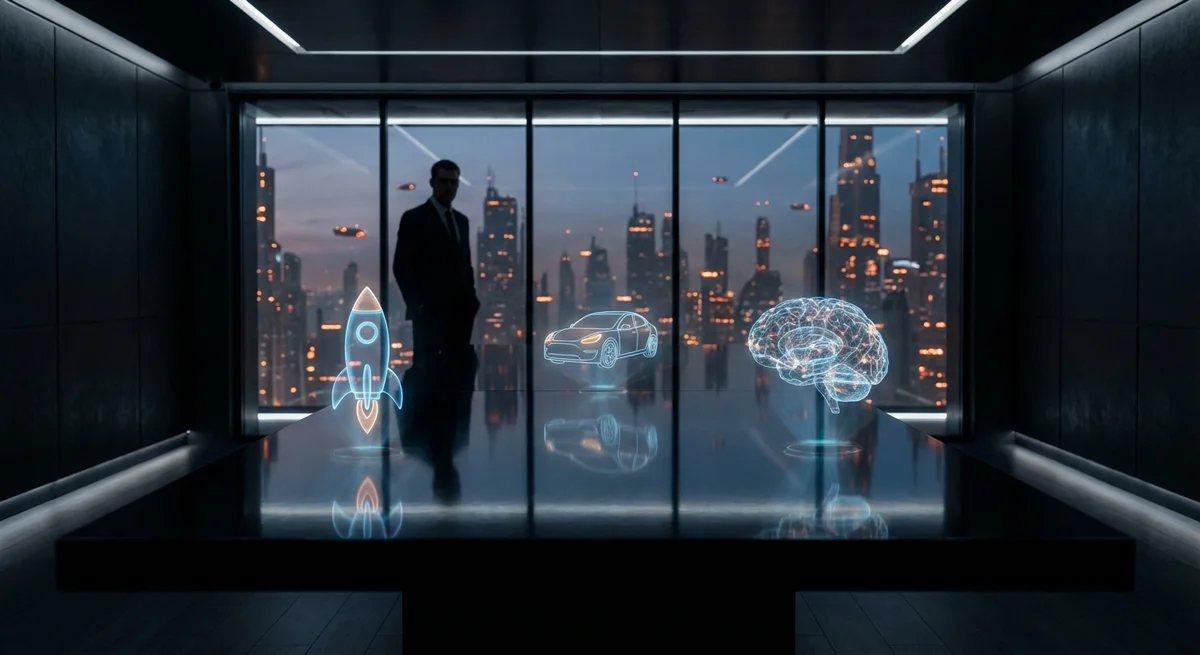
Forget the boring board advice and transparent corporate structures that have been drilled into us for decades. We are entering a new era of personal conglomerates, where entire industries revolve around the gravity of a single person. Elon Musk is effectively turning Tesla, SpaceX, and xAI into a single organism, completely ignoring the boundaries between public and private companies. This isn't just an attempt to save on office supplies or shared servers, but a fundamental shift in how a modern tech giant is built. In a world where speed matters more than procedures, Musk decided that the old rules of corporate governance only get in the way.
Business historians are already drawing parallels with the era of robber barons or the golden years of General Electric under Jack Welch. In those times, massive structures dominated the market through scale and ruthless integration. But Musk goes further: he is building a personal conglomerate where assets and talent flow from one pocket to another in pursuit of a global goal.
If SpaceX needs chips, they will be found in Tesla's supply chains. If xAI needs data to train its models, it will get them from the social network X and a massive array of telemetry from electric cars. This is a return to a model where the will of the leader stands above the interests of individual shareholder groups.
Critics and lawyers have pointed out glaring conflicts of interest for years, but Musk cares little about this. He creates a closed cycle of innovation that is impossible to replicate within a traditional corporation. In this scheme, xAI acts as the brain that should unite the physical hardware of Tesla and the logistics power of SpaceX. This is an attempt to build an empire where artificial intelligence permeates everything — from autopilot systems on roads to life support systems in a colony on Mars. Musk doesn't just own companies, he creates a technology stack that closes the needs of humanity from earth to deep space.
Such concentration of resources in one person's hands frightens regulators, but causes quiet envy among those tired of endless corporate bureaucracy. While classic giants like Google or Microsoft spend months negotiating partnerships and legal checks, Musk simply moves the pieces on his board. This gives him speed absolutely inaccessible to competitors. However, herein lies the main vulnerability: if one piece of this complex mechanism fails or encounters a legal ban, the entire structure is at risk. A personal conglomerate is held together by the reputation and energy of one person, which makes it simultaneously the most powerful and most fragile instrument in the modern economy.
We are watching how AI becomes not just a separate product, but an operating system for an entire constellation of companies. This is no longer just software for chatbots — this is the glue that connects machine production, rocket launches, and social media. Musk is betting that in the world of the future, it won't be the one with the most money in the bank that wins, but the one who closes the cycle between idea, data, and final product the fastest. While others play chess by the rules, he's simply changing the board itself.
The main point: the era of narrowly specialized companies is becoming a thing of the past, giving way to techno-dictatorships where one person manages AI, space, and transportation as a single project. Will this model survive its creator?
Want to stop reading about AI and start using it?
AI News is a curated feed of AI/tech news. Hamidun Academy teaches you to use AI systematically in your work.