Tesla Optimus Gen 3: A Million Iron Workers and the End of Manual Labor Era
Remember that awkward moment in 2021, when a man in tight spandex walked on stage and began dancing, impersonating a robot? It seemed then that Elon Musk had…
AI-processed from 36Kr (36氪); edited by Hamidun News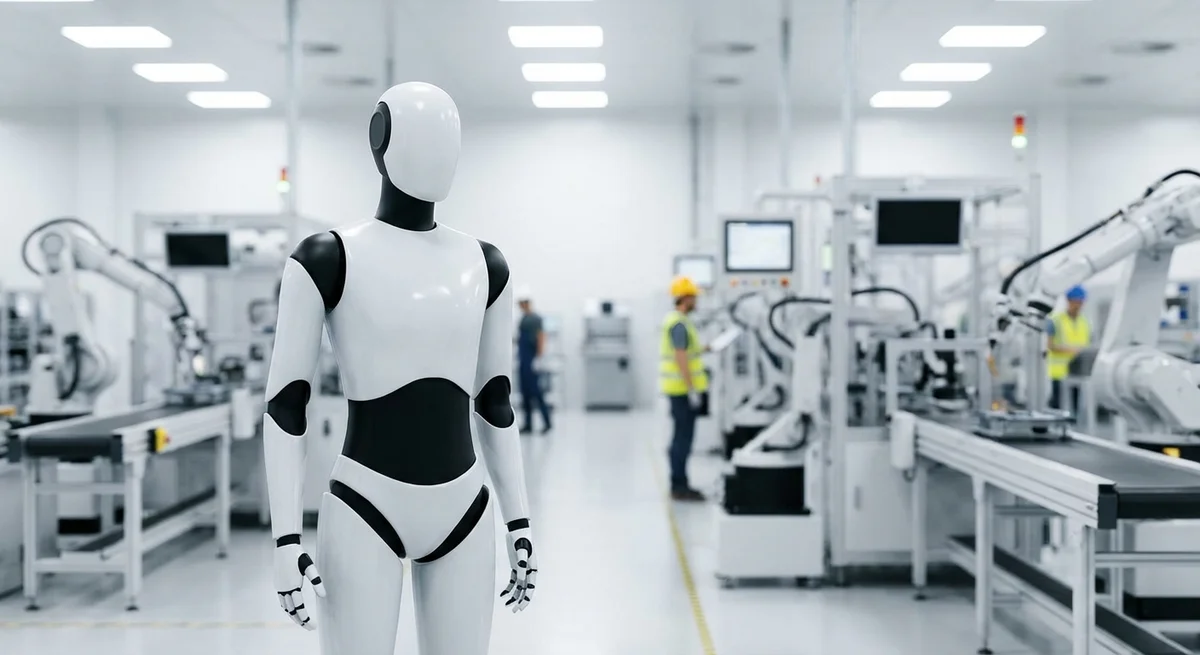
Remember that awkward moment in 2021, when a man in tight spandex walked on stage and began dancing, impersonating a robot? It seemed then that Elon Musk had finally taken his role as a futurist too far, and the Optimus project was merely a way to distract from Autopilot problems. But here we are, and Tesla's third-generation humanoid is already preparing to see the light of day, forcing skeptics to nervously check their retirement savings.
Recently, details about what awaits us in Gen 3 leaked through the company's official channels, and it looks like the beginning of a new industrial era. Musk is betting on his favorite "first principles" method again. Translated from engineering into human terms, this means that Tesla's team has abandoned old developments and designed the robot from scratch.
Why is this necessary? To make the machine as technologically advanced as possible for mass production. If the second generation was a test run and a demonstration of finger dexterity, then the third is being created with one goal—to get on the assembly line.
Tesla claims plans to produce up to a million units per year. The figure seems fantastical, considering that humanoid robots are currently assembled almost by hand, but the company has the scaling experience it gained from the Model 3. The most intriguing change concerns the "brains."
Gen 3 implements a learning mechanism through simple observation of human actions. Previously, engineers had to write out every micro-command for each joint. Now the robot uses neural networks similar to those in the Full Self-Driving system.
It watches videos, analyzes the movements of a live worker's hands, and repeats them, adapting to reality. This removes the main barrier in robotics—the complexity of programming for specific tasks. Now you can simply "ask" the robot to watch how boxes are folded, and it will go do it.
Why does this matter right now? The humanoid market has suddenly become crowded. Startups like Figure AI and 1X are already showing impressive results, and Tesla can't afford to be the one playing catch-up.
For Musk, Optimus is not just an assistant; it's the foundation of Tesla's future. He has said more than once that the value of robotics will ultimately exceed the value of the automotive business. If you can replace a factory worker, whose maintenance costs tens of thousands of dollars a year, with a robot that costs like a budget foreign car and doesn't ask for vacation time, economics change forever.
Of course, knowing Elon's love for optimistic timelines, you should divide his promises by two. A million robots a year is a colossal strain on supply chains, especially in the specialized actuators and sensors department. However, the direction is clear.
Tesla is transforming from an electric car manufacturer into a company that builds a common platform for artificial intelligence, whether it's a machine on wheels or a two-legged machine on a factory floor. We stand on the verge of a moment when the phrase "meat sacks" will stop being just an internet meme. The key point: Tesla is betting on mass production and self-learning.
If Optimus Gen 3 actually goes into series production, the question is not whether it will replace humans, but how quickly it will happen.
Want to stop reading about AI and start using it?
AI News is a curated feed of AI/tech news. Hamidun Academy teaches you to use AI systematically in your work.