ChiNext in Steep Dive: Chinese AI Sector Tests Investor Nerves
Индекс ChiNext, который часто называют китайским ответом NASDAQ, сегодня показал классический «разворот плеча». После бодрого роста на 1% котировки рухнули боле
AI-processed from 36Kr (36氪); edited by Hamidun News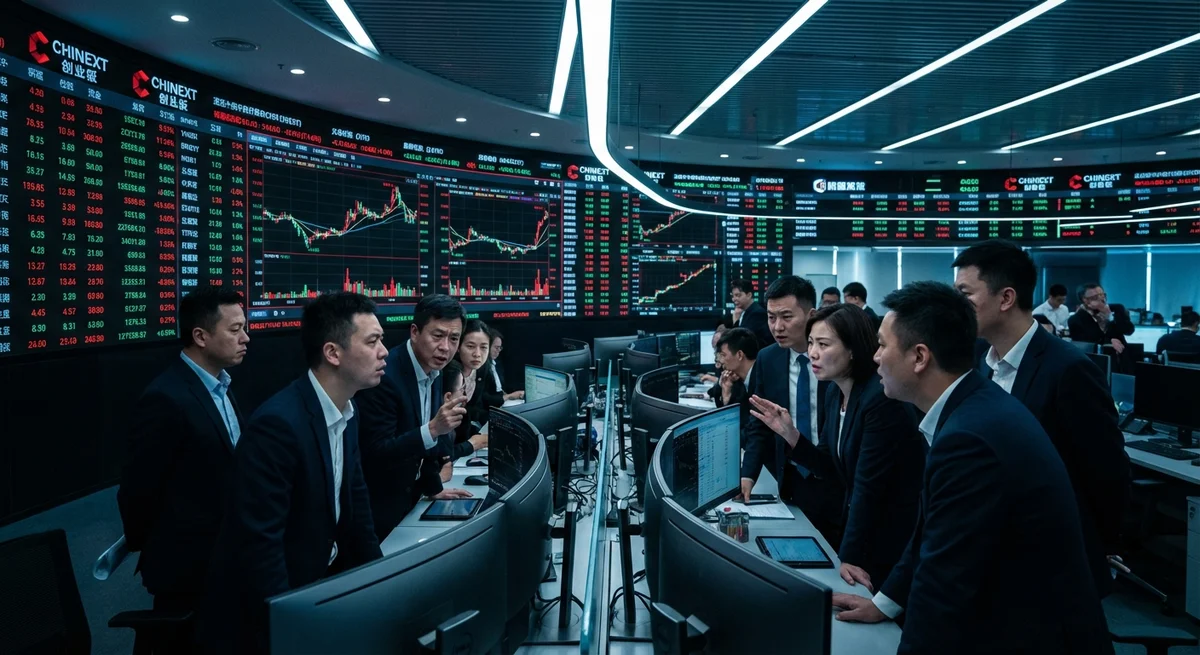
Imagine you're at a party where everyone's discussing a bright future and robots, but suddenly the music stops and guests begin nervously checking their wallets. That's roughly what happened today on the Shenzhen Stock Exchange. The ChiNext index, the main showcase for Chinese innovation and home to most ambitious AI startups, took a painful tumble.
Starting the day with confident growth of over 1%, the market suddenly changed its mind and fell by the same amount. For those following China's technology sector, this was a cold shower. To understand why this matters, you need to look at the context.
ChiNext isn't just numbers on a screen—it's a barometer of trust in China's "new economy." In recent months, the index has been growing on expectations from generative AI. Every news about another model from Baidu or Alibaba catching up to GPT-4 pushed quotes upward.
However, today the market showed its teeth. Investors seem to have realized that the path from an impressive chatbot demo to stable quarterly profits is much longer and more thorny than it seemed during the height of the hype. The situation is complicated by external factors.
While Chinese companies battle in a "model war," they face a Damocles sword of computational power shortage. Sanctions on deliveries of advanced Nvidia chips force businesses to spend colossal budgets creating workarounds or developing their own solutions, which often don't yet meet world standards. When the ChiNext index changes direction so sharply, it often means major capital has decided to take profits without waiting for the bubble of expectations to become too thin.
Interestingly, this reversal happened against the backdrop of active government attempts to stimulate the high-tech sector. Beijing is pouring billions into semiconductors and quantum computing, but the market is a capricious substance. It requires not only promises of technological sovereignty, but concrete cases of AI implementation in the real economy that bring in yuan here and now.
Today's volatility underscores: investors are no longer willing to buy the "future" at any price. What does this mean for the industry as a whole? Likely, we'll see cooling interest in small players and consolidation of resources around giants with staying power.
The period when any mention of neural networks in a press release guaranteed share growth is officially over. Now companies will have to prove their viability under tough competition and limited access to the global capital market. China's AI sector is entering a maturity phase, which is always accompanied by painful correction.
The main question: Is China's tech sector ready for a prolonged struggle without cheap money and easy optimism?
Want to stop reading about AI and start using it?
AI News is a curated feed of AI/tech news. Hamidun Academy teaches you to use AI systematically in your work.