Factories on Autopilot: Why AI Still Won't Be Trusted with the Start Button
The world watches mesmerized as autonomous vehicles navigate dense urban traffic, processing gigabytes of data from lidars and cameras in real-time. One…
AI-processed from Habr AI; edited by Hamidun News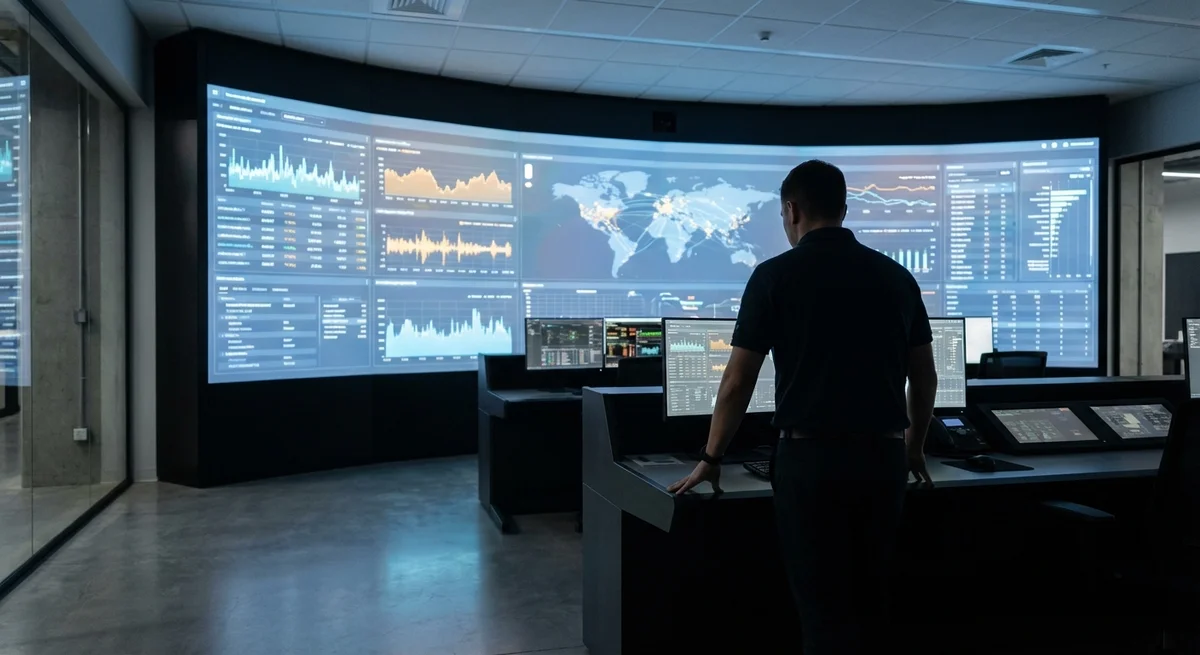
The world watches mesmerized as autonomous vehicles navigate dense urban traffic, processing gigabytes of data from lidars and cameras in real-time. One might think that if an algorithm can safely drive a person home through traffic jams, then managing a stable technological process at a factory should be a walk in the park for it. However, reality is harsh: in modern process control systems (SCADA), artificial intelligence still resembles an intern who was allowed to look at the instruments but forbidden to touch the levers. We see a paradoxical situation where industry, possessing colossal budgets, lags behind the consumer sector by a decade in terms of deploying active AI.
The main reason for such slowness lies in a fundamental difference in tasks. In the case of an automobile, an AI error is a tragedy of local scale. In the case of a petrochemical plant or nuclear power station, an incorrect neural network command could lead to a regional-scale catastrophe.
That is why industrialists have for decades relied on the good old PID controller and rigid logic, where every step is predictable and described by a mathematical formula. A neural network, by its very nature, is a "black box." It can deliver perfect results in 99% of cases, but no one can guarantee that in the remaining percent it won't decide that the best way to cool the reactor is to shut off all pumps.
Nevertheless, progress has begun in technical diagnostics. Today, machine learning is actively deployed to monitor instrumentation and dynamic equipment. Instead of waiting for a turbine bearing to shatter, algorithms analyze micro-vibrations, temperature changes, and acoustic noise. They find anomalies weeks before the most experienced operator would notice them. This is so-called predictive maintenance—an area where AI already brings real money, saving millions on unplanned repairs. Here, AI acts as an ideal advisor: it highlights the problem, but the final decision to replace a part remains with a human.
The problem of transitioning from diagnostics to control also comes down to data quality. Unlike a video stream, which is a clear and structured environment for AI, data from factory sensors is often noisy, not synchronized, or disappears entirely due to communication failures. To train a neural network to manage a complex distillation column, you need perfect historical data from years of operation, which most enterprises simply don't have. Moreover, technological processes are constantly changing, equipment wears out, and raw material composition varies. Under such conditions, a static model quickly becomes obsolete, and retraining it on the fly is a task of extreme complexity and risk.
Currently, the industry is trying to find a compromise in the form of "hybrid models." Engineers are attempting to combine classical process physics with the flexibility of machine learning. In such systems, AI does not replace the main controller but only adjusts its setpoints, optimizing fuel consumption or product yield within a narrow, safe range. This is a cautious approach that allows leveraging the benefits of neural networks without jeopardizing enterprise safety. We are in a phase of building trust: AI must prove its reliability across thousands of diagnostic scenarios before being entrusted with managing even a single valve.
The bottom line: industrial AI remains a "smart thermometer," not the "brain" of the factory. Are we ready to entrust critical infrastructure to algorithms that cannot be fully verified?
Want to stop reading about AI and start using it?
AI News is a curated feed of AI/tech news. Hamidun Academy teaches you to use AI systematically in your work.