Chinese Margin Call: Why the AI Bubble in China is Deflating
While Western tech giants compete in the number of parameters of their models, the Chinese market decided to remind everyone of the existence of financial…
AI-processed from 36Kr (36氪); edited by Hamidun News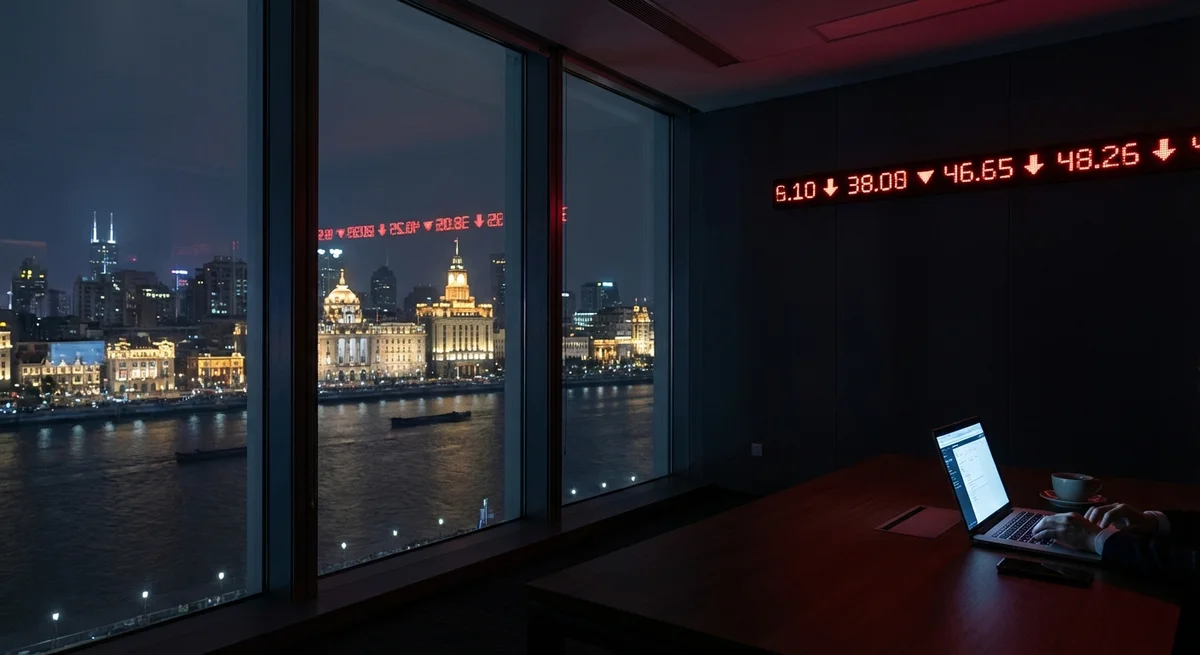
While Western tech giants compete in the number of parameters of their models, the Chinese market decided to remind everyone of the existence of financial gravity. Numbers coming from the Shanghai and Shenzhen exchanges look like a cold shower for those accustomed to endless growth fueled by borrowed capital. The total decline in margin credit balances by 23.4 billion yuan in just one trading day is not merely a statistical error, but a full-fledged warning signal that will echo throughout the tech sector. Let's figure out what actually happened.
The Shanghai Stock Exchange recorded a decline of 13.49 billion yuan, and the Shenzhen exchange — another 9.92 billion. In total, we're looking at an outflow of a gigantic volume of liquidity. Margin financing is a kind of doping for the market. Investors borrow money from brokers to buy more stocks, hoping for their growth. When this indicator drops sharply, it means that players either fear the future or are forced to close positions due to lack of collateral. For the artificial intelligence industry, which is currently the main driver of hope in China, this is bad news.
Context here is more important than the numbers themselves. Over the past two years, China has been actively investing resources in import substitution and developing its own large language models to keep up with OpenAI and Google. A huge part of this effort was financed through speculative capital. Investors believed that government support and national priority would make AI companies invulnerable. However, current dynamics show that private capital is beginning to get nervous. If money is flowing out of the exchanges, it means that technology companies have less room to maneuver when conducting new funding rounds or going public via IPO.
The connection between stock market panic and the real AI sector is much tighter than it appears at first glance. Many Chinese unicorns in generative AI and chip manufacturing (such as GPU startups in Shanghai) directly depend on the valuations of their publicly traded counterparts. When the market capitalization of giants like Baidu or SenseTime falls under the pressure of margin calls, private funds also start tightening the screws. We're seeing a classic cooling cycle: euphoria is replaced by harsh realization that AI requires not only Nvidia GPUs, but also a stable financial system.
It's worth remembering what happened earlier. Throughout last year, Beijing tried to stabilize the market by introducing various restrictions on short selling and supporting the state sector. But the margin balance is an indicator of the sentiment of precisely the active, aggressive part of investors. Their mass exodus suggests that faith in a rapid "rebound" of technology stocks has been exhausted. For model developers, this means that the time of "free money" for training neural networks has ended. Now they will have to prove effectiveness not by the number of parameters, but by real profit, which under Chinese censorship and chip export restrictions is doubly difficult.
What does this mean for us? The global AI market does not exist in a vacuum. If the Chinese segment begins to slow down due to financial hunger, this will change the balance of power in the global algorithmic competition. Less liquidity on exchanges means less investment in R&D, fewer equipment orders, and a slower pace of innovation. Chinese companies may become more aggressive in seeking overseas markets or, conversely, retreat inward, trying to survive on government subsidies. In any case, the romantic period of "investments in dreams" in Chinese AI has officially ended.
The main point: Is the Chinese AI sector ready for a prolonged financial winter, or will we see a series of high-profile startup bankruptcies of companies that never learned to make a profit?
Want to stop reading about AI and start using it?
AI News is a curated feed of AI/tech news. Hamidun Academy teaches you to use AI systematically in your work.