LimX Dynamics: $200 Million to Stop Robots From Being Toys
The embodied intelligence industry has finally reached that awkward crossroads where impressive on-stage dances no longer convert into investor confidence…
AI-processed from 36Kr (36氪); edited by Hamidun News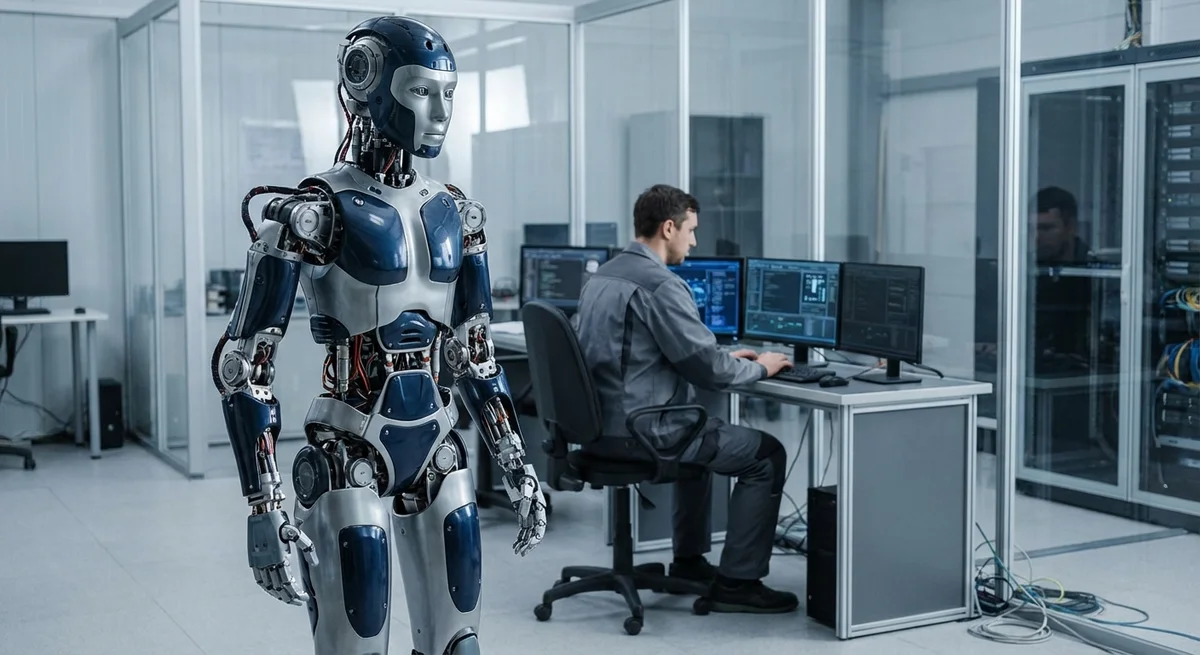
The embodied intelligence industry has finally reached that awkward crossroads where impressive on-stage dances no longer convert into investor confidence. Today's market needs more than just a "walking piece of metal" — it demands predictability, scalability, and most importantly, a robot's ability to work in the chaos of the real world without a team of ten engineers supervising. Chinese startup LimX Dynamics just confirmed this thesis by closing a Series B round at an impressive $200 million. The investor list includes not only venture funds from the UAE, but also automotive heavyweights like SAIC and NIO, who clearly plan to find applications for these technologies on their production lines.
The main problem with modern robotics has always been excessive specialization. The traditional "one scenario — one machine" approach forced companies to spend years developing narrowly specialized devices that became useless at the slightest change in task. LimX Dynamics decided to pursue modularity instead, introducing the TRON 2 system.
It's essentially a "robo-lego" for industrial and home use. Thanks to its original architecture, the TRON 2 base can change configurations: today it's a bipedal android for working in tight office spaces, tomorrow it's a wheeled platform for quick cargo delivery in a warehouse, and the next day it's a four-legged creature for patrolling rough terrain. Such an approach radically reduces the cost of ownership for a robot fleet and allows businesses to test hypotheses without purchasing a dozen different models.
However, hardware without a brain remains just a pile of aluminum and servos. Parallel to the modular platform, the company is developing LimX COSA — the industry's first operating system for "agentic" embodied intelligence (Agentic OS). While most existing models (VLA) can only execute linear command chains, COSA endows a robot with the ability for long-term planning and situational adaptation. During tests, the full-size humanoid Oli under the control of this OS not only delivered water to a guest but also independently rerouted its path when a notification came mid-task about needing to pick up a package. The robot itself reprioritized without falling into digital paralysis, something that was previously considered the highest level of achievement for autonomous systems.
The secret to such flexibility lies in dividing the robot's "brain" into two parts: a cognitive center (cerebrum) and a motor center (cerebellum). The cognitive part handles meaning comprehension and planning, while the motor part ensures the robot doesn't fall on the stairs and smoothly opens a door. LimX Dynamics managed to "reconcile" these levels through a unified software layer, allowing third-party developers to skip the hassle of tuning leg balance and move directly to creating application skills for specific industries. Essentially, the company is creating a standard that could turn them into the "Microsoft of robotics."
LimX Dynamics' ambitions extend far beyond factory floors. Although the first clients will be logistics centers and laboratories, the company's ultimate goal is the consumer market. The transition from commercial services to household helpers will require even greater reliability and lower prices, but the modular approach of TRON 2 gives them an edge on this front. When a robot stops being a unique piece of engineering art and becomes a standardized product, its mass appearance in our living rooms becomes merely a matter of time and software quality. Judging by the investment volume, China clearly believes in this unconditionally.
Key point: LimX Dynamics is betting on software universality and hardware modularity instead of creating the perfect, but narrowly specialized humanoid. Will the "robo-platform" concept beat classical anthropomorphic robots in the race for the mass market?
Want to stop reading about AI and start using it?
AI News is a curated feed of AI/tech news. Hamidun Academy teaches you to use AI systematically in your work.