Apple: Trillions in the Bank Can't Replace Lack of Coherent AI
Apple снова бьет рекорды по выручке, но финансовые успехи больше не могут скрывать отставание в гонке вооружений ИИ. Пока Microsoft и Google перекраивают индуст
AI-processed from Bloomberg Tech; edited by Hamidun News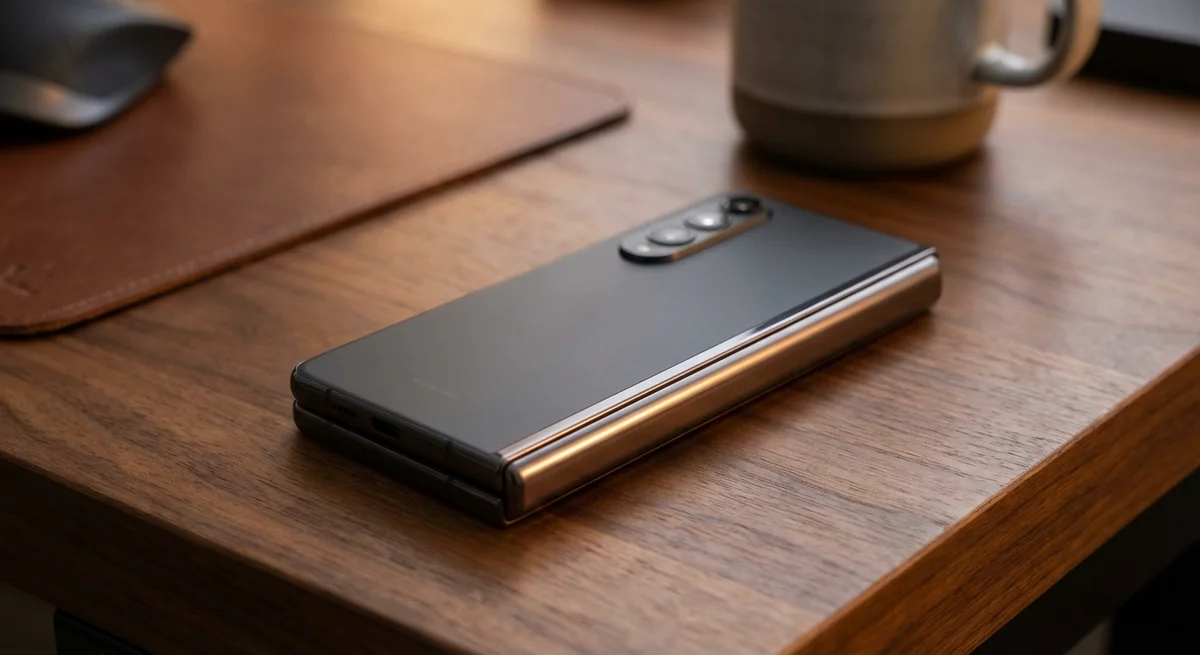
Apple once again proved that it can print money better than any other company in the world. The holiday quarter turned out so powerful that any talk of the empire's decline seems premature. However, behind the facade of billions in profit lies a troubling void that cannot be filled even by the thinnest MacBook bodies. The industry has frozen in anticipation of Apple's "moment of truth" in artificial intelligence, and no financial reports can postpone this inevitable reckoning. While Nvidia stamps out chips and OpenAI rewrites the rules of human-computer interaction, in Cupertino they continue playing their favorite game—waiting.
Of course, the company isn't sitting idle, but its activity looks strange against the tectonic shifts among competitors. The plan includes a MacBook Pro update as part of the macOS 26.3 cycle, which sounds like a standard maintenance procedure for the product line. We'll see a bit more performance, a bit less power consumption, but will this change the rules of the game? Hardly. Apple's problem today isn't the hardware; it's what that hardware should do. If the operating system doesn't offer a radically new level of neural network integration, the MacBook will remain just a very expensive printing press with an excellent screen. Users no longer want just "faster"—they want "smarter."
In parallel, Apple has resumed experiments with foldable device form factors. This is about a "clamshell" that should be Apple's answer to Samsung's Flip series. The irony is that when this device launches, the foldable smartphone market will have already matured and may even begin to stagnate. Apple often allowed itself to arrive at the party last, capturing all attention, but in the age of AI, such a strategy may fail. A foldable screen is a nice bonus, but it won't replace a full-fledged digital assistant capable of understanding context and acting autonomously. Against the backdrop of GPT-4o and Gemini's success, a foldable iPhone looks like an attempt to solve a problem that doesn't exist.
The company hasn't forgotten about small things like AirTag either. An update to the trackers is planned soon, and while this is a useful accessory, it merely underscores Apple's current focus on the consumption ecosystem rather than creation. We see a company that meticulously polishes existing products but is afraid to take a step into the unknown. This is the classic trap of a successful player: when everything is going well, risk seems unnecessary. But the history of technology teaches us that it's precisely at moments of greatest financial triumph that companies most often miss the next big turn. For Apple, that turn has been generative AI, and the time to get into it is running out fast.
Investors are holding steady for now, looking at the financial reports, but questions on conference calls are becoming increasingly sharp. Everyone is interested not in the number of watches sold, but in Apple Intelligence's roadmap. If the company continues to feed the market promises and minor updates to old product lines, audience loyalty could crack. We don't need foldable phones if they're not smarter than a brick. We don't need new MacBooks if Siri still can't book a restaurant table without five leading questions. It's time for Apple to admit that the old rules no longer work.
The main point: Will Apple's brand magic save it when users realize that their iPhone is the only device in their pocket without built-in superintelligence?
Want to stop reading about AI and start using it?
AI News is a curated feed of AI/tech news. Hamidun Academy teaches you to use AI systematically in your work.