Nano Banana Pro: How One Agent Saves Designers Weeks of Revisions
Everyone who's ever dealt with renovations or interior design knows this classic trap: you show a client a beautiful mood board with pictures from Pinterest…
AI-processed from Habr AI; edited by Hamidun News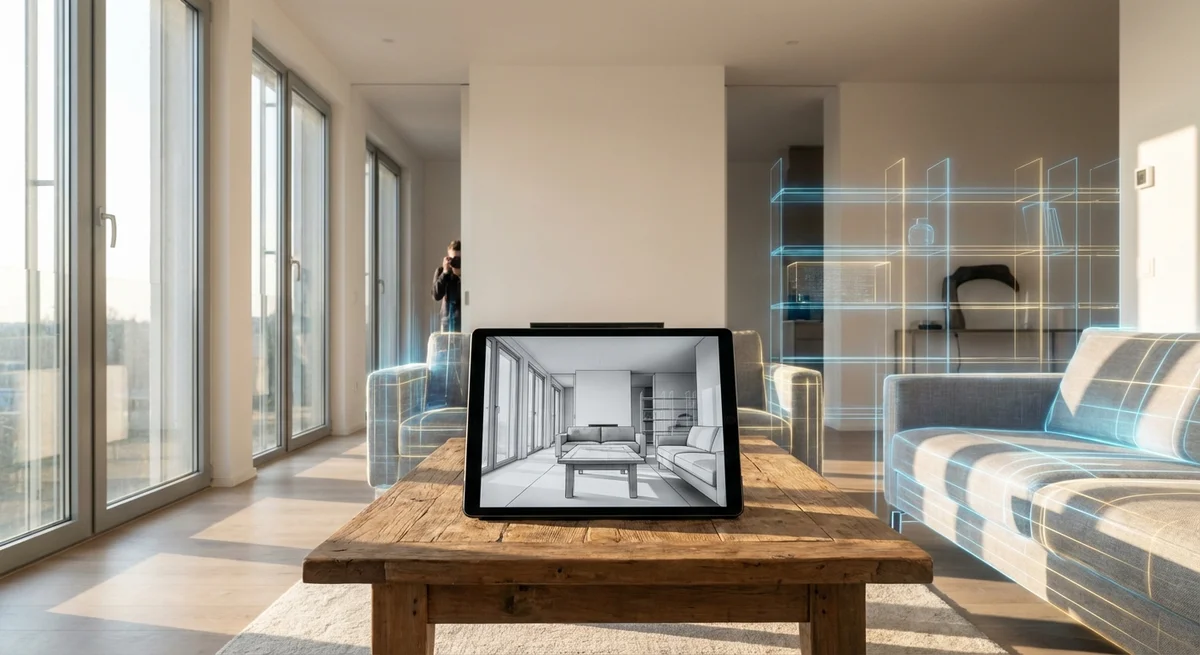
Everyone who's ever dealt with renovations or interior design knows this classic trap: you show a client a beautiful mood board with pictures from Pinterest, they nod happily, and then you disappear for a week into 3D Max. After hundreds of hours of rendering, it turns out the "vibe" was misunderstood, and all the work needs to be thrown in the trash. The gap between an idea and its first realistic visualization has always been a black hole for time and money. Now a tool called Nano Banana Pro is trying to fill that hole, proving that sometimes a hobbyist project knocked up on a whim solves professional pain better than corporate giants.
The project's creator calls his approach "vibe coding" — this is when you create tools for real life without being a professional developer, simply using the capabilities of neural networks. Nano Banana Pro was born from a specific request from a designer friend who needed to quickly "sketch out" a room's style before serious technical work would begin. In a traditional workflow, the first 3D visualization is a huge step. If the client rejects it, the designer loses dozens of billable hours. This agent hits precisely at the target, automating the most nerve-wracking stage of negotiations.
Unlike ordinary image generators that often "hallucinate" and change layouts beyond recognition, this tool knows how to respect the geometry of space. It doesn't just draw a pretty picture; it fills a specific empty room with furniture and light while preserving the location of walls and windows. The user gets a photorealistic sketch literally in five minutes. This makes it possible to test dozens of styles and furniture arrangements right during a meeting with the client before sitting down with the heavy artillery of Revit or Archicad.
It's important to understand here that we're not talking about replacing professional software. No AI can yet prepare working drawings for builders with millimeter precision. However, we see a fundamental shift in how AI is embedded in the industry: it stops being a "magic button" for everything and becomes a surgical instrument for specific bottlenecks. By automating the stage of conceptual alignment, designers get the ability to work faster and take on more projects without burning out on endless revisions of useless renders. This is true democratization of quality visualization at the early stages of a project.
The fact that Nano Banana Pro is given to the masses for free highlights yet another trend — the flourishing of "indie AI." While large corporations try to build universal machines, individual developers create specialized agents that fit perfectly into existing workflows. It's a reminder that the most useful tools often come from those who understand the daily routine of a specific profession. The interior design market is huge, and similar solutions could change the threshold for entering the profession within the next couple of years.
The main question: will such "quick and clean" AI-sketch become the new standard for a first meeting, or will clients continue to demand a perfect 3D render from the very beginning?
Want to stop reading about AI and start using it?
AI News is a curated feed of AI/tech news. Hamidun Academy teaches you to use AI systematically in your work.