Illusion of Omniscience: Why Chatbots Turn Us into Overconfident Dilettantes
Чат-боты стали идеальным катализатором эффекта Даннинга-Крюгера. Исследования подтверждают: люди, использующие нейросети для решения задач, склонны катастрофиче
AI-processed from Futurism; edited by Hamidun News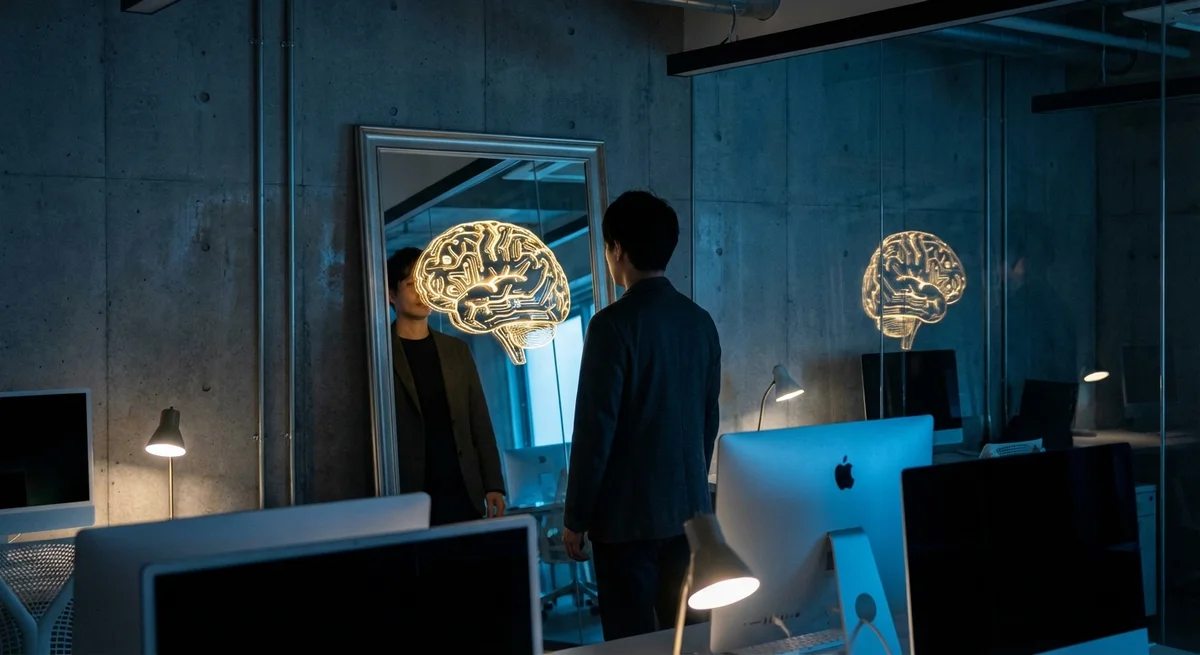
Imagine you suddenly felt like an expert in quantum physics, Baroque architecture, and Rust programming all at once. All it took was a ChatGPT subscription and a couple of lucky prompts. This pleasant sense of omnipotence that modern generative AI gives us turns out to be a treacherous trap. We are entering an era where the line between "I know" and "I know where to ask" is finally blurred. The consequences of this blurring can be far more serious than a couple of wrong exam answers or a silly mistake in a work chat. We are witnessing the birth of a perfect machine for producing the Dunning-Kruger effect.
Social psychologists David Dunning and Justin Kruger described this cognitive bias back in the late 1990s—a phenomenon where people with low competence in a field make faulty conclusions and poor decisions, yet lack the ability to recognize their own errors due to that very low competence. Previously, achieving such a state required reading at least a couple of superficial articles or watching dubious videos. Now, neural networks deliver structured, confident, and seemingly logical answers in mere seconds. When users receive such results, they unconsciously appropriate these insights as their own knowledge. The brain is deceived by the presentation: if I managed to formulate a question and received a complex answer, then I must control this domain of knowledge.
The problem lies in the mechanics of how we learn. True understanding of a subject always requires effort—what we might call cognitive friction. To genuinely learn something, you must doubt, seek connections, make mistakes, and correct them. AI completely removes this friction. When an algorithm delivers a ready-made solution, our brains skip the stage of critical synthesis. We become operators of someone else's intellect, mistakenly taking its computational power for our own erudition. This resembles a situation where someone who has used a calculator since first grade begins to consider themselves a mathematician without understanding the principles of long division.
Research reveals a disturbing dynamic in educational and corporate settings. Students using AI assistants show excellent results on short-term tests but fail deep comprehension checks on process logic a week later. They remember the answer, but not the path to it. In business, this manifests even more starkly: middle managers begin presenting strategies and analyses generated by neural networks, genuinely believing in their flawlessness. They cannot verify model hallucinations because they lack the foundational knowledge to spot the deception. Confidence grows in proportion to the complexity of the tools used, while actual competence stagnates.
It is ironic that technology giants promote AI as a tool for democratizing knowledge. But knowledge is not simply a set of facts accessible at the click of a button. It is neural connections formed through intellectual labor. The ease with which AI solves our problems deprives us of the intellectual struggle necessary for growth. We risk becoming a civilization of high-tech dilettantes. We trust the black box not because we understand how it works, but because it speaks beautifully and confidently, flattering our egos and confirming our own biases.
Long-term, this threatens a systemic crisis of expertise. If anyone can generate a legal document or medical advice, the value of real experience diminishes in society's eyes. But when AI makes a mistake, the confident dilettante becomes defenseless. He does not simply not know the answer—he does not know that he does not know. This intellectual fast food satisfies quickly, creating an illusion of fullness, yet leaves the brain in a state of exhaustion. It is time we acknowledged that the ability to use prompts does not make us smarter. It merely makes us more efficient users of other people's thoughts.
The key point: AI is an exoskeleton for the mind, not a replacement for it. If you use it without taxing your own cognitive faculties, your mental muscles will inevitably atrophy. Are we ready for a world where behind the façade of brilliant neural network answers lies the void of our own lack of understanding?
Want to stop reading about AI and start using it?
AI News is a curated feed of AI/tech news. Hamidun Academy teaches you to use AI systematically in your work.