Nobel Prize for an Algorithm: Why AI Scientists Risk Killing Scientific Excitement
Инициатива The Nobel Turing Challenge ставит амбициозную цель: создать ИИ, способный на открытия уровня Нобелевской премии к 2050 году. Однако за красивыми лозу
AI-processed from Habr AI; edited by Hamidun News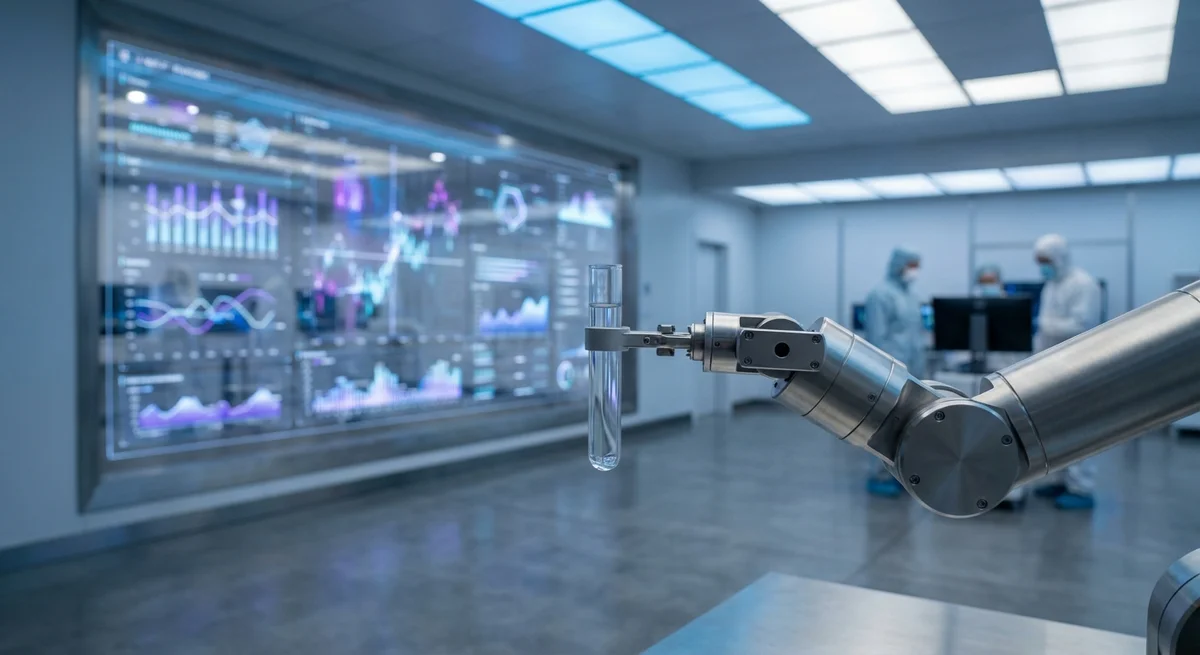
Imagine the year 2050. On stage in Stockholm, they announce the winner of the Nobel Prize in Physics, but instead of a gray-haired professor, no one steps up to the microphone. The prize goes to a server rack that calculated in a couple of hours what would have taken humanity centuries. It sounds like the opening to a mediocre sci-fi novel, but the Nobel Turing Challenge project actually exists. Its ideologue Hiroaki Kitano genuinely believes that by mid-century we will create an AI system capable of autonomous discoveries of global significance. However, behind this optimism lies a rather uncomfortable truth about how neural networks are already changing the scientific landscape today.
We are used to perceiving science as a triumph of human reason and intuition. Archimedes in the bath, Newton's apple, Mendeleev and his table — all these legends contain an element of insight. Modern LLMs work differently. They don't experience eureka moments; they simply very efficiently process gigantic volumes of data. Today scientists increasingly use AI for routine work: finding the right articles, summarizing research, and even writing code for experiments. This is convenient, no doubt. But when an algorithm starts dictating the direction of inquiry, there's a risk of obtaining so-called lifeless discoveries. These are results that are statistically correct but lack deep conceptual meaning and don't open new horizons.
The problem lies in the very nature of training large language models. Any LLM is essentially a mirror of our past experience. It trains on existing articles and hypotheses, which means it is genetically predisposed to conservatism. If the entire scientific community begins to massively use the same models to generate hypotheses, we risk falling into a trap of intellectual inbreeding. Research will become more predictable, and the diversity of approaches, which has always been the engine of progress, will begin to shrink rapidly. We will get thousands of papers that refine details, but won't see a single one that turns the game around.
Moreover, there is a real danger of degradation of the scientific process itself. When AI takes on the grunt work of analyzing literature, a young scientist loses the opportunity to accidentally stumble upon an important detail in a neighboring field. Those very mistakes and strange anomalies that often led to great discoveries, an algorithm might simply cut off as noise. In the pursuit of efficiency, we risk throwing out the baby with the bathwater — that very spark of curiosity that makes a person struggle for years over an unsolvable problem without any guarantee of success. AI optimizes the process, but science is not only optimization; it is also risk.
Nevertheless, it would be foolish to deny the benefits of technology. Open source tools for data analysis and manuscript preparation already save researchers thousands of hours today. The question is only how we distribute the roles. AI can be an excellent lab assistant, capable of processing terabytes of information, but it should not become the chief architect of meaning. True science has always been, and remains, a dialogue between humanity and the unknown, not simply an exercise in selecting the most probable next word in a sentence. As long as we preserve the right to crazy ideas, no server rack can replace us.
The Main Point: Will the scientific community be able to hit the brakes in time and not turn the search for truth into an endless conveyor belt for generating predictable reports?
Want to stop reading about AI and start using it?
AI News is a curated feed of AI/tech news. Hamidun Academy teaches you to use AI systematically in your work.