UBTECH and Fenglong: why robots aren't rushing to list on the stock exchange
Remember those days when any news about a technology giant buying a modest factory would trigger a bombshell effect on the stock exchange? Investors were…
AI-processed from 36Kr (36氪); edited by Hamidun News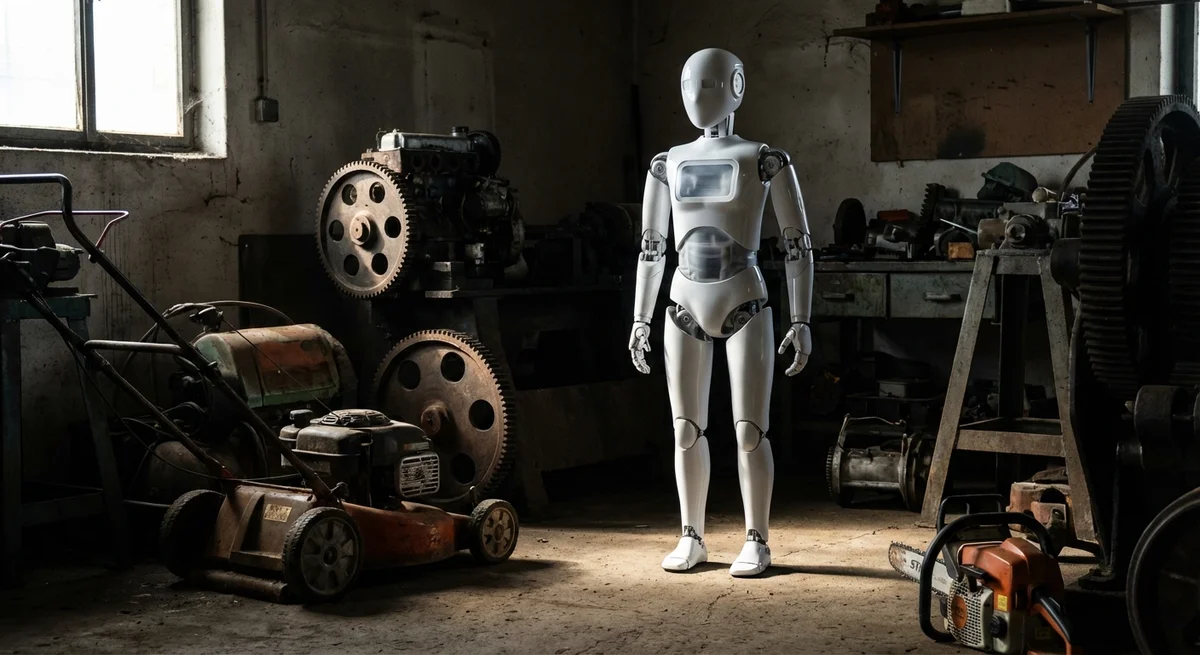
Remember those days when any news about a technology giant buying a modest factory would trigger a bombshell effect on the stock exchange? Investors were already rubbing their hands together, expecting UBTECH, the leading Chinese poster boy of the humanoid robot world, to simply pour its cutting-edge technologies into Fenglong's shell. But reality turned out to be far more mundane and, frankly, a bit harsh for fans of easy money.
Recently, it became known that UBTECH has committed to not transferring any of its assets to Fenglong's balance sheet for the next 36 months. Three years is an eternity in the world of AI, and such a decision speaks volumes. To understand why this matters, you need to look at the context.
Fenglong has historically dealt with things infinitely far from neural networks and servo drives — they make spare parts for chainsaws and garden equipment. When UBTECH began the process of entering Fenglong's capital, the market immediately decided that we had a classic "back door" listing scheme. In China, this is called "asset injection," when a private company essentially takes over a public one to trade on the stock exchange without the complex IPO procedure.
However, Chinese regulators have recently viewed such maneuvers with extreme suspicion, fighting the inflation of "empty" stocks. UBTECH is currently in an interesting position. On one hand, it has already gone public in Hong Kong, becoming the first public humanoid robot manufacturer.
On the other hand, mainland China's market operates by its own rules. The promise not to touch Fenglong for three years is not just a bureaucratic formality, but a clear signal to regulators: "We are not trying to cheat the system." This decision essentially puts Fenglong in stasis in its current state, leaving investors alone with their expectations.
Instead of a sharp transformation into a robotics cluster, the company remains what it was, but with a very influential shareholder in the shadows. What does this mean for the industry as a whole? First, the era of easy speculation on the AI theme in China is coming to an end.
If a company wants to call itself a technology leader, it will have to prove this with products, not financial manipulations. UBTECH is currently actively deploying its Walker S robots to automobile factories, and it seems management has decided to focus on the real sector rather than stock market games. This is the right move for reputation, but painful for those used to making money on merger rumors.
Ultimately, this 36-month pause could benefit everyone. UBTECH has time to perfect its technologies and show real profit, not paper capitalization. The market, in turn, gets a lesson in patience.
While robots learn to tighten bolts on assembly lines, investors will have to learn to wait. In a world where every day announces a "revolution," such old-fashioned caution looks even refreshing. But don't be fooled: once the commitment period expires, we'll see a completely different game.
The key point: UBTECH chose the path of transparency instead of quick hype. Is the market ready to wait three years for "garden equipment" to turn into an AI empire?
Want to stop reading about AI and start using it?
AI News is a curated feed of AI/tech news. Hamidun Academy teaches you to use AI systematically in your work.