Battle of Chinese Quants: How Algorithms Extract 28% Returns from Chaos
В китайском финтех-сегменте разгорелась настоящая битва стратегий количественного выбора акций. Трое признанных мастеров опубликовали результаты своих алгоритмо
AI-processed from HuXiu (虎嗅); edited by Hamidun News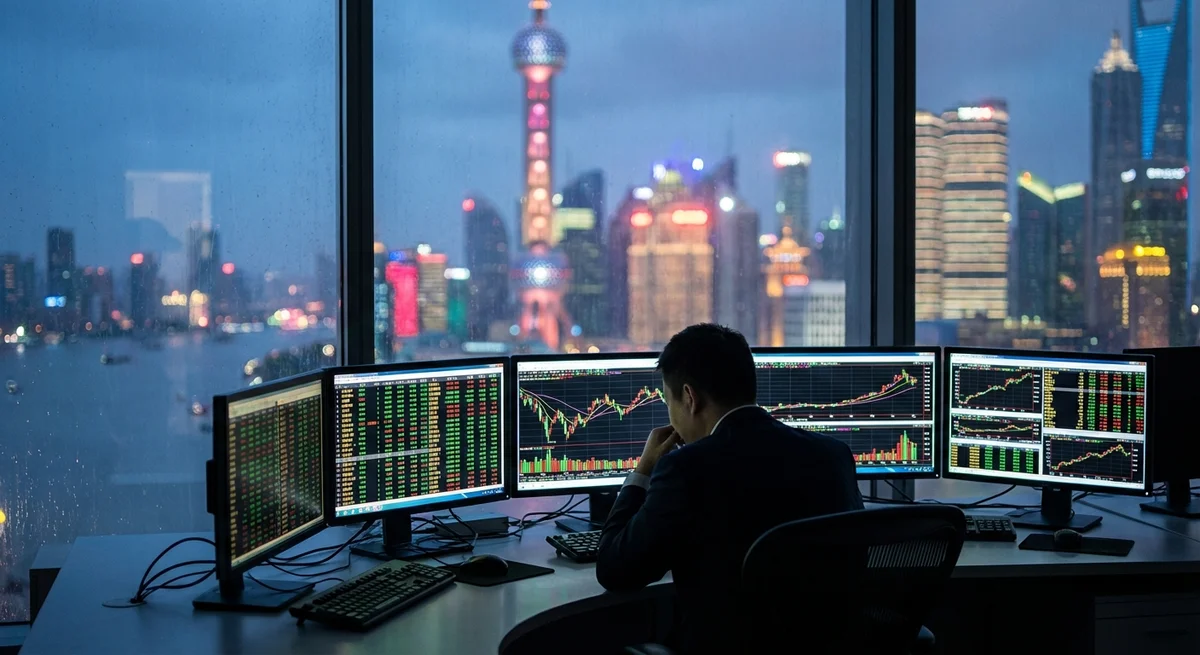
Imagine a printing press that works not on paper and ink, but on pure code and statistical anomalies. In China, this is no longer fiction—it's the everyday reality of local "masters of quantitative analysis." Recently, data from three major players surfaced online, who had arranged an unspoken competition: whose stock selection strategy will bring more money with minimal risk.
The numbers make even seasoned Wall Street traders nervously smoke. We're talking about annual returns of 28.5% with a maximum drawdown of just 12.
3%. To understand why this is causing such a frenzy precisely now, you need to look at the context. The Chinese stock market has always resembled a roller coaster in the fog.
Traditional analysis methods often shatter against specific regulation and sudden shifts in government policy. Under such conditions, AI and quantitative methods become the ideal tool. They don't try to guess the future; they search for microscopic patterns in an ocean of data that the human eye simply cannot perceive.
These strategies are built on rigid logic and historical backtesting, which gives investors at least an illusion of control over chaos. What has actually changed? Previously, quants were a closed caste, their algorithms were considered a sacred Grail, hidden behind seven locks.
Today we see a public demonstration of power. Masters post their strategies with detailed explanations of the logic, as if teasing the market. This is a sign of industry maturity: when an algorithm is so good that you're not afraid to show it, because its speed of adaptation is higher than competitors' speed of copying.
We are moving from the era of "black boxes" to the era of transparent, but incredibly complex mathematical models. Why is this important for each of us? The financial sector has always been the first testing ground for the most aggressive AI technologies.
If today algorithms successfully manage capital in Shenzhen, tomorrow similar models will determine commodity prices, logistics routes, and even personal credit ratings across the entire world. This is not just a battle for percentage points of returns; it is a battle for the right to determine the value of assets in the digital world. Of course, there is always a risk that historical results are just "curve fitting."
The market knows how to punish excessive confidence, and a 12% drawdown can easily turn into 50% if the algorithm faces a "black swan" event. But for now the numbers speak for themselves: mathematics defeats intuition with a score of 28:0. The main point: the era of star traders is definitively ending.
The time of algorithm architects is coming. Will these models survive in conditions of global recession, or are they effective only in a rising market?
Want to stop reading about AI and start using it?
AI News is a curated feed of AI/tech news. Hamidun Academy teaches you to use AI systematically in your work.