AI is Eating Your Memory: Why New PCs Are Becoming a Luxury
Эпоха доступного железа официально заканчивается. Искусственный интеллект поглотил 40% мировых мощностей по производству памяти, спровоцировав настоящий «голод»
AI-processed from HuXiu (虎嗅); edited by Hamidun News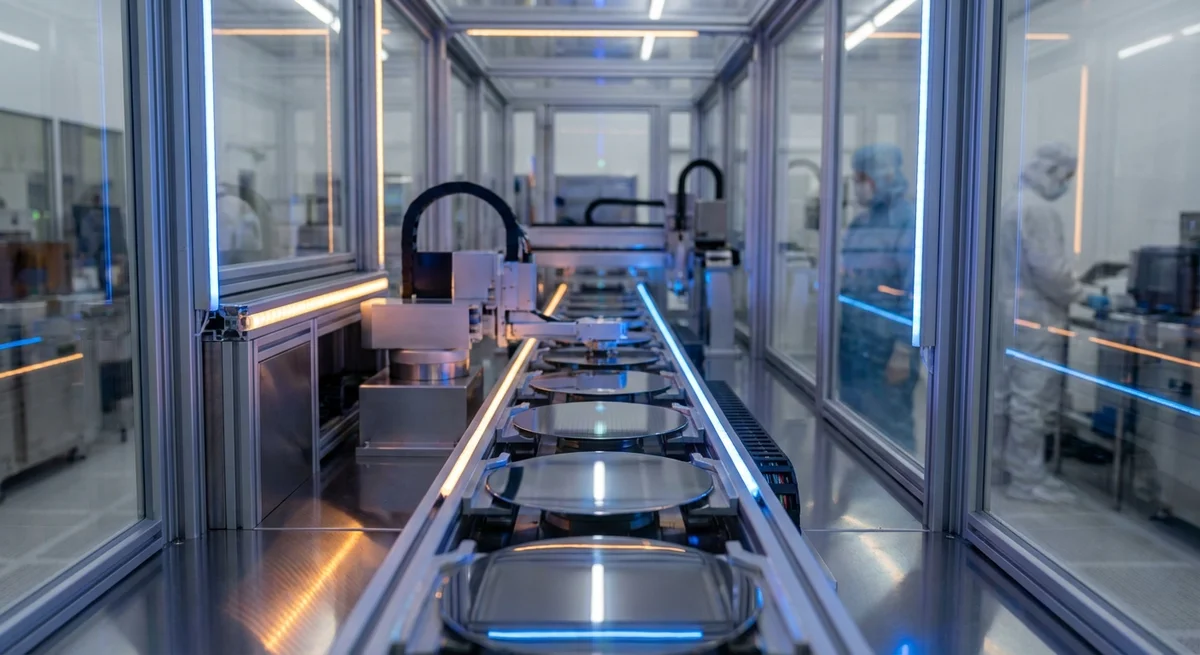
You've probably heard that AI is the new oil. But nobody warned you that to get this oil, we'd have to drain the gas from our own cars. While the world discusses when the next language model will solve quantum equations, the hardware market has hit a harsh reality: AI is simply consuming the resources that used to go to your home computer.
We've entered a phase of the first serious consumer crisis caused by neural networks, and this is just the beginning of a long climb up the price ladder in electronics stores. The situation at Samsung, SK Hynix, and Micron factories right now resembles a rush in the midst of a storm. The industry has encountered a phenomenon that China has already nicknamed "memory shortage."
The essence of the problem is simple and cynical: chip production is an inertial process limited by physical capacity. To satisfy the appetites of Nvidia and other giants producing accelerators for model training, factories are massively redirecting up to 40% of all production lines to HBM output — memory with extremely high bandwidth. It's more complex to manufacture, requires more time, and most importantly, brings manufacturers exponentially more profit.
Previously, these same lines were stamping regular DDR4 and DDR5 for your laptops and budget smartphones. Now priorities have changed forever. Why sell a memory stick to a gamer for a hundred dollars when you can sell an HBM3e stack as part of a server module for thousands?
As a result, we're seeing a classic wave of price increases that's only beginning to pick up steam. The irony of the situation is that even if you're staunchly against using ChatGPT, don't generate videos, and generally think neural networks are a one-day trend, you still pay an "AI tax" with every tech purchase. This shortage isn't just a temporary logistics hiccup, like we saw during the pandemic.
It's a fundamental structural shift. Data centers have become the planet's primary semiconductor consumers, permanently pushing the consumer sector to the back burner. Analysts are noting that PC RAM prices have already risen by double digits per quarter, and the trend won't change in the near future.
Smartphone manufacturers are also starting to factor these increased costs into their new flagship prices, as modern devices now need a minimum of 12-16 GB of RAM just to support the local AI features that marketers are pushing. What does this mean for you in practical terms? First, forget about cheap upgrades and "great deals" at sales.
If you were planning to build a new PC or upgrade your work laptop, now — this is that moment when "yesterday was better." Over the next year and a half, the market will be turbulent, as demand from giants like OpenAI and Microsoft continues to grow. The AI boom requires sacrifices, and accessibility to basic hardware has become the first victim.
We're witnessing the birth of a new hierarchy in the world of technology, where the private consumer ends up at the very back of the line for silicon. Of course, we can hope for expanded manufacturing capacity, but building a new factory is a three-to-four-year project. Until then, we'll have to get used to the idea that computers are once again becoming serious investments, not just household appliances you can replace every two years.
The industry has chosen the path of maximum profit, and that path runs through server racks, not our desks. Consumer electronics are becoming a byproduct of the big data industry. The key point: AI has stopped being an abstract technology from the cloud and is now directly affecting your bank account.
Are you ready to pay for progress that still hasn't learned to draw five fingers on a hand correctly?
Want to stop reading about AI and start using it?
AI News is a curated feed of AI/tech news. Hamidun Academy teaches you to use AI systematically in your work.