Musk Assembling the Puzzle: Why SpaceX, Tesla, and xAI Want to Become One
Илон Маск обсуждает слияние SpaceX, Tesla и xAI. Цель проста: создать единую экосистему, где ИИ от xAI управляет беспилотниками Tesla и связывается через спутни
AI-processed from TechCrunch; edited by Hamidun News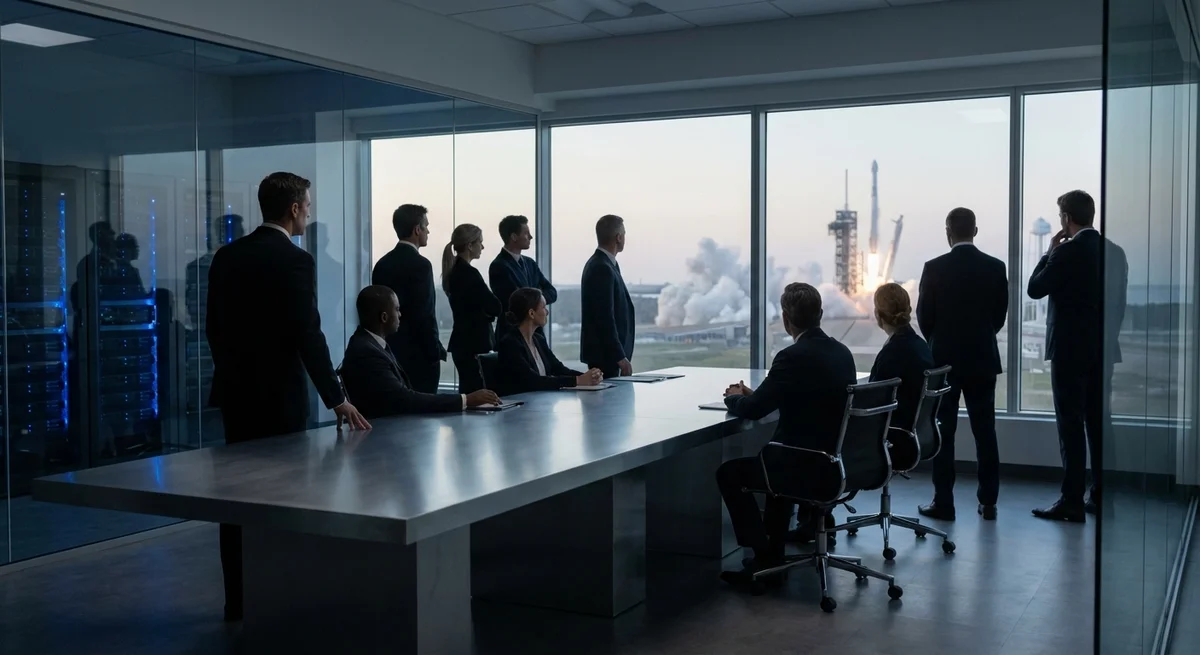
Imagine simultaneously running the world's best space company, the most expensive automaker, and an AI startup trying to catch up with OpenAI. Sooner or later you get tired of shuffling money and engineers from one pocket to another, risking yet another lawsuit from disgruntled shareholders. It seems Elon Musk has come to exactly this conclusion. Reports of possible merger negotiations between SpaceX, Tesla, and xAI are not just a financial reshuffle, but an attempt to create the first vertically integrated empire of physical intelligence in history.
Context here is more important than the rumors themselves. For the past several years, Musk has effectively used his companies as a single organism. Tesla engineers helped build SpaceX factories, and xAI specialists trained the Grok chatbot on data from social network X. This raised many legal questions. Tesla investors have already sued, accusing Musk of poaching talent and resources for his private projects. A merger solves this problem in one fell swoop: now any engineer works for the common good of "Musk's Empire," and no one can accuse him of a conflict of interest.
What exactly will change for technology? Musk is building a closed loop. Tesla provides the "body" in the form of Optimus robots and autonomous vehicles. xAI supplies the "brain"—neural networks capable of understanding the physical world. SpaceX and Starlink provide the "nervous system"—global connectivity with minimal latency at any point on the planet and beyond. In this scheme, the Grok chatbot stops being just a toy on social media and becomes an operating system for the material world. If the merger happens, Musk will gain access to a colossal volume of data from sensors in machines and satellites that neither Google nor Microsoft could have imagined.
Of course, regulators stand in the way of this ambitious plan. Tesla is a public company whose shares trade on the exchange, while SpaceX and xAI remain private and are worth hundreds of billions of dollars. Valuing such a deal without offending minority shareholders is an almost impossible task. Moreover, the US Securities and Exchange Commission (SEC) has never favored Musk. Any attempt to combine assets will trigger a barrage of investigations into monopolization and market manipulation. But Musk has repeatedly proven that rules for him are merely annoying obstacles on the path to Mars.
Why is this important right now? We are at a point where software finally meets hardware. For AI to become truly useful, it needs to go beyond the browser. Musk understands that the division into "car company" and "software company" is outdated. He needs a single testing ground for AGI. If the merger happens, we will see the birth of a structure that controls transportation, communications, and intelligence simultaneously. This is a challenge not only for competitors but for the very concept of government control over technology.
The bottom line: Will this mega-holding become a salvation for Musk's ambitions or turn into an unwieldy giant burdened by debt and lawsuits?
Want to stop reading about AI and start using it?
AI News is a curated feed of AI/tech news. Hamidun Academy teaches you to use AI systematically in your work.