AI Catches Aggressive Cancer: Swedish Experiment Worth Thousands of Lives
Шведские исследователи завершили масштабное испытание ИИ в скрининге рака молочной железы, охватившее более 100 тысяч женщин. Результаты впечатляют: нейросети н
AI-processed from Bloomberg Tech; edited by Hamidun News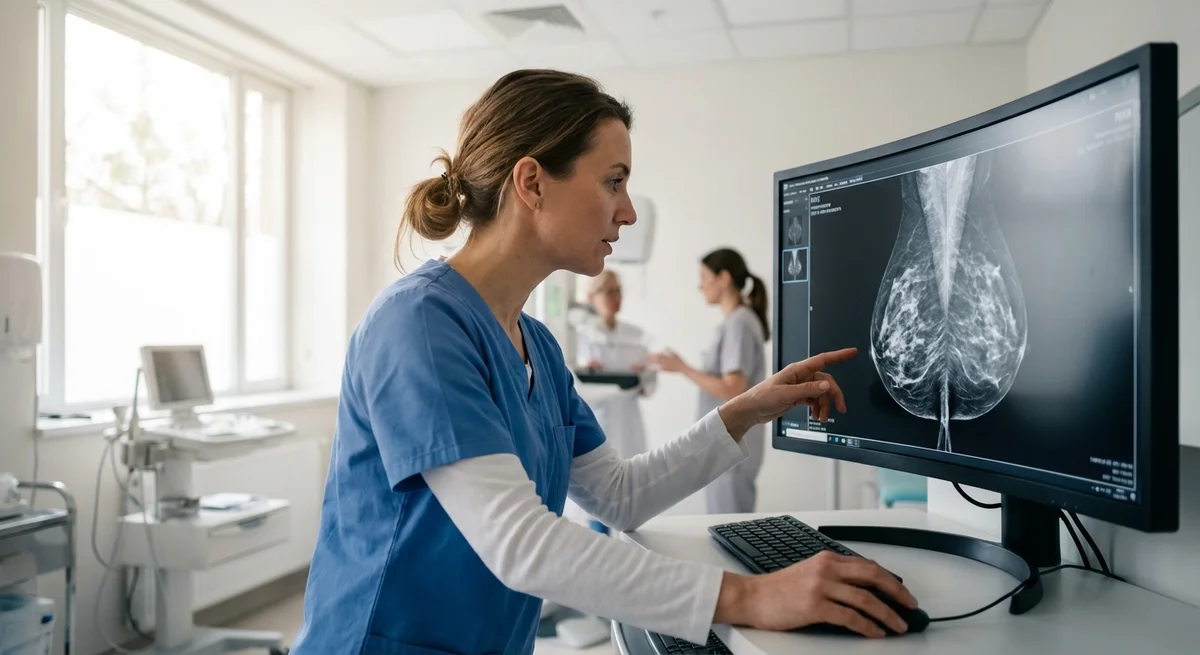
Medicine is inherently one of the most conservative industries, and with good reason. When human lives are at stake, the phrase "move fast and break things" sounds more like a threat than a startup motto. However, the results of a recent Swedish study show that excessive caution regarding AI could cost us dearly. Researchers from Lund University conducted a test that can rightfully be called historic: they entrusted neural networks with analyzing images from over 100,000 women. And the AI performed better than we expected.
The problem with traditional screening has always been the human factor. In most European countries, each mammography image must be examined by two independent radiologists. This double-check consumes enormous amounts of time and resources, yet still leaves room for errors. Eyes grow weary, fatigue accumulates, and a tiny cluster on an image can look like ordinary noise. The most terrifying scenario here is the so-called interval cancer. These are tumors that doctors miss during routine exams and grow into a full-blown problem by the next visit. Usually these are the most aggressive and fast-growing forms of the disease.
The Swedish experiment showed that AI knows how to find precisely these "invisible" threats. The algorithm didn't just mark suspicious areas; it did so with accuracy exceeding the standard examination by two doctors. Moreover, the workload on medical personnel was cut by nearly half. Instead of spending hours reviewing thousands of "clean" images, radiologists could focus on truly complex cases that the AI flagged as priorities. This is a classic example of how technology doesn't replace humans—it frees them from routine work, returning medicine to its human face and precision.
Why does this matter right now? We're at a point of demographic crisis in healthcare. There are not enough doctors, screening queues are growing, and the cost of medical services is skyrocketing. If we keep clinging to methods from thirty years ago, the system will simply collapse under its own weight. The Swedish experience proves that implementing AI in diagnostics isn't an "experimental feature"—it's a necessary survival standard. Neural networks don't get tired, they don't need coffee, and they won't get distracted by phone notifications when examining your tissues for deadly threats.
Of course, questions of ethics and responsibility remain. Who is liable if the AI makes a mistake? But Swedish data beats any philosophical debate with dry statistics: the number of detected cancers increased, and the number of false alarms remained within normal limits. This means thousands of women got a chance for timely treatment. The irony is that while we fear the rise of machines, machines are quietly learning to save us from what we ourselves can't always manage.
The key point: the Swedish case will become the foundation for new WHO protocols. Are you ready to entrust your diagnosis to an algorithm if it increases your chances of life by 20 percent?
Want to stop reading about AI and start using it?
AI News is a curated feed of AI/tech news. Hamidun Academy teaches you to use AI systematically in your work.