Waymo vs. Kids: School Incident Threatens the Future of Robotaxis
Waymo столкнулась с серьезным кризисом доверия. В Сан-Франциско беспилотный автомобиль компании задел ребенка прямо у начальной школы. Хотя травмы оказались нес
AI-processed from Futurism; edited by Hamidun News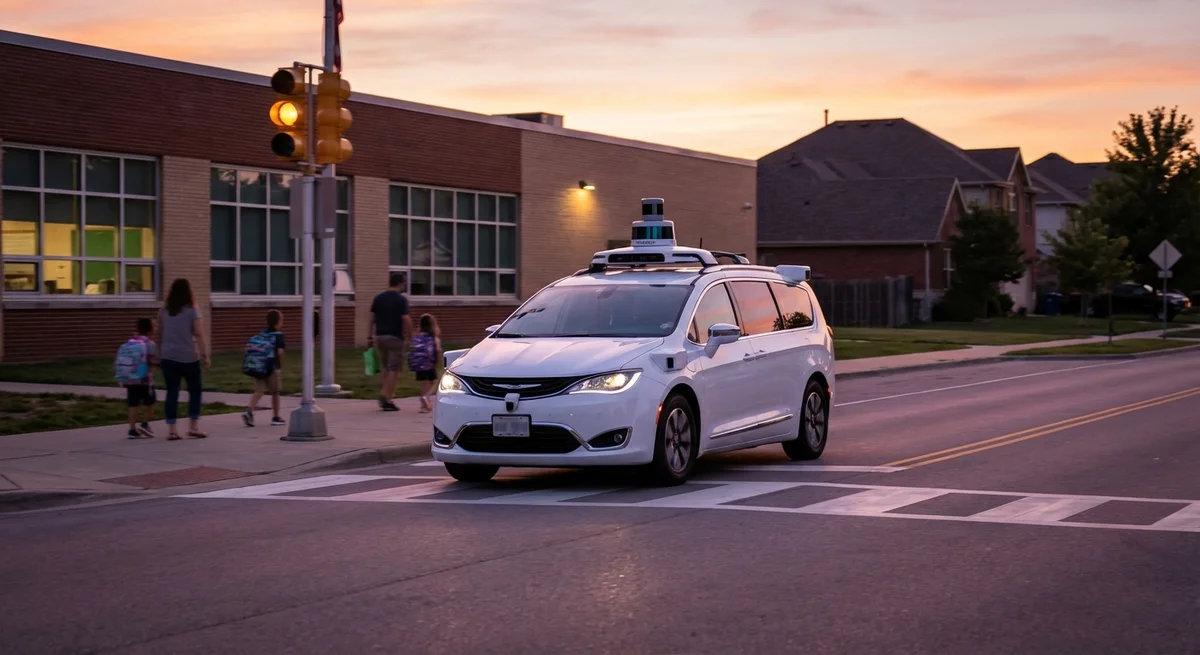
Waymo had long been that star student in the autonomous vehicle class, the one everyone pointed to when they needed to justify the industry's existence. While competitors from Cruise were caught in scandals, blocking ambulances and making ridiculous mistakes, Google's self-driving cars neatly maneuvered through the hilly streets of San Francisco. But the idyll ended where it was feared most—in a school zone. An incident in which a robotaxi hit a child instantly transformed a technological triumph into the subject of a federal investigation and a reason for a new wave of skepticism.
This is not just a random accident that can be written off as statistical error. For Waymo, this is an existential challenge. Until now, the company had successfully promoted the thesis that their system sees the world better, wider, and faster than any human driver. However, scenarios involving children—so-called "edge cases"—have always been the Achilles heel of autonomous driving. Small stature, unpredictability of movement, and sudden appearance on the road baffle even the most advanced neural networks trained on millions of miles of standard traffic. Now the National Highway Traffic Safety Administration (NHTSA) is trying to determine how systemic this problem is and whether it's time to forcibly restrict the service's operation.
Regulators have begun digging deeper, and this is not the first investigation into Waymo in recent months. However, this particular case carries maximum reputational risk. If it turns out that the LIDAR sensors or cameras misinterpreted the child's movement or—worse—the decision-making algorithm ignored school zone signs, the company will have to rethink the entire logic of its software. For Alphabet, Waymo's parent company, this comes at the worst possible moment. They have only just begun aggressive expansion in Phoenix and Los Angeles, trying to prove to investors that a decade of investment in autonomy will finally start generating profits. Any delay now means losing billions of dollars.
Remember what happened to Cruise after their car dragged a pedestrian across asphalt. The company almost instantly lost its licenses, replaced all its leadership, and was forced to hit the brakes in all cities of operation. Waymo is in a more stable position for now, but the public and regulatory trust is not infinite. In San Francisco, discontent is already growing: firefighters complain about blocked fire hydrants, and residents complain about unjustified stops in the middle of busy intersections. Each new incident fuels the fears of those who believe city streets have become a testing ground for corporations, where residents serve as unwilling test subjects.
In the coming months, we face an exciting battle of data. Waymo will defend itself with numbers, arguing that human drivers hit children thousands of times more often and do so while intoxicated or inattentive. But in the world of high technology, public perception often weighs more than dry statistics. A machine's error is perceived as a systemic failure of human genius, while a human's error is seen as tragic but understandable accident. If Waymo cannot convince regulators of the absolute safety of its systems in the presence of the most vulnerable road users, the era of widespread robotaxis may arrive much later than we were promised.
Key: Can Waymo prove this was just a coincidence, or should we expect mass license revocations for all autonomous vehicle operators?
Want to stop reading about AI and start using it?
AI News is a curated feed of AI/tech news. Hamidun Academy teaches you to use AI systematically in your work.