Siemens vs SAP: Why the Industrial Giant Suddenly Became More Valuable Than Cloud Software
While everyone was discussing how quickly generative AI would replace programmers and copywriters, it turned out that good old factories and turbines bring…
AI-processed from Bloomberg Tech; edited by Hamidun News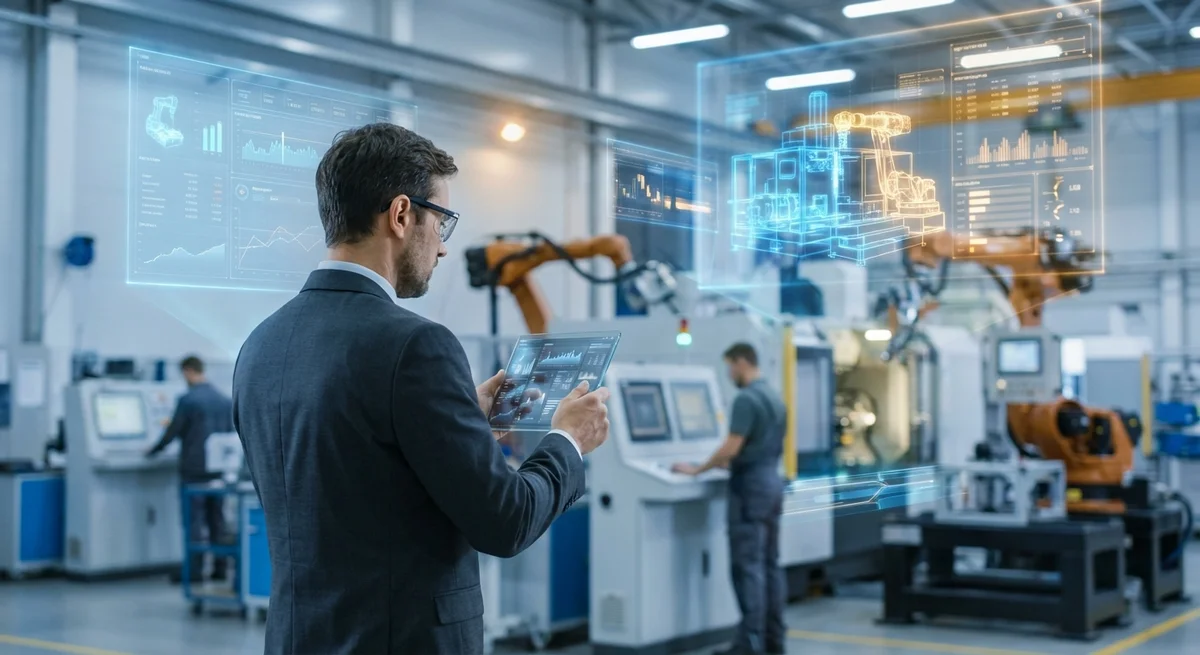
While everyone was discussing how quickly generative AI would replace programmers and copywriters, it turned out that good old factories and turbines bring investors more confidence than cloud subscriptions. Siemens officially surpassed SAP in market capitalization, reclaiming its title as Germany's most expensive company. This is not just a boring rearrangement in stock exchange summaries, but a telling moment for the entire technology industry that signals a shift in priorities on a global scale.
SAP long considered itself the "German answer" to Silicon Valley. The company built its empire on software for enterprise management, and in recent years actively rebranded itself in the colors of artificial intelligence. However, the market is a harsh and straightforward thing. As soon as SAP cut its sales forecasts, citing customer caution, investors immediately remembered that promises of a bright AI future don't mix well with falling revenue in the present. The software giant's shares plummeted, clearing the way for Siemens, which had quietly been doing its job all this time.
The irony of the situation is that Siemens stopped being just a "company that makes trains and refrigerators" long ago. While SAP tried to sell corporations new versions of its databases, Siemens methodically captured the industrial AI market. They made a bet on so-called "digital twins"—when, before building a real factory, wind turbine, or train, a complete virtual copy is created. AI on this copy works through millions of failure scenarios, optimizes logistics and energy consumption before the first brick is even laid. It turned out that the real sector is much more willing and stable to pay for such optimization than for abstract chatbots for HR departments.
This shift in capitalization highlights an important trend: "physical" AI is becoming much more attractive than cloud-based AI. Investors are beginning to understand that the value of data in industry is orders of magnitude higher than in marketing or office administration. If an algorithm helps Siemens save 5% of energy at a huge steelworks or reduce power grid downtime, it turns into real billions of euros. If AI in SAP's software helps an employee write a letter to a client ten seconds faster—that's a nice bonus, but it's hard to charge a huge fee for it in a crisis.
Siemens is now in a unique position that even American Big Tech could envy. They own both the "hardware" and the data that hardware generates every second. In a world where every other startup tries to train its model on texts from the internet, Siemens has access to unique arrays of information about how complex physical systems actually work. This is their "moat," which competitors from the pure software sector practically can't jump over. They don't just use AI, they embed it in the foundation of world infrastructure.
For the European market, this event is a kind of return to roots, but at a completely new technological level. A country often criticized for slow digital transformation suddenly discovered that its powerful industrial base is the ideal testing ground for the next stage of AI development. While software companies like SAP try to rebuild on the fly and prove their relevance in a world where AI writes code for itself, Siemens simply continues to implement algorithms where they bring tangible benefit to the physical world. It seems the era of pure SaaS is beginning to give way to the era of smart manufacturing.
The key point: The market is cooling toward software for software's sake and beginning to value real integration of data into the physical world. Can SAP regain leadership if it offers nothing more than "smart" spreadsheets and interfaces?
Want to stop reading about AI and start using it?
AI News is a curated feed of AI/tech news. Hamidun Academy teaches you to use AI systematically in your work.