Spark Ring: The AI Ring That Survived Against Investors and Common Sense
Imagine an investor meeting where you bring a chunk of black plastic printed on a 3D printer. It's thick, rough, and a ridiculous square protrudes from the…
AI-processed from 36Kr (36氪); edited by Hamidun News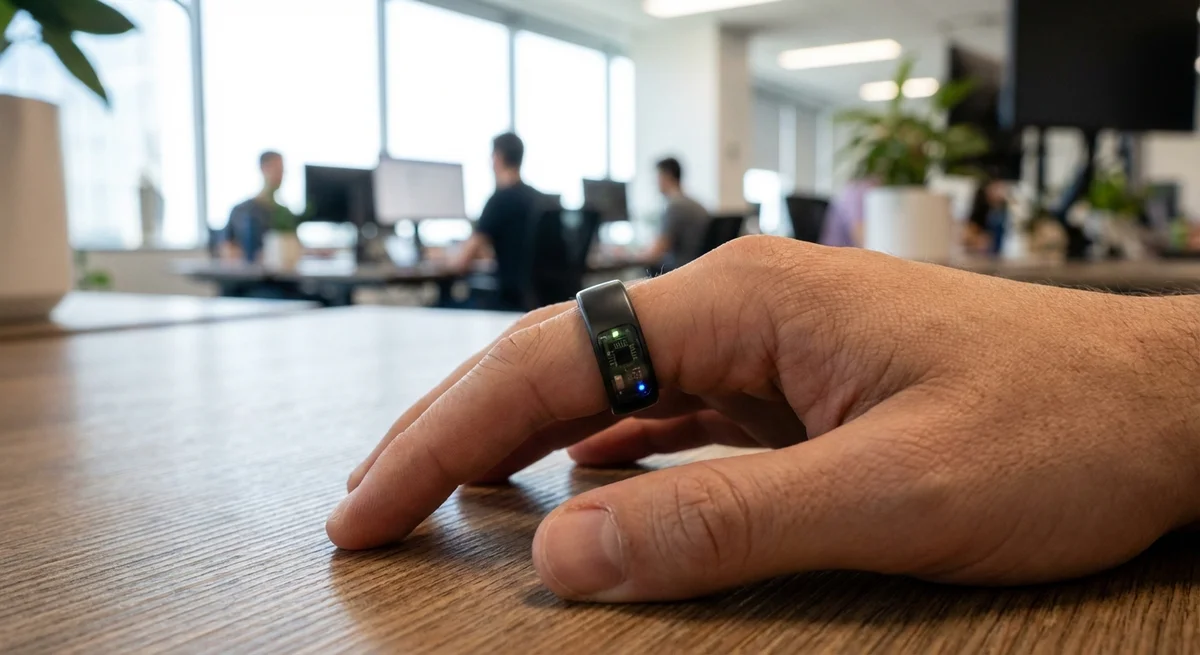
Imagine an investor meeting where you bring a chunk of black plastic printed on a 3D printer. It's thick, rough, and a ridiculous square protrudes from the top — supposedly a camera. This is how the story of Tan Chan and his Spark Ring project began.
Investors didn't just refuse — they advised him not to show this monstrosity at all if he wanted to preserve any reputation. The team scattered, financing was withdrawn, and Tan was left alone with his idea of a "multimodal ring." This is a typical scenario for a hardware startup where death comes before the first working prototype.
Tan Chan didn't give up but switched to "subsidy survival mode." He collected grants in Hong Kong and Shenzhen, literally fighting for his product's right to exist. By January 2025, the situation had changed.
At the CES exhibition in Las Vegas, he presented a completely different device: an elegant ring made of black ceramic with a transparent inner wall through which you can see the microchips. The main change — he removed the camera. This was a strategic capitulation.
Investors didn't understand why a ring needed eyes, and the technological complexities made the device too bulky. But the focus on voice hit the mark. Spark Ring is now positioned as a "personal agent at your fingertip."
The ring can record up to 8 hours of audio and transmit data to an app where a neural network does the rest. It recognizes intentions, creates calendar events, forms to-do lists, and answers questions in streaming mode. At CES, a curious difference in mentality emerged.
While Chinese users carefully asked about the agent's logic and workflow architecture, Americans and Europeans simply asked: "Turn off your phone screen and record something again." When they saw that the magic worked without smartphone involvement, they were ready to pay. Why does this matter now?
We're in a phase of searching for the ideal form factor for AI. The smartphone is an intermediary that often gets in the way. Glasses are too invasive, clips like the Humane AI Pin are questionable.
A ring, however, is a familiar accessory that people have already learned to wear thanks to Oura and other fitness trackers. Tan Chan is confident that a large AI brain must have constant access to our lives to be truly useful. And voice is the shortest path to that access.
While Apple and Samsung view rings exclusively as health sensors, smaller players are trying to turn them into a full-fledged interface for communicating with machines. Interestingly, Tan is not afraid of competition from tech giants. He calls this the "innovator's dilemma."
Large corporations don't want to spend billions on a market that hasn't yet been validated by customer purchases. They wait for someone else to pave the way, hit the bumps, and prove that people really do want to whisper their thoughts into their fingers. For a startup, this is a window of opportunity — a chance to create a brand and loyal community before the heavyweights enter the game.
Currently, Spark Ring is preparing for its US market launch in March, and this will be a decisive test for the "recording ring" concept. The bottom line: Whether voice in a ring becomes a new standard or remains a toy for geeks is an open question, but Spark Ring has proven: in the age of AI, even the ugliest prototype has a chance if the creator is willing to cut the excess (in this case — the camera) for the sake of the product's survival.
Want to stop reading about AI and start using it?
AI News is a curated feed of AI/tech news. Hamidun Academy teaches you to use AI systematically in your work.