Shengyi Electronics: How to Make 350% Profit on 'Boring' AI Hardware
Компания Shengyi Electronics опубликовала прогноз на 2025 год, и цифры выглядят впечатляюще. Ожидаемая чистая прибыль вырастет на 331–356%, достигнув 1,51 млрд
AI-processed from 36Kr (36氪); edited by Hamidun News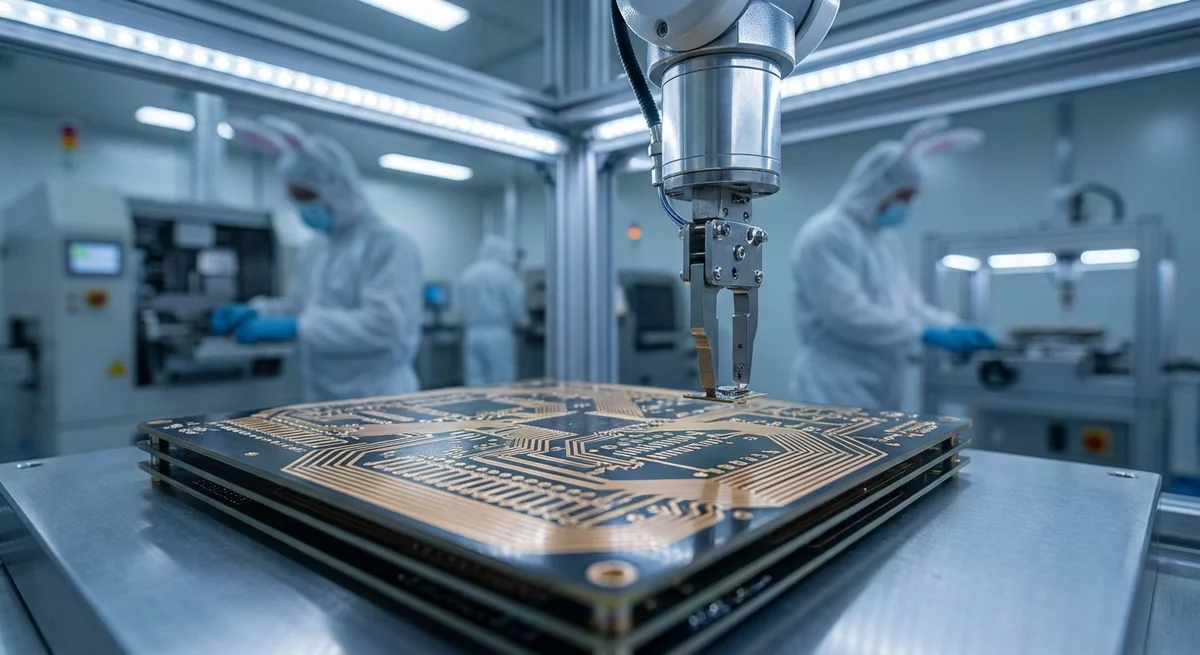
While venture capitalists and technology evangelists argue about when artificial intelligence will achieve consciousness, pragmatic guys from China's Guangdong province are simply counting money. Shengyi Electronics released a preliminary report for 2025 that forces a fresh look at who's actually winning in the current "gold rush." A forecast of net profit in the range of 1.43 to 1.51 billion yuan means growth of more than fourfold compared to the previous period. To be precise, the company expects a jump of 331–356%. This is not just a lucky quarter—it's a direct consequence of a tectonic shift in computing system architecture. Let's figure out what exactly happened.
Previously, printed circuit boards (PCBs) were considered something like consumables—important, but fairly simple components. However, the era of large language models changed everything. Modern AI servers don't need ordinary textolite. They need multilayered boards with extremely low signal loss and high thermal resistance, capable of withstanding colossal loads from the latest generation graphics processors. Shengyi Electronics reoriented its production capacity at the right time toward manufacturing high-level boards for servers and 800G switches.
When the AI infrastructure market began growing exponentially, the company found itself in the right place with the right product. This financial success highlights an important detail that's often overlooked amid flashy announcements of new chatbots. The physical layer of AI is the bottleneck of the entire industry. To launch Claude or GPT-5, you need thousands of server racks connected by kilometers of high-speed buses. Each such bus sits on a board that must be produced by a company like Shengyi. A 350% profit increase shows that demand for this "hardware" is not just stable—it's in deficit. Buyers are willing to pay premium prices for quality and delivery schedules just to avoid halting their data center deployments.
It's also interesting how Shengyi Electronics managed to outpace competitors. After a lull in the consumer electronics market, many component manufacturers found themselves in crisis. But those who managed to jump aboard the AI server train are now doing exceptionally well. The transition to 800G and higher data transmission standards requires technologies that only a few players possess. Shengyi invested in research and development (R&D) at exactly the moment when others were cutting costs. Now these investments are returning as excess profits.
What does this mean for us? First, the AI boom is not just a bubble of startup promises, but quite tangible growth in the real manufacturing sector. Second, global AI's dependence on Chinese supply chains for components remains critical. Despite all the talk about diversification, giants like Shengyi Electronics remain indispensable links in creating the computing power of the future.
If you thought the most interesting thing in AI happens in code, look at the financial reports of those making that code physically possible. Main point: Second-tier hardware manufacturers are becoming the main beneficiaries of the AI race. Will Chinese factories have enough capacity to satisfy Silicon Valley's appetite in 2025?
Want to stop reading about AI and start using it?
AI News is a curated feed of AI/tech news. Hamidun Academy teaches you to use AI systematically in your work.