Bumble and Panera Under Fire: Social Engineering Hits Unexpected Targets
Bumble and Panera Under Fire: Social Engineering Strikes at the Most Unexpected Places At first glance, what could a dating app, a popular bakery chain, and…
AI-processed from Bloomberg Tech; edited by Hamidun News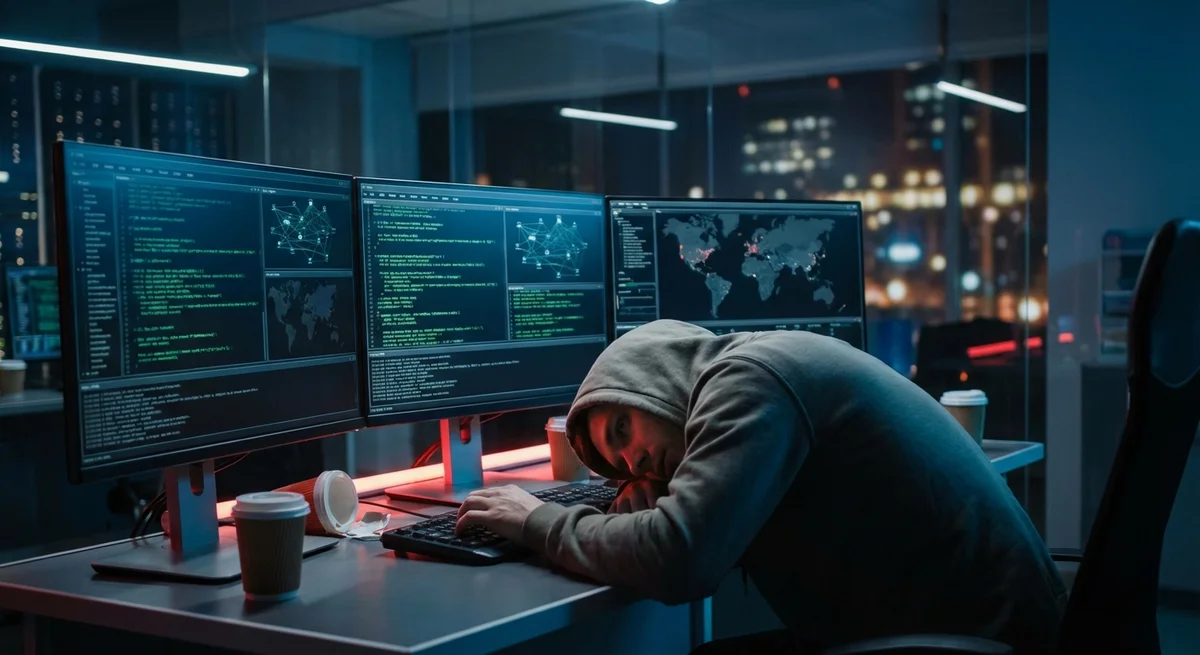
Bumble and Panera Under Fire: Social Engineering Strikes at the Most Unexpected Places
At first glance, what could a dating app, a popular bakery chain, and a global startup database possibly have in common? It sounds like the start of a strange joke, but reality turned out to be far more mundane and harsh. Bumble, Match Group, Panera Bread, and CrunchBase made simultaneous appearances in cybersecurity news feeds. And it's not about some new sophisticated virus or zero-day vulnerability in popular software.
The root of the problem is social engineering. Security experts are raising alarms, pointing to a new wave of attacks targeting American companies. We're used to thinking of hackers as hoodie-wearing guys frantically pounding keyboards, cracking encryption. But the reality of 2024 shows that it's far simpler (and cheaper) to just politely ask a tired support employee for their password, or send an accountant a very convincing email from the "CEO."
Why is this case important right now? Because we're seeing a diversification of targets. Previously, attacks often had an industry focus: today they crack banks, tomorrow—crypto exchanges. The current wave casts a wide net. Match Group and Bumble hold gigabytes of sensitive personal information and conversations whose leakage could destroy users' lives. CrunchBase is a treasure trove of business intelligence, contacts, and financial data on private companies. Panera Bread represents millions of credit cards and consumer behavior patterns. Hackers are assembling a puzzle from different spheres of our lives.
It's interesting to observe how, with the development of AI tools, social engineering itself is evolving. Although reports so far contain no direct evidence of generative models being used in these specific attacks, the general industry trend is obvious. Phishing emails no longer have grammatical errors and look disturbingly personalized. Voice deepfakes allow for mimicking calls from superiors. The human factor has always been the weak link, but now the tools to exploit it have become accessible to every schoolkid with an API subscription to neural networks.
For business, this is a signal that investments in "hardware" and software no longer guarantee security. You can build a digital fortress for millions of dollars, but it will fall if an administrator clicks the wrong link in a messenger. Companies like Bumble and Match, whose entire business is built on trust and privacy, risk losing their audience faster than Panera sells sandwiches.
Bottom line: In an era when AI can write the perfect breach letter, your best defense is paranoia. Training employees in digital hygiene is now more important than updating antivirus software.
Want to stop reading about AI and start using it?
AI News is a curated feed of AI/tech news. Hamidun Academy teaches you to use AI systematically in your work.