TeraFab from Tesla: Elon Musk Decided to Outmaneuver Nvidia on Its Own Playing Field
It's time to admit the obvious: Tesla stopped being just a car company long ago. If you still evaluate it by the number of sedans sold, you're missing the…
AI-processed from Bloomberg Tech; edited by Hamidun News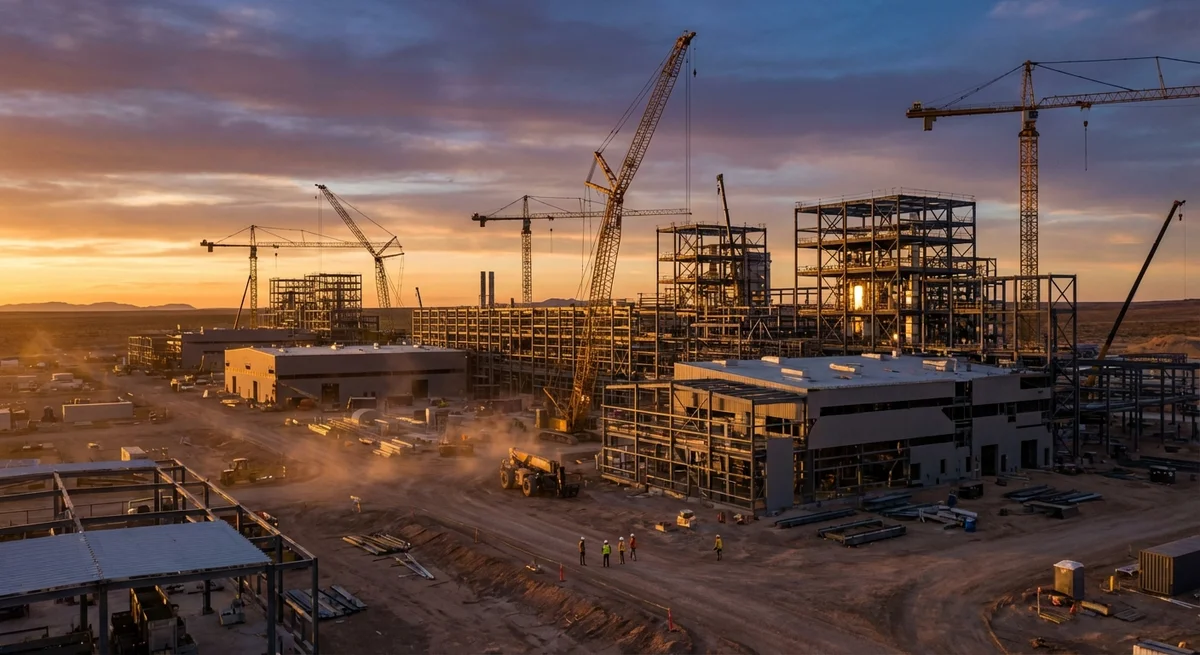
It's time to admit the obvious: Tesla stopped being just a car company long ago. If you still evaluate it by the number of sedans sold, you're missing the most interesting part. Elon Musk has finally settled on the idea that the future of his empire depends not on the quality of vehicle assembly, but on computing power. His new announcement about building TeraFab — his own semiconductor manufacturing facility — is not just another flashy quote for investors. It's a declaration of war against the current order in the chip industry, where all roads lead either to Nvidia or to TSMC.
Tesla's relationship with hardware has always been a story of striving for total control. At first, the company used ready-made solutions from Nvidia for its Autopilot, but quickly realized that third-party chips always meant compromise. They were universal, but Musk needed something specific. This is how Tesla's own FSD chips came about — the company designed them itself but outsourced production to third-party foundries. Now that's not enough. Musk wants to own not just the blueprints, but the lithography equipment itself. The TeraFab concept implies creating a vertically integrated behemoth that will mass-produce silicon at the scale needed for training Dojo neural networks and running millions of Optimus robots.
Why take such a risk now? The answer lies in supply chain vulnerability. The world has seen how easily industry is brought to its knees when tiny microchips are in short supply.
Musk doesn't want to depend on TSMC's schedules or Jensen Huang's priorities. When you're building supercomputers for AI training, you're either a customer or you hold the power. TeraFab is an attempt to hold the power.
Of course, the price tag runs into billions of dollars, and this is at a time when the automotive market is turbulent and competition from China is becoming increasingly aggressive. But Musk's logic is simple: if Tesla becomes the only company capable of mass-producing chips, software, and robots all under one roof, its market cap will soar to the stars.
However, chip manufacturing is not the same as assembling cars. It's one of the most complex and capital-intensive industries in the world. Intel has been trying for years to regain its leadership, investing tens of billions, and not always successfully. Will a company that still struggles with Cybertruck door gaps be able to master nanometer-scale manufacturing processes? This is an enormous challenge for engineers and the finance department. But we shouldn't forget that Musk has already trained us to expect his seemingly crazy ideas sometimes become industry standards. If TeraFab actually works, it will change the rules of the game not only for the auto industry but for the entire AI sector.
In the end, TeraFab is Tesla's insurance policy against a future where computing power becomes more expensive than oil. Musk understands that without his own silicon, his ambitions in AI and autonomous driving will remain hostage to third parties' manufacturing capacity. It's an expensive bet, possibly the most expensive in the company's history. But for a man planning to colonize Mars, building a factory on Earth seems like just a logical next step in his plan to seize technological dominance.
Bottom line: Tesla is definitively transforming into a semiconductor giant. Will Musk have enough patience and money to complete TeraFab before competitors from China eat away at his automotive market?
Want to stop reading about AI and start using it?
AI News is a curated feed of AI/tech news. Hamidun Academy teaches you to use AI systematically in your work.