Alibaba's Golden Triangle: How Its Own Chips Save the Cloud Empire
Alibaba официально представила архитектуру своего «золотого треугольника», где чипы собственной разработки Pingtouge встречаются с облаком и моделями Tongyi Qia
AI-processed from Jiqizhixin (机器之心); edited by Hamidun News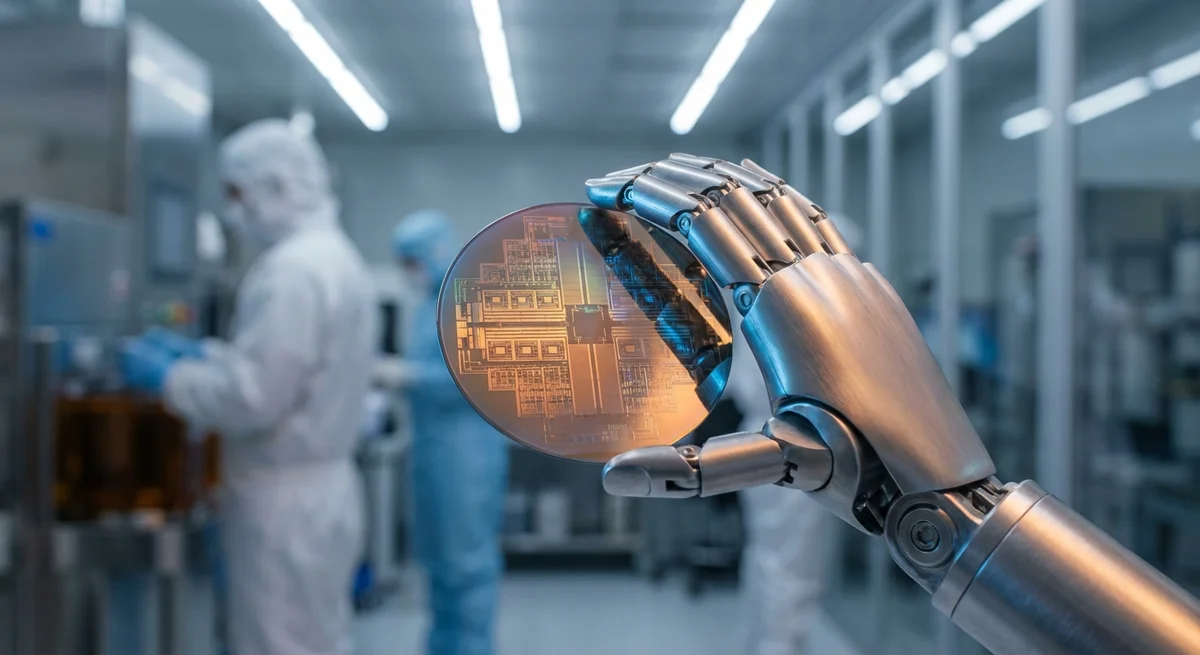
While the Western world held its breath awaiting the next shipment from NVIDIA, a completely different game was unfolding in the East. Alibaba decided to show what lies under the hood of its AI machine, and this spectacle forces one to think about the real state of affairs in the industry. We are talking about the so-called "golden triangle," where proprietary chips, cloud infrastructure, and large language models converge.
This is not just a corporate slide for investors, but a bid for complete technological autonomy in a world where access to powerful hardware has become an instrument of geopolitics. The foundation of this construction is the Pingtouge division — Alibaba's semiconductor wing, which has long remained in the shadows. The name refers to the honey badger, a fearless beast that is not afraid to engage in combat with a superior opponent.
The irony here is quite fitting: Pingtouge is indeed challenging the established order by creating specialized AI accelerators called Hanguang. Unlike universal graphics processors, these chips are tailored for specific Alibaba cloud tasks, which allows them to squeeze maximum efficiency where ordinary solutions begin to "suffocate" from overheating or lack of memory.
The second angle of the triangle is Alibaba Cloud. In modern reality, a chip by itself is just a piece of silicon. The real magic begins when it is seamlessly integrated into the cloud environment. Alibaba has structured its system so that its cloud platform "understands" the architecture of its own chips at the lowest level. This allows it to dynamically distribute load across thousands of nodes with minimal latency. If companies previously had to adapt their algorithms to the architecture of third-party vendors, now they dictate the rules of the game themselves, creating hardware to meet the needs of their services.
The composition is completed by the Tongyi Qianwen family of models. Here lies the main economic rationale for the entire venture. Training and, more importantly, inference (running) of huge models costs astronomical sums. By using the combination of "own chip + own cloud + own model," Alibaba can radically reduce the cost per token for the end user. While competitors are forced to include the cost of renting external resources and chip manufacturers' margins in their prices, Alibaba controls the entire value chain. This gives them maneuvering room in the price wars that are already raging on the Chinese AI market.
Of course, a reasonable question arises: can these chips really compete with top solutions from the "green giant"? A direct head-to-head comparison might not favor Chinese engineers if you only look at teraflops. However, in real business tasks, what matters is not peak power, but the ratio of performance per watt and, more importantly, per dollar. Vertical integration allows Alibaba to compensate for the shortfall in raw power through perfect alignment of software with hardware. This is the classic Apple approach, scaled to data centers and neural networks.
What does this mean for the rest of the world? We are witnessing the birth of two parallel AI universes. One is built on universality and the dominance of a few global hardware suppliers, the other on deep specialization and closed ecosystems. Alibaba's experience shows that surviving under constraints forces companies to become smarter and more inventive. If the "golden triangle" works as intended, we will see a cloud provider that is practically impossible to drive out of the market through price dumping, because its infrastructure costs will be an order of magnitude lower than anyone who buys off-the-shelf solutions.
The key point: Vertical integration is becoming the only way to survive in the AI race when hardware is scarce. Will anyone in the West, besides Google with their TPU, be able to repeat this path on such a scale?
Want to stop reading about AI and start using it?
AI News is a curated feed of AI/tech news. Hamidun Academy teaches you to use AI systematically in your work.