The Line: Saudi Arabia Swaps City-Wall for Giant GPU Farm
Проект The Line официально сжимается. Вместо города будущего на 9 миллионов человек саудиты строят гигантский вычислительный хаб. Это классический маневр: если
AI-processed from Futurism; edited by Hamidun News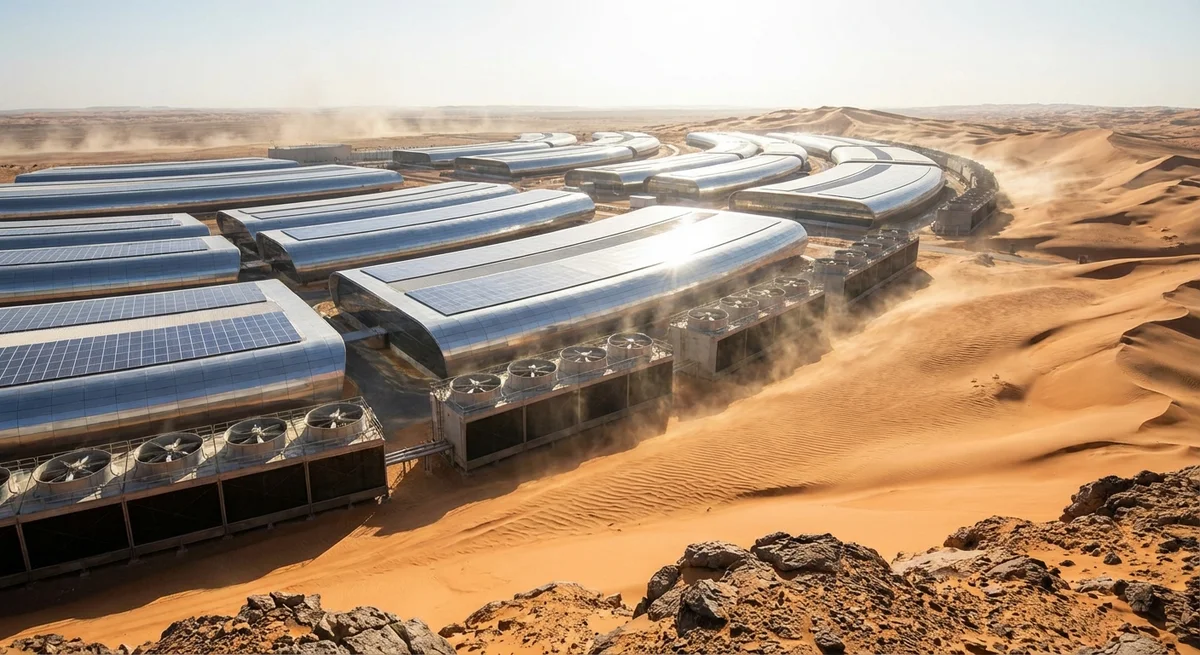
Remember The Line? That very mirrored wall-city 170 kilometers long that was supposed to slice through the desert and accommodate nine million people. Well, reality turned out to be far less pliable than the renderings in presentations. When budgets started coming apart at the seams and investors started asking uncomfortable questions, Saudi Arabia did what everyone does in 2024: announced that they are now a leading AI superpower. It looks like an attempt to save face after the most ambitious construction project of the century collided with harsh physics and economics.
Initially, Neom was conceived as a monument to human greatness and inexhaustible oil reserves. But building a city with no cars yet with flying taxis and an artificial moon turned out to be harder than releasing a beautiful YouTube video. In the end, the project was reduced to a measly 2.4 kilometers by 2030. To not look like losers, the Saudis are shifting focus to "digital infrastructure." This is not just a change in priorities, it is a desperate leap onto the departing train of generative AI, before the bubble finally bursts.
Now instead of endless mirrored walls we will see endless rows of server racks. Saudi Arabia is launching a project codenamed "Transcendence." The goal is both simple and insane: create the world's largest hub for training neural networks. They are buying Nvidia chips by the thousands, competing in purchase volumes with Meta and Microsoft. If you can't build a city for people, why not build a city for algorithms? The logic is clear: data centers build faster than residential blocks with complex logistics, and reports about "investments in the future" sound solid at international forums.
The problem is that the AI industry requires not only electricity and powerful air conditioning in the desert, but also brains. Silicon Valley was built over decades on the basis of universities and a unique startup culture. Saudi Arabia is trying to buy this experience for petrodollars, creating a $100 billion fund for technology investments. This looks like classic cargo cult: we'll build huge hangars, put the most expensive chips in them, and the AI revolution will happen on its own. But H100 chips don't care where they stand, as long as there is cooling. And cooling servers in 50-degree heat is a separate engineering nightmare that might cost more than the city itself.
We've already seen similar attempts from their neighbors in the UAE with their Falcon model. But the Saudis are playing big. They don't just want their own LLM, they want to control world-class computing power. This changes the market landscape: now for scarce GPU resources not only tech giants compete, but entire monarchies. For Jensen Huang it's a celebration, for everyone else it's food for thought—will the market overheat before the desert finishes building the first data center? So far the project looks like "Plan B" for a project that had no workable "Plan A" in the first place.
The bottom line: Saudi Arabia has officially admitted that concrete megaprojects lose to silicon ones. Will AI save Neom from turning into the most expensive monument to unfulfilled dreams in history, or will we just see very expensive and very hot ruins in the sands?
Want to stop reading about AI and start using it?
AI News is a curated feed of AI/tech news. Hamidun Academy teaches you to use AI systematically in your work.