Two Co-founders of Thinking Machines Lab Return to OpenAI
Сооснователи Thinking Machines Lab покидают компанию и возвращаются в OpenAI. Это значимая потеря для лаборатории. Причины ухода пока не ясны, но уже появились
AI-processed from Wired; edited by Hamidun News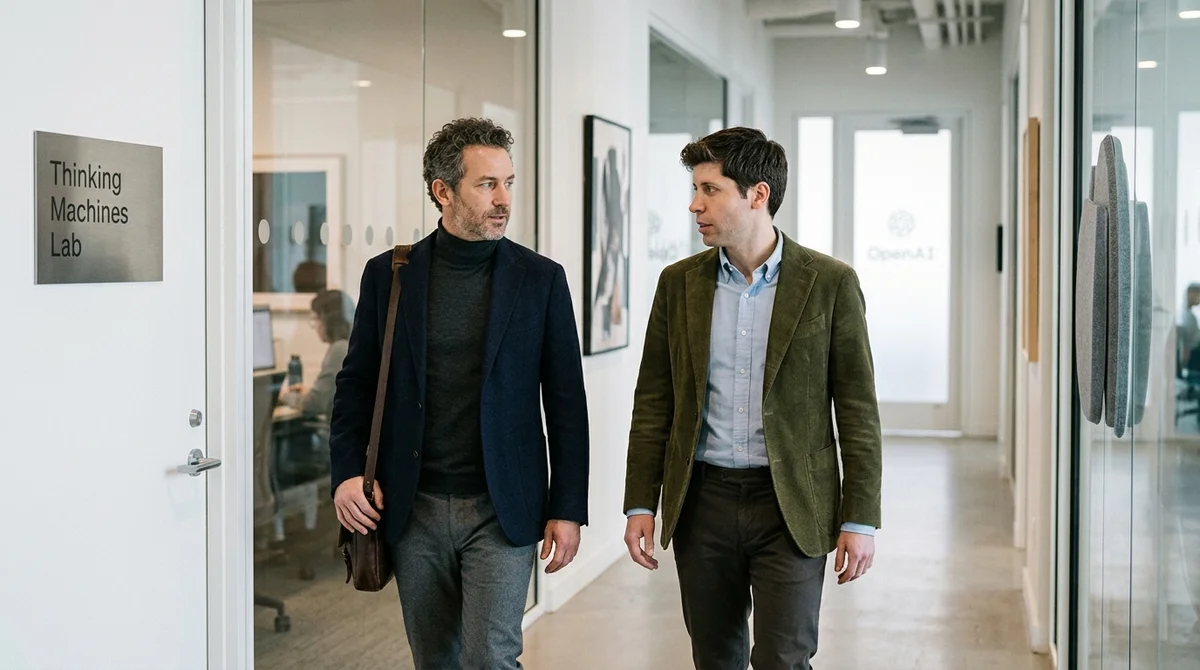
In the world of artificial intelligence, a notable event has occurred: two co-founders of Thinking Machines Lab, a promising research organization, have decided to leave their positions and return to OpenAI, the company behind the acclaimed GPT. This move has sparked a wave of discussions and generated several theories about the reasons behind this decision.
Thinking Machines Lab, founded relatively recently, has established itself as a promising player in the development of advanced AI technologies. The departure of key figures is undoubtedly a significant blow to the lab's ambitions and raises questions about its future plans. The question arises: what could have prompted such experienced and sought-after specialists to leave their own project and return to an already established structure, albeit as influential as OpenAI?
Currently, two main theories are circulating. The first is related to possible internal disagreements at Thinking Machines Lab regarding development strategy and research priorities. It is possible that the co-founders did not reach a consensus with other team members regarding the company's future direction, which led to the decision to return to OpenAI, where their views on AI development may be more aligned with the overall concept.
The second theory suggests that OpenAI offered the co-founders of Thinking Machines Lab more attractive conditions, both in terms of funding and opportunities to pursue their scientific ambitions. OpenAI, possessing enormous resources and a team of leading specialists, can offer unique perspectives for conducting large-scale research and developing innovative AI solutions. Possibly, this factor was decisive in the co-founders' departure.
What are the consequences of this event for the artificial intelligence industry? First, it could lead to a redistribution of resources and talent in favor of OpenAI, which would strengthen its leading market position. Second, it could slow down the development of Thinking Machines Lab and cast doubt on its ability to compete with larger players. Third, it could serve as a signal to other AI startups that retaining key employees amid intense competition for talent is becoming increasingly difficult.
Ultimately, the return of the co-founders of Thinking Machines Lab to OpenAI is a significant event that underscores the growing concentration of power and resources in the hands of a few major companies in the field of artificial intelligence. It also reminds us of the importance of creating favorable conditions for the development of talented specialists and providing them with opportunities to pursue their scientific ambitions.
Want to stop reading about AI and start using it?
AI News is a curated feed of AI/tech news. Hamidun Academy teaches you to use AI systematically in your work.