The Real War for AI Talent: Plumbers and Electricians
The rapid development of artificial intelligence (AI) has created an unexpected problem: a shortage of qualified workers, namely plumbers and electricians…
AI-processed from Wired; edited by Hamidun News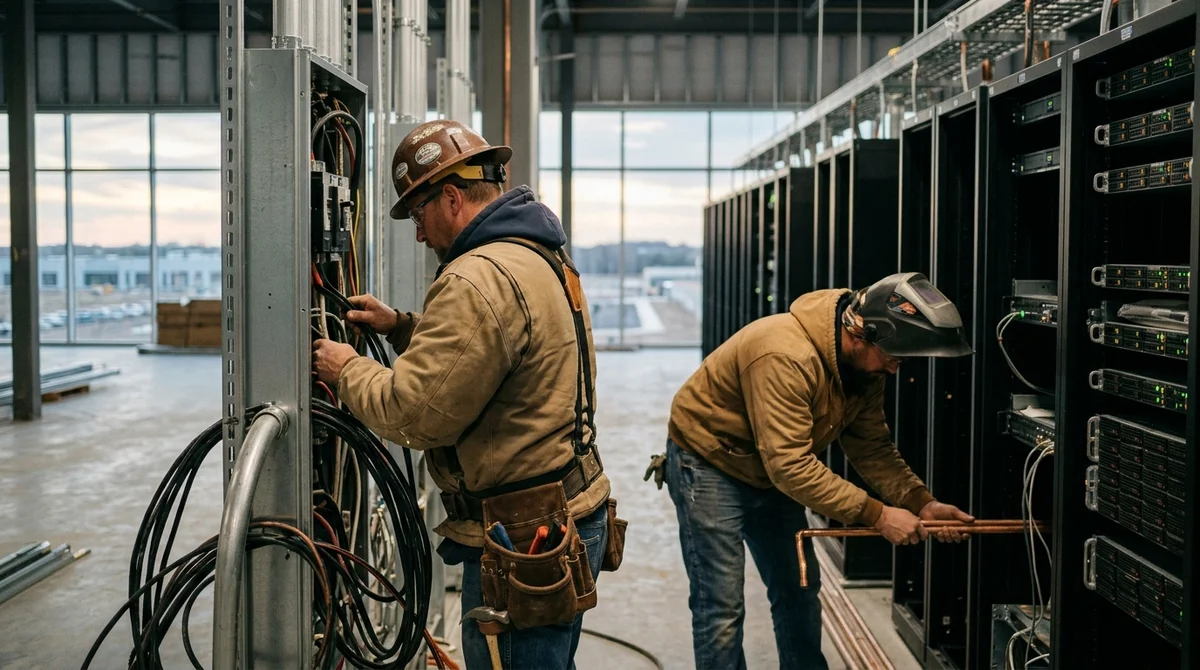
The rapid development of artificial intelligence (AI) has created an unexpected problem: a shortage of qualified workers, namely plumbers and electricians. While tech giants compete in developing advanced algorithms and neural networks, data centers—requiring massive amounts of energy and complex cooling systems—form the foundation of this AI revolution. And that's where the shortage of qualified personnel emerges.
Demand for data centers in the United States is growing exponentially. To train large-scale models like GPT-4 and future versions, enormous computing power is required, housed in these very data centers. As a result, large-scale construction of new facilities and modernization of existing ones has been launched across the country. However, this process has encountered a serious obstacle: a lack of qualified specialists capable of ensuring the uninterrupted operation of these critical infrastructures.
The problem lies not only in quantity but also in the specifics of the required skills. Modern data centers are complex engineering structures that require precise installation and maintenance of electrical power, cooling, and ventilation systems. Plumbers and electricians working in this field must possess knowledge of industrial automation, energy efficiency, and safety. Unfortunately, the professional education system in the United States is not keeping pace with growing market demands, leading to a shortage of qualified personnel.
The shortage of plumbers and electricians could seriously slow the development of the AI industry. Delays in data center construction and deployment will lead to a limitation of computing power necessary for training and deploying new AI models. This, in turn, could negatively affect the competitiveness of American companies in the global market.
Furthermore, the shortage of personnel leads to rising service costs and longer project timelines. This creates additional financial burden on companies investing in AI infrastructure. Ultimately, this could affect end consumers, who will face higher prices for AI-based products and services.
Solving this problem requires a comprehensive approach. It is necessary to invest in developing the professional education system, create retraining and skills upgrading programs for existing specialists. It is also important to attract youth to construction trades by showing them the prospects and career growth opportunities in the rapidly developing AI industry. Without solving this problem, the United States risks losing its lead in the race for AI superiority.
In conclusion, the talent war in AI is not only competition for the best engineers and scientists, but also a struggle for qualified plumbers and electricians. Without them, all the complex and ambitious AI infrastructure simply cannot function. It is necessary to urgently take measures to eliminate the shortage of personnel to ensure the further development of the AI industry in the United States.
Want to stop reading about AI and start using it?
AI News is a curated feed of AI/tech news. Hamidun Academy teaches you to use AI systematically in your work.