Aviation Safety on Autopilot: Trump Makes AI Write Laws
Администрация Трампа решила радикально ускорить бюрократическую машину, доверив написание авиационных регламентов искусственному интеллекту. План под кодовым на
AI-processed from Futurism; edited by Hamidun News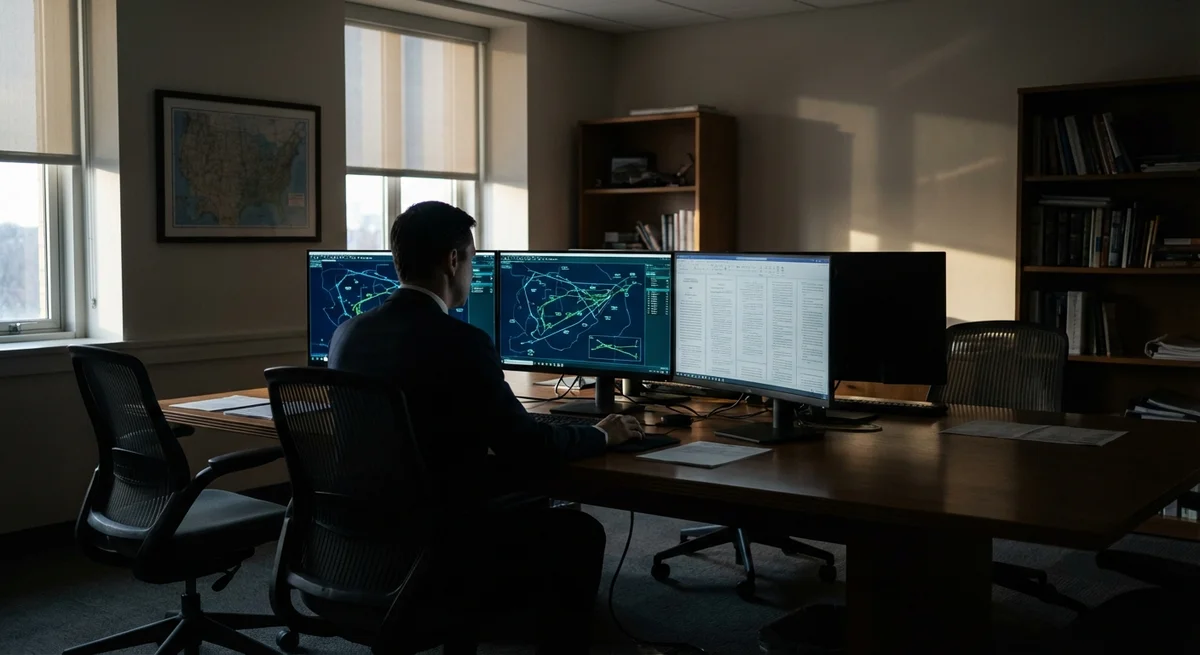
"Flooding the zone" — that's exactly how they describe the new strategy in the American Department of Transportation. While the tech world argues whether ChatGPT will replace programmers, the Trump administration decided to go all-in and entrust neural networks with aviation safety — the holy of holies. The idea is simple to the point of cynicism: if the state machine can't keep up with the market, just hit the "generate" button. This isn't simply an attempt to streamline clerical work, but a radical shift in how rules are created — rules that govern how the entire world flies.
Historically, aviation safety rules have been written in blood. Every comma in FAA (Federal Aviation Administration) regulations appeared after meticulous investigations of disasters, years of testing, and endless coordination. It's a slow, painful, but decade-tested process. Now they want to turn it into an assembly line. Officials plan to use large language models to write new rules and revise old ones to eliminate "excessive regulation" in record time. The logic is simple: the faster we remove barriers, the faster business will fly.
The problem is that AI isn't a lawyer or an aviation engineer. It's a complex statistical machine that predicts the next word in a sentence. When such a machine writes code for a mobile game — that's a risk of interface bugs. When it writes rules for operating complex aircraft components — that's a risk to hundreds of people on board. The main argument of reform supporters is that AI can analyze thousands of pages of documentation faster than any team of lawyers. But does the algorithm understand safety context the way a human does — someone who has witnessed the consequences of technical errors?
This move looks like an attempt at total deregulation under the guise of technological progress. In aviation, the term "regulatory capture" has long existed — when controlled companies start dictating terms to controllers. Using AI trained on texts created partly by aviation giants' lobbyists could turn the oversight body into an automatic printer for corporate interests. Meanwhile, no official is willing to take responsibility for possible "hallucinations" of the algorithm in legal texts.
It's especially ironic that all this happens against the backdrop of a prolonged crisis of trust in aviation. After a series of Boeing incidents, the world expected stronger oversight and more thorough checks, not their automation. However, the new administration is convinced: speed matters more than procedures. If the experiment in the Department of Transportation succeeds, we'll see a similar approach in all spheres — from medicine to ecology. Laws will be written faster than we can read them, let alone understand their long-term consequences.
The main question isn't even whether AI will make a mistake. It will — that's embedded in the nature of the technology. The question is whether there will remain a living human in this chain, capable of hitting the brakes in time. For now, "flooding the zone" looks like an attempt to tear down the old order without building a reliable replacement. We're entering an era where flight safety may start to depend on how well-crafted a prompt a mid-level bureaucrat came up with on Monday morning.
The main point: Is society ready for laws to be written by algorithms without human reflection?
Want to stop reading about AI and start using it?
AI News is a curated feed of AI/tech news. Hamidun Academy teaches you to use AI systematically in your work.