The Multimodal Shift: How AI Stopped Being Blind and Why It Matters
Текстовое окно больше не является пределом для ИИ. С переходом к нативной мультимодальности модели вроде GPT-4o и Gemini 1.5 начали воспринимать мир в его перво
AI-processed from KDnuggets; edited by Hamidun News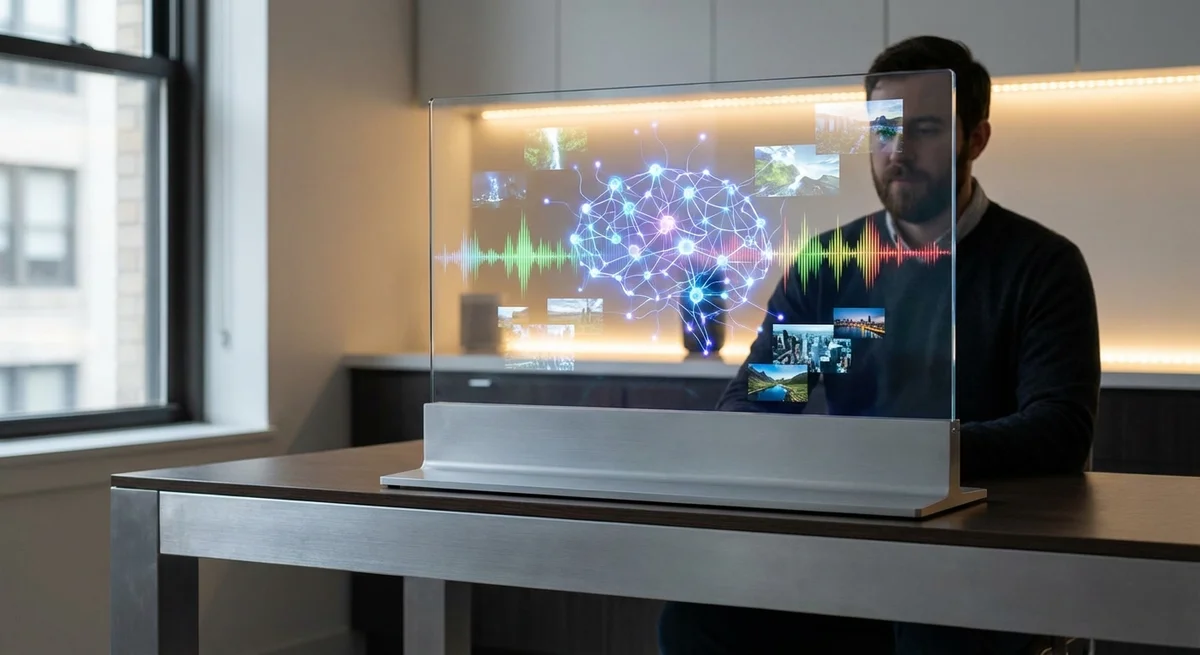
A couple of years ago, we marveled at the fact that neural networks could draft a well-written letter or write code. Back then, AI reminded us of a brilliant hermit in a dark room who learned about the outside world exclusively through notes slipped under the door. Today, that metaphor no longer works. The door has been blown off its hinges, and the hermit has acquired eyes and ears. Multimodality has become the new industry standard, and it's far more serious than simply being able to ask a bot to describe a photo of your cat.
To understand the scope of these changes, we need to recall how everything worked before. Legacy systems used a cascading approach: one model converted speech to text, a second analyzed that text, and a third generated a response. At each step, nuances were lost: intonation, irony, background noise. Modern architectures that we see in the latest releases from OpenAI and Google work differently. They are natively multimodal. This means that for the model, there is no difference between a text token and an image fragment. It learns on the entire dataset simultaneously, establishing connections between visual imagery and words at a fundamental level.
Why does this matter for business and everyday users? First, speed and context. When a model directly analyzes a video stream, it can instantly respond to changes in the frame, which is critical for security systems or autonomous vehicles. Second, accuracy. In medicine, AI can now correlate data from medical histories with actual MRI scans without relying on radiologists' textual descriptions, which can be subjective. We are transitioning from tools that "know about things" to systems that "understand things."
This shift also solves the data bottleneck problem. The textual internet is nearly exhausted — AI has already read almost everything humanity has written. But the world of video, audio, and sensor data is thousands of times more voluminous. By training models on video platforms and image archives, companies gain access to layers of knowledge that were never recorded in books. For example, how a master craftsperson's hand moves when working with wood, or how a person's facial expressions change with certain emotions. This is the direct path to creating truly intelligent robots.
Of course, this coin has a flip side. Multimodal models require colossal computational power. Processing one hour of video in a context window is a task that, not long ago, seemed impossible. Nevertheless, the arms race in hardware and algorithm optimization shows that these barriers are crumbling faster than expected. We are entering an era where interaction with computers will become maximally natural: you simply show it a problem, and it solves it.
The key point: text has ceased to be the primary interface for communication with AI, becoming instead one of many channels. Are we ready for algorithms to understand our nonverbal signals better than we understand them ourselves?
Want to stop reading about AI and start using it?
AI News is a curated feed of AI/tech news. Hamidun Academy teaches you to use AI systematically in your work.