Brainphone: State Replaces Scarce Doctors with Neural Networks
Фонд суверенных технологий вошел в капитал стартапа «Брейнфон». Ребята создают ИИ-систему для раннего выявления патологий головного мозга. Зачем это нужно госуд
AI-processed from CNews AI; edited by Hamidun News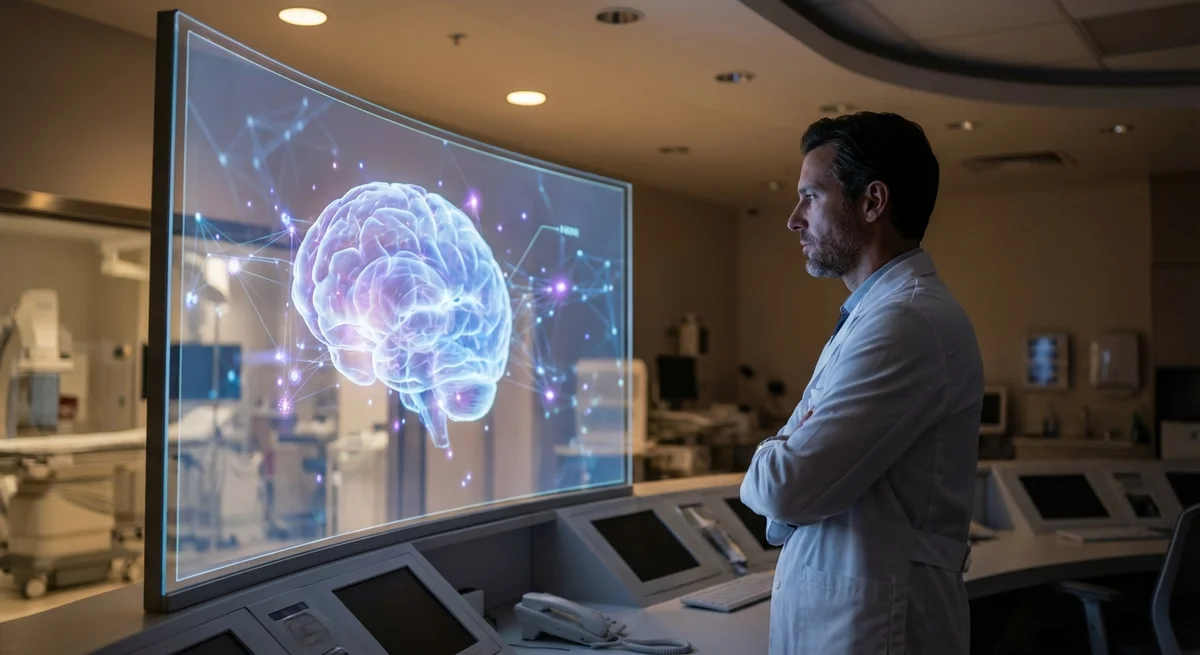
While the industry debates whether ChatGPT will replace screenwriters, the state has decided to play its trump card and begin implementing technology where the shortage of qualified personnel is most acute. In medicine. The Sovereign Technology Fund has acquired a stake in the startup "Brainfone." This is not just another software investment—it's an attempt to create a "digital sieve" for the human brain. The context here is simple and rather harsh: the number of neurodegenerative diseases is growing alongside the average age of the population, while the number of qualified diagnosticians is not.
"Brainfone" is working on technologies that allow early detection of brain diseases using neural networks. Essentially, they are creating an algorithmic filter. Today, to understand that something is wrong with the brain, you must go through a long chain: general practitioner, neurologist, expensive MRI, waiting for interpretation. The neural network promises to shorten this path and, more importantly, make it tens of times cheaper. When we talk about a "cheap filter," we mean economies of scale. A single trained algorithm can process thousands of images and data points per minute, working 24/7 without lunch breaks or burnout.
Why is this important right now? The Russian healthcare system, like many others worldwide, is facing a "bottleneck" problem. Primary care physicians are critically scarce, while specialists are overwhelmed with routine work. Using AI as a first line of defense allows filtering normal from pathological automatically. This frees up the time of human doctors for truly complex cases that require intuition and experience, not just pattern recognition on an image.
The state fund's interest here is purely pragmatic. Investments in such technologies are not charity, but an attempt to reduce future budget spending on maintaining severely ill patients. The earlier a disease is detected, the cheaper patient support becomes and the longer the patient remains socially active. We see how hardware and code are becoming tools of social policy. If the state used to invest in building hospitals, it now invests in algorithms that should make these hospitals more efficient.
Of course, questions remain about data quality and responsibility for errors. In medicine, neural network hallucinations are not a funny chat-bot text but an incorrect diagnosis. "Brainfone" will have to prove that their system can work stably across different data samples and not lose accuracy in real conditions of regional clinics, where equipment may be far from state-of-the-art. The connection with a state fund gives the startup not only money but also access to vast data sets, which is a critical advantage in the AI solutions race.
In the long term, such projects can completely change the face of preventive screening. Imagine that basic brain screening becomes as routine and cheap as a blood test. This is exactly the digital transformation that is so much discussed in reports but rarely takes concrete form in working tools. We are witnessing medicine transform into a data-driven industry, where the patient's first meeting happens not with a person in a white coat but with code on a server.
The key point: The state is transitioning from talking about innovation to purchasing tools for direct budget savings. Whether an algorithm can become a reliable shield against dementia and other diseases remains an open question, but the healthcare system seems to have run out of choices.
Want to stop reading about AI and start using it?
AI News is a curated feed of AI/tech news. Hamidun Academy teaches you to use AI systematically in your work.