Haystack and Multi-Agents: How to Stop Being On-Call at Night and Start Living
Imagine three in the morning and a piercing sound of a pager announcing that your production has decided to take an unplanned vacation. Any SRE engineer…
AI-processed from MarkTechPost; edited by Hamidun News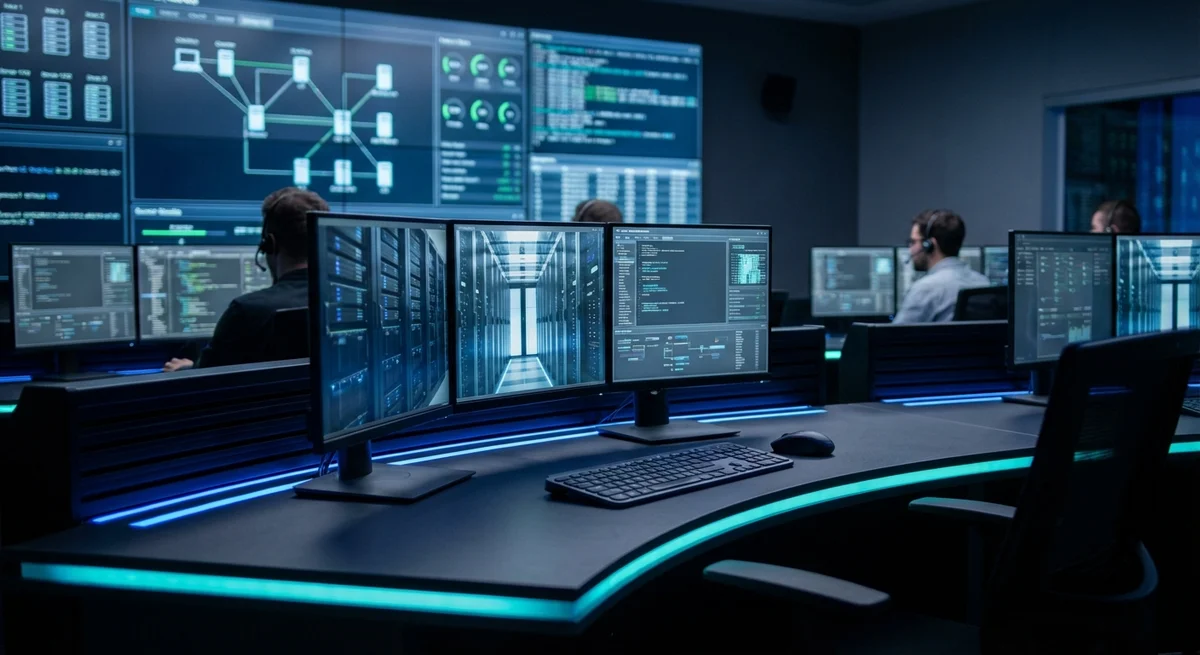
Imagine three in the morning and a piercing sound of a pager announcing that your production has decided to take an unplanned vacation. Any SRE engineer knows this feeling: when you need to simultaneously stare at Grafana, grep through logs in Kibana, and try not to fall asleep at your keyboard. For a long time, we hoped that large language models would free us from this routine, but in practice everything came down to hallucinations and an inability to work with complex contexts. However, the team at Haystack decided to prove that the era of "toy" examples has passed, and presented the concept of a multi-agent system capable of closing the incident investigation cycle from start to finish.
At the heart of this story lies the transition from monolithic AI assistants to specialized agents. Previously, we tried to feed models all the logs at once and hoped for a miracle. Now Haystack proposes an architecture where each agent has its own narrow role and a clear set of tools. One agent acts as a detector, constantly scanning the system for anomalies. As soon as something goes wrong, it passes the baton to the "investigators." These guys don't just read text—they actively interact with APIs, pull specific metrics, and filter logs, cutting out the extra noise that usually paralyzes human work.
The most interesting part here is orchestration. Haystack focuses on state management and structured control flow. This means agents don't just exchange messages; they operate within a strict business process. If a log analysis agent finds a database error, it doesn't just report it—it initiates a check of related services. This mimics the behavior of an experienced engineer who knows that one fallen table is just the tip of the iceberg. Such an approach minimizes the risk of AI missing an important detail or getting stuck on something.
Why does the business need this, beyond the obvious desire to let engineers sleep? The answer lies in the numbers. Mean Time To Recovery (MTTR) directly depends on how quickly you localize the problem. A multi-agent system does this in seconds, producing not just "it seems everything is broken," but a full production-grade report with root cause analysis and a timeline of events. Once the dust settles, the system itself generates a draft post-mortem document, which a human only needs to review and approve. We finally see AI actually doing the work, not just paraphrasing articles from the internet.
Of course, a reasonable question arises: are we ready to hand over the keys to infrastructure to a set of scripts and a neural network? For now, Haystack positions this as a decision support system, not as an autonomous administrator with superuser rights. But the direction of development is clear. We are moving toward a world where the operation of complex systems becomes so automated that the human role is reduced to high-level supervision of an army of virtual assistants. And if this helps prevent major service outages caused by a single typo in the config, then I'm all for it.
The main point: the era of single chatbots in DevOps is officially ending, giving way to complex orchestrated systems. Can your current monitoring compete in speed with a team of agents that never sleep?
Want to stop reading about AI and start using it?
AI News is a curated feed of AI/tech news. Hamidun Academy teaches you to use AI systematically in your work.