Raspberry Pi launches board for running generative AI locally
Raspberry Pi is betting on local artificial intelligence with the release of its new AI HAT+ 2 expansion board. For $130, Raspberry Pi 5 users can now run…
AI-processed from The Verge; edited by Hamidun News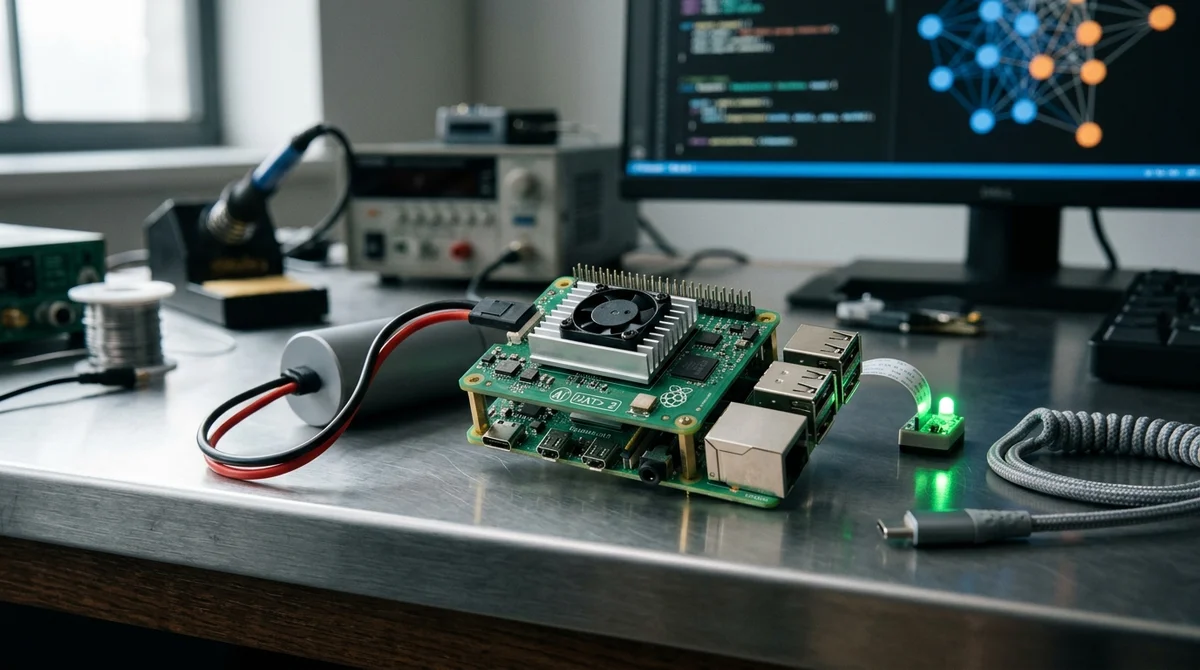
Raspberry Pi is betting on local artificial intelligence with the release of its new AI HAT+ 2 expansion board. For $130, Raspberry Pi 5 users can now run small generative AI models directly on their device, without needing to rely on cloud computing. This is a significant step forward for enthusiasts and developers who want to experiment with AI in standalone mode.
The AI HAT+ 2 board is an updated and more powerful version of the previous AI HAT+ model. The key difference is the presence of 8 GB of RAM and a Hailo 10H chip that provides AI performance of up to 40 TOPS (trillion operations per second). This allows Raspberry Pi 5 to use the AI HAT+ 2 to handle AI-related tasks, freeing up the main Arm processor for other computations. The previous version was primarily focused on image processing, while AI HAT+ 2 can run small generative AI models such as Llama 3.2 and DeepSpeech.
Why is this needed? Running AI models locally has a number of advantages. First, it's privacy. Data doesn't leave the device, which is important for applications working with sensitive information. Second, it's speed. The absence of latency associated with sending data to the cloud and back can significantly improve performance. Third, it's accessibility. Local AI works even without internet connection, which is critical for projects in remote or unstable locations.
The use of the Hailo 10H chip is a key factor providing the necessary performance. Hailo specializes in developing high-performance and energy-efficient AI accelerators for edge computing. Their chips enable running complex AI models on resource-limited devices such as Raspberry Pi. Integration with Raspberry Pi opens new possibilities for using AI in robotics, home automation, industrial control, and other fields.
What consequences will this have for the industry and users? For developers, it means a more accessible platform for experimenting with AI. Raspberry Pi is already a popular tool for prototyping, and AI HAT+ 2 makes it even more attractive for projects related to machine learning. For ordinary users, this could lead to the emergence of new applications and devices using local AI to enhance privacy, speed, and accessibility.
In conclusion, the release of AI HAT+ 2 is an important step in democratizing artificial intelligence. By providing the ability to run generative AI models locally on Raspberry Pi, the company is opening new horizons for creativity, innovation, and practical application of machine learning. This could become a catalyst for the development of new and exciting AI applications across various fields.
Want to stop reading about AI and start using it?
AI News is a curated feed of AI/tech news. Hamidun Academy teaches you to use AI systematically in your work.