Dear Upstairs Neighbors: Why Animators Need Help from AI Engineers
На фестивале «Сандэнс» состоялась премьера анимационной короткометражки «Dear Upstairs Neighbors». Проект интересен не только сюжетом, но и процессом: это резул
AI-processed from Google AI Blog; edited by Hamidun News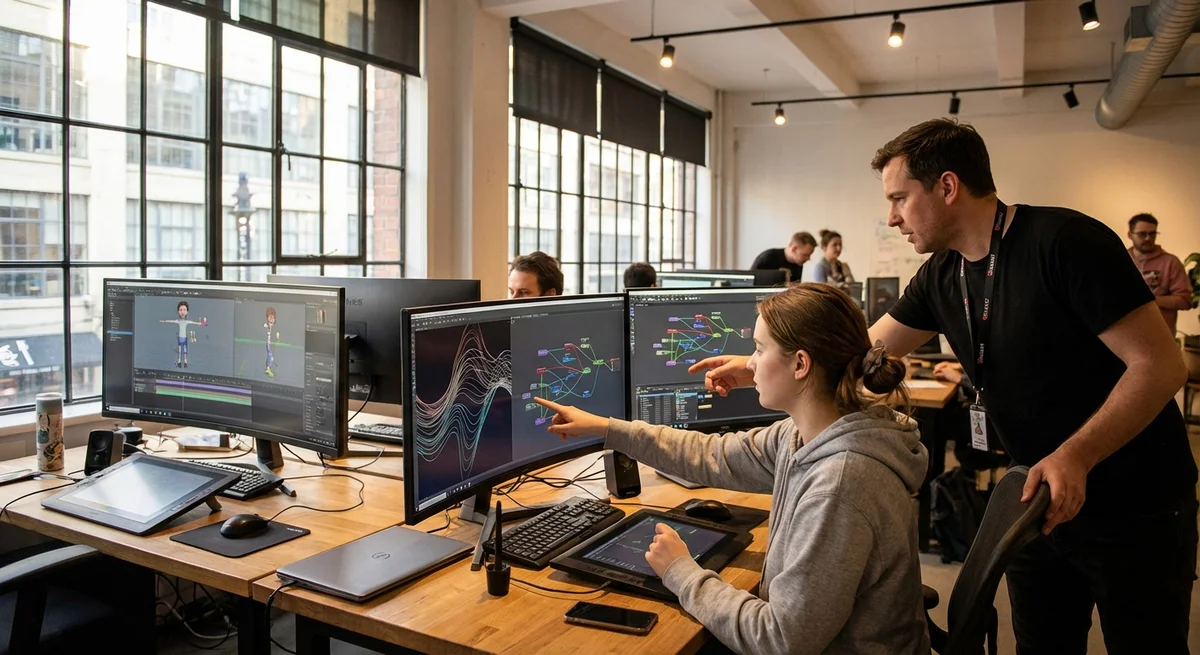
While some directors fear that neural networks will steal their jobs, others are already actively testing new tools on the world's biggest platforms. The Sundance Festival presented "Dear Upstairs Neighbors" — an animated film that became the result of an unusual alliance. Here at one table sat not only production designers, but also those who usually write code for large language models and computer vision systems.
This event is important because it moves the use of AI from the gray zone of dubious Twitter experiments to the level of high cinema art. For a long time it was believed that neural networks produce only averaged results, stripped of authorial vision and clear control. However, this project demonstrates a completely different approach.
Instead of asking the algorithm to simply "make it beautiful," the team of researchers and animators created custom tools. These solutions allow an artist to maintain control over every frame, using the power of machine learning to accelerate routine processes and create unique visual styles. Remember how Pixar once changed the industry by introducing computer graphics. Back then, many also spoke of the death of "real" animation and the loss of soul in drawing. Today we are witnessing a similar tectonic shift, but with one important caveat: now progress moves not in decades, but in weeks. Researchers from AI laboratories are becoming full-fledged participants in the creative process, just like cinematographers or editors.
The "Dear Upstairs Neighbors" project clearly shows that the future does not lie in complete one-button automation, but in complex hybrid forms of creativity. Animators used neural networks to solve specific tasks — for example, to ensure character and texture consistency, which has always been a weak point of generative models. This is effectively the democratization of complex visual style. In the coming years, such technologies will allow small independent studios to compete in picture quality with giants like Disney or DreamWorks, without their thousands of employees and hundreds of millions of dollars in their accounts.
Of course, skepticism still permeates the industry. Many ask: where does human work end and the algorithm begin? But when the result of the joint work of engineers and artists makes it into the Sundance program, it becomes clear: ignoring these technologies is no longer possible. This is no longer a toy for geeks or a way to quickly make fake videos, but a full-fledged brush in the hands of a master. Just this brush operates on the power of cloud servers and requires deep understanding of weight mathematics. We are entering an era where the technical director of a film will be as important as the screenwriter.
Main point: The line between software and art has been permanently erased. Will traditional studios be able to adapt to the speed of AI researchers before they themselves start making full-length blockbusters without the participation of Hollywood majors?
Want to stop reading about AI and start using it?
AI News is a curated feed of AI/tech news. Hamidun Academy teaches you to use AI systematically in your work.