Microsoft vs Nvidia: Why Satya Nadella Is Building His Own Silicon Empire
Microsoft представила второе поколение AI-процессоров Maia, стремясь снизить критическую зависимость от поставок Nvidia. Пока весь мир стоит в очереди за чипами
AI-processed from Bloomberg Tech; edited by Hamidun News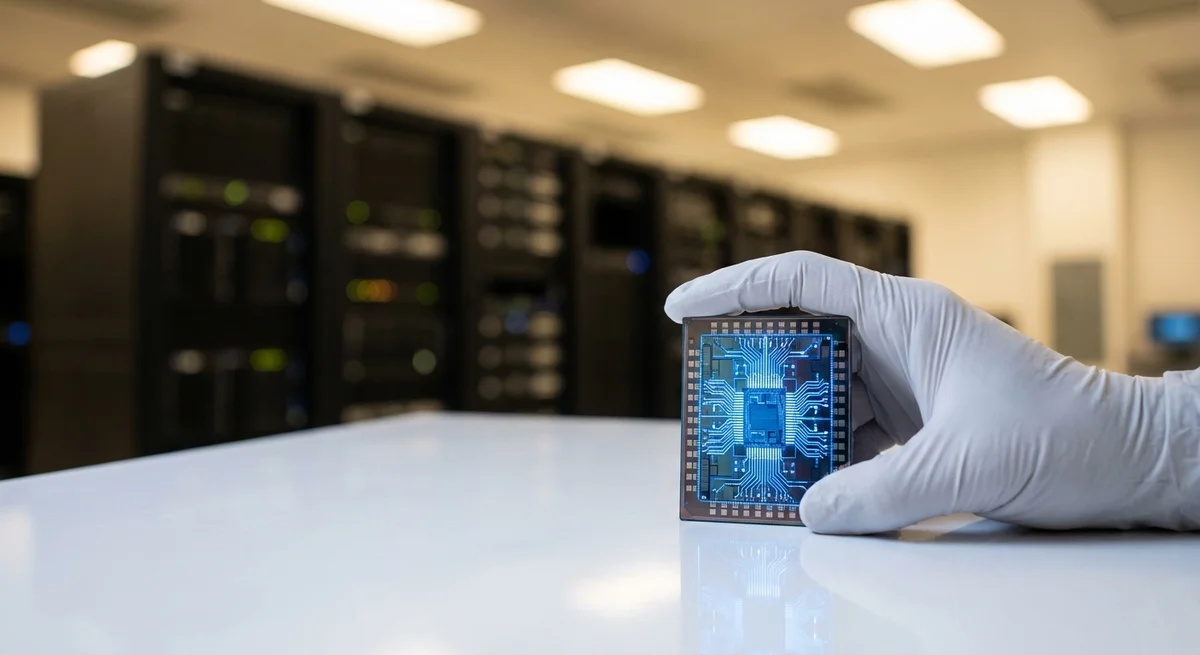
Imagine building the world's largest amusement park, but you're forced to buy all the motors for the carousels from a single supplier who keeps raising prices. This is exactly the situation Microsoft found itself in during the generative AI boom. As the largest sponsor of OpenAI and the main AI power provider through Azure, the corporation became hostage to Jensen Huang and his "golden" Nvidia chips. Microsoft's second generation of proprietary AI processors is not just a technical update, but a large-scale attempt to declare independence and stop paying a massive "innovation tax" to an outside manufacturer.
This confrontation didn't start yesterday. Microsoft has spent years watching Apple successfully transition its devices to its own M-series chips, gaining complete control over performance and power consumption. In the cloud computing world, the rules of the game are the same. When you're operating hundreds of thousands of servers, even a small optimization at the processor architecture level translates into billions of dollars in savings. The first generation of Maia chips was a trial run, a kind of reconnaissance mission. Now Microsoft is rolling out a solution that should become the foundation for the entire Copilot ecosystem and future iterations of GPT.
What exactly changed in the company's approach? Redmond is no longer trying to simply create an "Nvidia analog." They are designing hardware for the specific tasks of their models. This allows them to eliminate everything unnecessary and focus on memory bandwidth and energy efficiency — the two main bottlenecks in modern AI. The new generation of chips integrates into server racks natively, using custom liquid cooling systems. This is not just a chip in a box; it's part of a vast living organism of a data center, where every watt of energy must work towards results, not heat the atmosphere.
However, the main battle will unfold not in semiconductor manufacturing plants, but in lines of code. Nvidia dominates not just because their chips are fast, but because they have CUDA — a software platform on which almost all modern neural network software is written. Microsoft is betting on open standards and its own ecosystem, trying to convince developers that switching to their hardware will be seamless. This is a risky game: even the most powerful hardware becomes useless silicon if it's hard to write code for it. But with such levers as GitHub and Azure in hand, Microsoft has every chance of turning the situation in its favor.
Why does this matter to us, ordinary users? The answer is simple: the cost of computation. Right now, each request to an advanced language model costs the company real money, and these expenses ultimately fall on the shoulders of subscribers or limit free tiers. If Microsoft manages to radically reduce the cost of running its neural networks thanks to proprietary hardware, we'll see faster, cheaper, and smarter services. This is an arms race in which the winner will be whoever can make intelligence a mass-market commodity, not a luxury accessible only with scarce graphics cards.
Ultimately, Microsoft's actions are a signal to the entire market. The era when you could simply buy standard hardware and rest on your laurels is over. Now, leadership in AI requires a full stack: from data mining and algorithm development to transistor design. Satya Nadella understands this better than most, and his "vertical integration" strategy could be the very factor that allows Microsoft to maintain leadership in the long-term perspective, even if the hype around chatbots dies down a bit.
The bottom line: Will Microsoft be able to convince OpenAI and other partners to completely abandon Nvidia in favor of its "homegrown" silicon, or will Maia remain just an auxiliary tool for budget savings?
Want to stop reading about AI and start using it?
AI News is a curated feed of AI/tech news. Hamidun Academy teaches you to use AI systematically in your work.