Memory Shortage: RAM Prices Soar Due to AI Companies
Memory manufacturers such as Samsung and Micron have shifted their supplies toward AI companies, triggering a RAM shortage. Prices for computers, smartphones, a
AI-processed from The Verge; edited by Hamidun News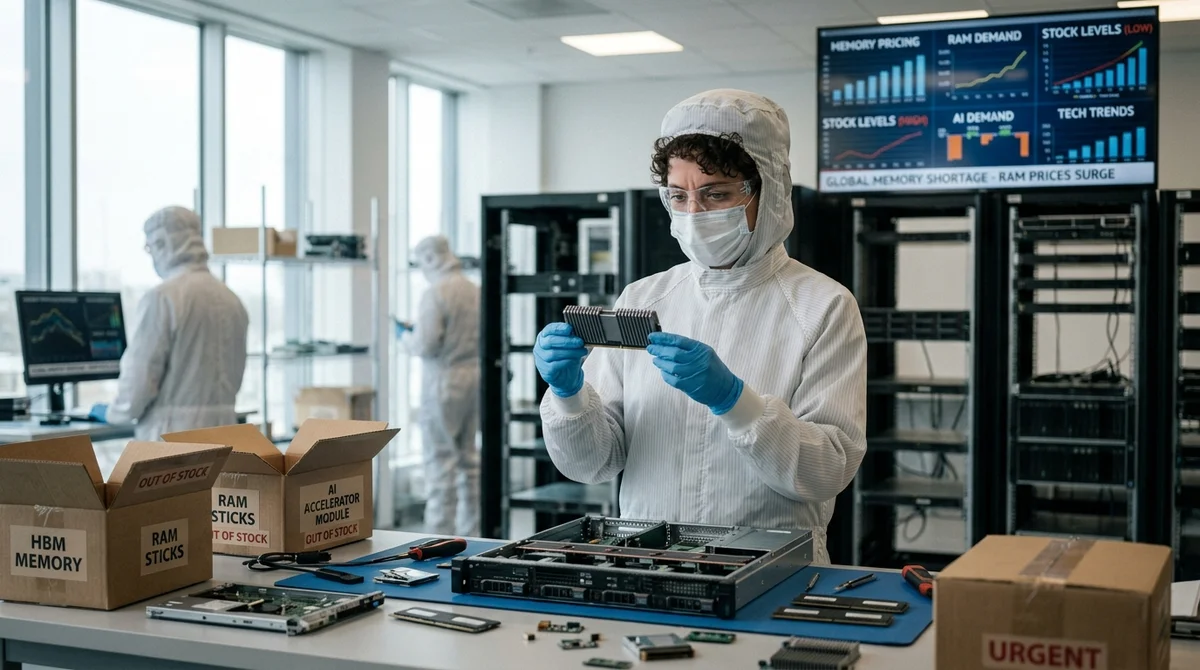
The world of technology is facing a new problem: rapid growth in RAM (random access memory) prices. This component, essential for the operation of virtually any electronic device, from smartphones to servers, has suddenly become scarce. The reason lies in the growing appetite of AI companies such as OpenAI, Anthropic, Google, and Meta, whose massive data centers require ever more memory.
The largest RAM manufacturers, including Samsung, SK Hynix, and Micron, have responded to this explosive demand by redirecting their production capacity to more profitable contracts with AI giants. This has led to a reduction in RAM supplies to the consumer market, which immediately affected prices. The cost of RAM kits for PC assembly, as well as for laptop, smartphone, and gaming console manufacturers, has risen sharply.
Some companies, such as Raspberry Pi and Framework, have already announced price increases on their products. Others, including Dell, Asus, Acer, Xiaomi, and Nothing, are warning of upcoming increases. The situation is worsened by the fact that, according to forecasts from the International Data Corporation (IDC), the RAM shortage could last until 2027. This means that consumers should be prepared for further increases in electronics prices.
Micron's decision to close the Crucial brand, oriented toward the consumer market, is another sign of this trend. The company explains this move as wanting to "help" consumers, but it is clear that Micron simply wants to redirect its resources to the more profitable segment of the market – supplying RAM and SSDs for AI companies. This decision will certainly not go unnoticed and will impact the consumer electronics market.
The impact of the RAM shortage is felt everywhere. RAM kit prices have tripled in just three months. Some stores have even started selling "ready-made" PCs without RAM in order to somehow reduce the cost. The situation is so serious that some compare selling RAM to selling lobster – an allusion to the fact that this component has become a delicacy.
For users, this means that upgrading a computer or buying a new smartphone will cost significantly more. Device manufacturers will be forced to raise prices in order to compensate for increased RAM costs. In the long term, this could slow the pace of development of the consumer electronics market, as consumers will postpone buying new devices due to high prices.
In conclusion, the global RAM shortage caused by manufacturers' reorientation toward AI companies represents a serious problem for consumers and electronics manufacturers. In the coming years, we should expect further increases in RAM prices and, consequently, in all devices that use it. This situation underscores the growing importance of the AI industry and its impact on other sectors of the economy.
Want to stop reading about AI and start using it?
AI News is a curated feed of AI/tech news. Hamidun Academy teaches you to use AI systematically in your work.