Doctor YouTube: Google AI Overviews trusts bloggers more than doctors
Немецкие исследователи обнаружили тревожную тенденцию в работе Google AI Overviews. Алгоритм, который должен выдавать проверенные медицинские справки, при ответ
AI-processed from Guardian; edited by Hamidun News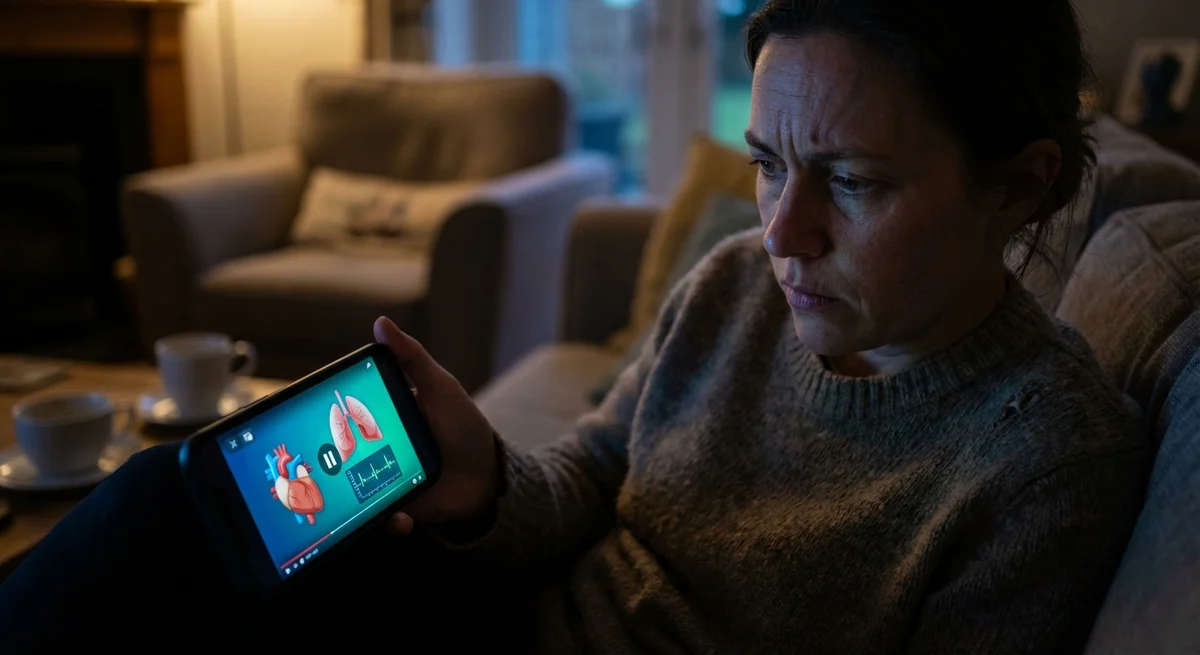
Imagine you're trying to figure out the cause of sudden chest pain, and instead of an EKG, your doctor suggests watching a fresh vlog from a popular lifestyle blogger. It sounds like an absurd scenario from a sci-fi series, but for Google users, this is becoming everyday reality. A new study by German specialists has shed light on how exactly AI Overviews algorithms work, and the results are alarming, to say the least. It turns out that when it comes to life-and-death questions, Google's artificial intelligence prefers to cite YouTube rather than specialized medical portals.
Context is critically important here. After launching AI Overviews, Google faced a wave of criticism for strange advice like adding glue to pizza. At the time, management assured everyone that for "sensitive" topics, such as medicine or finance, the AI uses only the most reliable and verified sources like the CDC or Mayo Clinic. However, real data tells a different story. In its pursuit of keeping users within its own ecosystem, Google seems to have forgotten about safety. Researchers found that links to the video hosting platform appear in AI summaries significantly more often than articles from peer-reviewed medical journals.
The problem here isn't just that Google promotes its own service. The real issue lies in the nature of YouTube itself. It's a platform where content is created for views and engagement, not for diagnostic accuracy. A video can be perfectly optimized for search queries, have millions of likes, and still contain pseudoscientific nonsense. The AI model, trained on this data, isn't always able to distinguish between a professional surgeon and an alternative medicine enthusiast. As a result, the user gets a "confident" answer based on a video that the algorithm deemed relevant simply because of its popularity.
Why is this happening right now? Google is in a fierce battle for the search market with OpenAI and Perplexity. To not lose its audience, the company needs to deliver fast, visual, and engaging answers. Text from a medical reference is boring and dry, while a YouTube video is a ready-made scenario that can easily be turned into a short summary. Visual content is better indexed and easier to consume, making it ideal fuel for generative AI. But when it comes to the health of two billion people, such optimization starts to look like a game of roulette, where public welfare is at stake.
Moreover, this Google strategy hurts the entire quality medical content industry. If AI extracts facts from videos and presents them as its own, users have no reason to visit professional community websites. In the long term, this will lead to quality resources simply running out of budget for creating verified content, and the information landscape will be completely filled with "experts" from social media. We risk ending up in a situation where the only source of knowledge about diseases is algorithmic curation based on hype, not evidence-based medicine.
Bottom line: Google chose the path of keeping traffic within its own ecosystem at the expense of data quality. Are we ready to trust our health to an algorithm for which video popularity matters more than a doctor's degree?
Want to stop reading about AI and start using it?
AI News is a curated feed of AI/tech news. Hamidun Academy teaches you to use AI systematically in your work.