Greenland deal: Trump seizes resources for AI industry in exchange for tariffs
Дональд Трамп реализовал свой давний план по получению контроля над Гренландией. Схема оказалась классической для его стиля: угроза жесткими тарифами в обмен на
AI-processed from HuXiu (虎嗅); edited by Hamidun News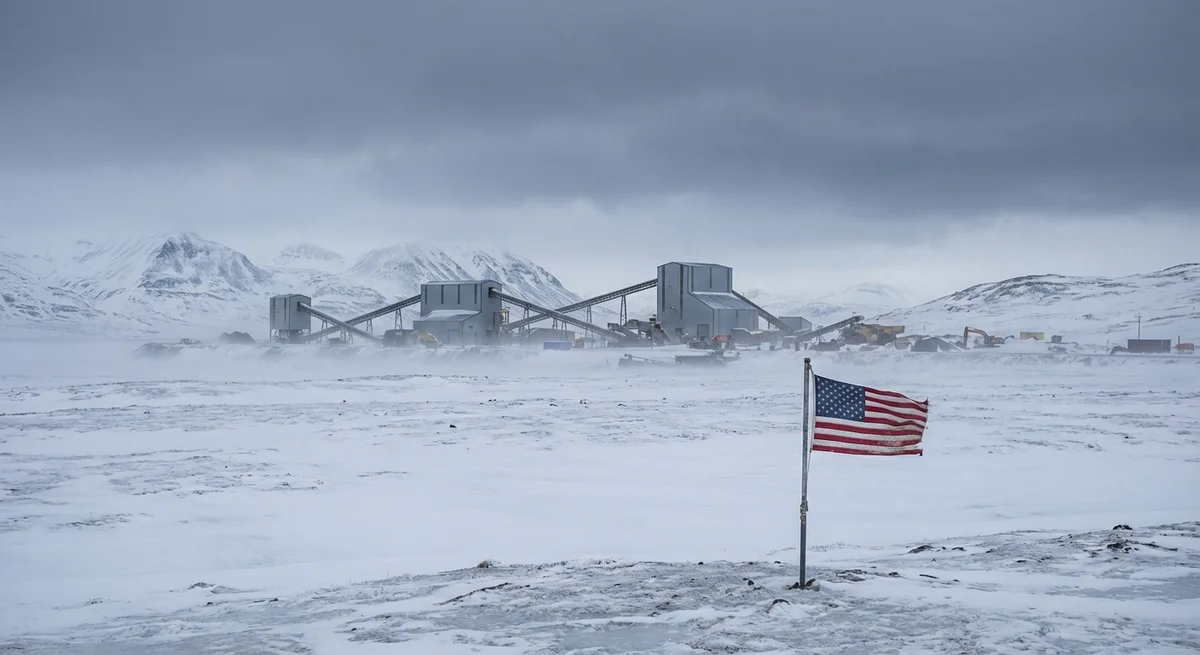
Remember 2019, when the world's media laughed at Donald Trump's idea to buy Greenland? Back then, it seemed like a ridiculous joke from a businessman who confused state governance with a game of Monopoly. Today, even the most hardened skeptics have stopped laughing.
The situation has turned 180 degrees with astounding speed: the US has effectively gotten what it has been seeking for years—strategic control over the island's mineral resources and military installations. Denmark, the formal sovereign of the territory, found itself in a state of deep shock at how quickly NATO stepped aside, yielding to Washington's direct bilateral interests. The mechanics of this deal proved to be painfully pragmatic.
The White House deployed its favorite tactic of "tariff leverage," threatening Danish exports with unsustainable tariffs. Once Copenhagen and Greenland's authorities realized the seriousness of the economic consequences, a counteroffer appeared on the table. The condition was simple: the transfer of extraction rights and expansion of American military presence in exchange for the withdrawal of trade restrictions.
This is a classic example of realpolitik, where economic pressure is converted into geopolitical influence and access to critically important assets. Why is this important for the high-tech and AI industries right now? The answer lies beneath the island's surface.
Greenland is not just ice and rock, but a gigantic treasure trove of rare earth elements. Without these minerals, it is impossible to produce modern semiconductors, powerful magnets for electric vehicles, and server components on which neural networks are trained. In the context of intensifying technological confrontation with China, which has long held a monopoly on the rare earth market, Greenland becomes a matter of national security and technological survival for the US.
Control over this raw material is control over the entire value chain in the AI sector. The seizure of influence over Arctic resources is a direct response to the "iron hunger" of recent years. If previously we discussed only GPU architecture and the number of parameters in models, now we must acknowledge: the physical world is asserting itself.
Trump is playing the long game. While the market watches Nvidia's quarterly reports, he is laying the foundation for physical control over the production base of the future. This transforms Greenland from a cold island on the periphery into a central hub of new technological geography.
The speed with which this "change of clothes in mid-air" happened is striking: yesterday we were discussing environmental standards and indigenous rights, and today contracts for industrial development of mineral resources are being signed. For European allies, this incident was a cold shower. It turned out that the NATO security umbrella is a rather flexible structure, especially when American military-industrial complex and tech giant interests are at stake.
Denmark has effectively lost its decisive voice in the question of the future of its Arctic territories. Now Greenland will develop according to a scenario written in Washington, where the priority is not the preservation of the Arctic ecosystem, but ensuring uninterrupted supplies of raw materials for microchip production facilities. This is a new reality where access to a mine is more important than access to a cloud API.
The key takeaway: Geopolitics has become a permanent part of the tech stack. Control over Greenland gives the US leverage in the production of iron for AI, which could prove more powerful than any sanctions. Who will be the next object of "profitable exchange" in this new resource race?
Want to stop reading about AI and start using it?
AI News is a curated feed of AI/tech news. Hamidun Academy teaches you to use AI systematically in your work.