AI Meteorologists: How Neural Networks Improve Weather Forecasting
Weather forecast accuracy has always been a critically important task affecting agriculture, energy, transport, and the daily lives of millions of people…
AI-processed from Bloomberg Tech; edited by Hamidun News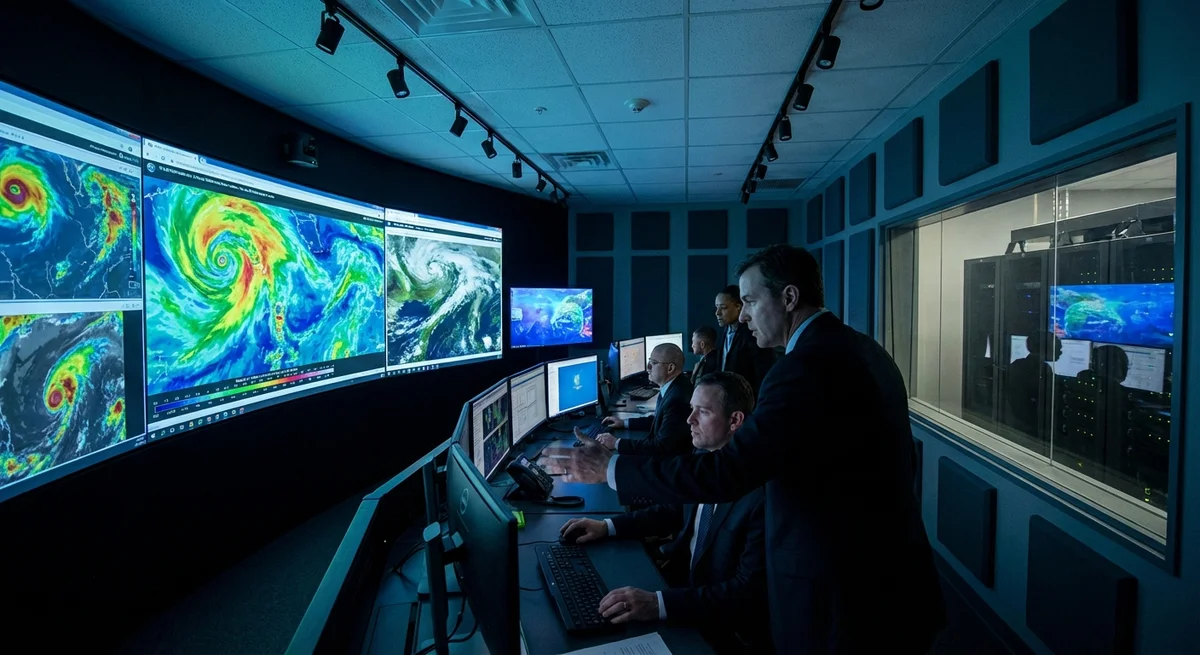
Weather forecast accuracy has always been a critically important task affecting agriculture, energy, transport, and the daily lives of millions of people. Traditional forecasting methods, based on complex physical models and enormous volumes of data, often prove insufficiently accurate, especially over longer timescales. However, with the development of artificial intelligence (AI) and machine learning, the situation is beginning to change. Major technology companies such as Google, Microsoft, and Nvidia are actively developing and implementing AI models for weather forecasting, promising significant improvements in prediction accuracy and range.
The context of this race for accuracy lies in the growing need for more reliable forecasts. Climate change is leading to an increase in the frequency and intensity of extreme weather phenomena such as droughts, floods, and hurricanes. Accurate forecasts enable timely measures to protect populations and infrastructure, minimizing economic damage. Furthermore, the development of renewable energy, particularly solar and wind power, requires more accurate weather forecasting for efficient energy system management.
The AI models used for weather forecasting are trained on vast arrays of historical data, including data from weather stations, satellite imagery, and results from numerical models. These models are capable of identifying complex patterns and relationships that are difficult to detect using traditional methods. For example, neural networks can account for the influence of local factors such as terrain and vegetation on weather formation.
Google is developing the GraphCast model, which, according to their claims, outperforms traditional methods in forecasting extreme weather phenomena. Microsoft is also actively investing in AI meteorology, using cloud computing and machine learning to create more accurate and scalable models. Nvidia, in turn, offers powerful graphics processors (GPUs) to accelerate the training and operation of AI models, and is also developing specialized software tools for meteorologists.
The implementation of AI in meteorology has serious consequences for various industries. In agriculture, accurate forecasts enable optimization of planting operations, irrigation, and plant protection from pests and diseases. In energy, they help plan the production and distribution of electricity, taking into account the variability of solar and wind generation. In transport, they increase traffic safety and reduce the risk of accidents related to adverse weather conditions. For ordinary users, more accurate forecasts mean the ability to plan their activities more effectively and make informed decisions.
However, the development of AI meteorology also raises new questions. It is necessary to ensure the reliability and robustness of AI models, as well as to account for potential risks associated with the use of large data and algorithmic bias. It is also important to develop cooperation between scientific institutions, government organizations, and private companies to exchange data and experience. In conclusion, AI meteorology represents a promising direction that can significantly improve the quality of weather forecasting and benefit society. Competition between Google, Microsoft, and Nvidia stimulates innovation and accelerates the implementation of new technologies, bringing us closer to more accurate and reliable understanding of atmospheric processes.
Want to stop reading about AI and start using it?
AI News is a curated feed of AI/tech news. Hamidun Academy teaches you to use AI systematically in your work.