Hyundai Overtakes GM Thanks to Robots: A New Era of Automation?
Hyundai Motor Co. has made an impressive leap, surpassing General Motors and taking fourth place in the ranking of the world's most valuable automotive…
AI-processed from Bloomberg Tech; edited by Hamidun News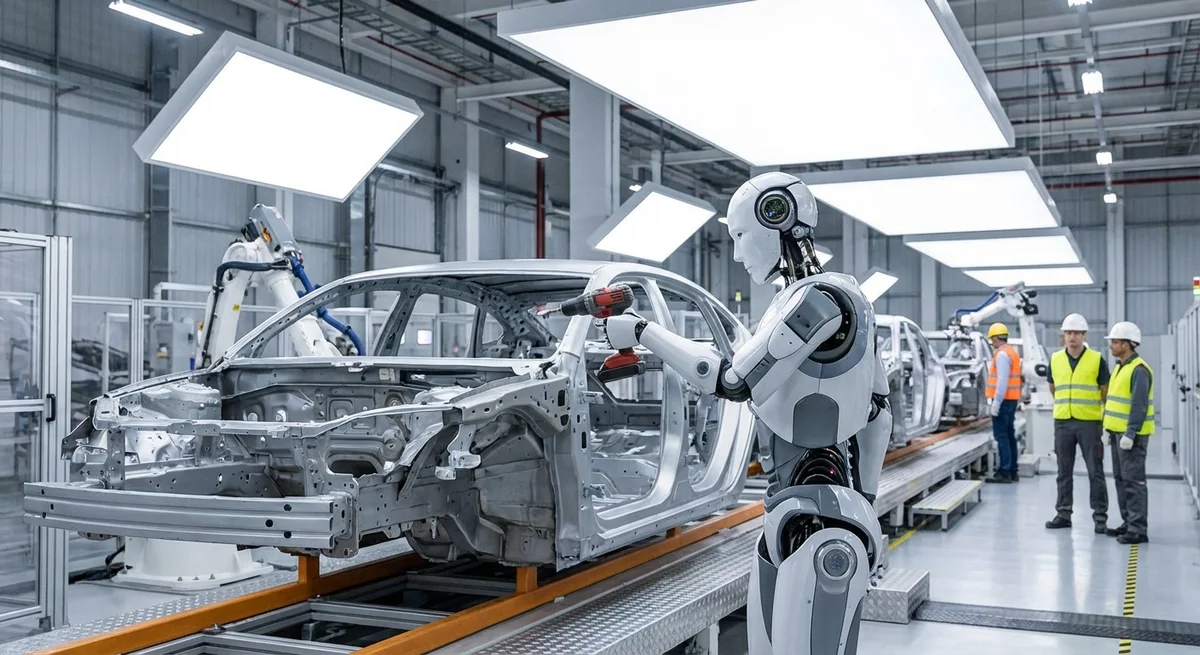
Hyundai Motor Co. has made an impressive leap, surpassing General Motors and taking fourth place in the ranking of the world's most valuable automotive companies. This rise is driven not only by traditional automobile business but also by active development in the robotics field, which has triggered a surge in the company's stock. The presentation of the new Atlas robot, capable of performing complex tasks, became a catalyst for investors who saw great potential in this.
The context of this event lies in the growing interest in automation and robotization across all spheres of life. The automotive industry is no exception, and Hyundai seeks to establish a leading position in this field. Investments in robotics are viewed as a long-term strategy that allows the company to diversify its business and prepare for a future where robots will play a key role in manufacturing, logistics, and even in the creation of vehicles themselves.
The Atlas robot presented by Hyundai is not merely a demonstration of technological capabilities. It is a complex engineering development capable of performing tasks requiring high precision and coordination. It can be used in various industries, from manufacturing to logistics, and even in rescue operations. The development of such robots requires enormous investments in research and development, but Hyundai sees in this a promising direction capable of bringing significant profits in the future.
This leap by Hyundai has important implications for the entire automotive industry. It demonstrates that the future of automobile companies is not limited to vehicle manufacturing alone. Investments in new technologies, such as robotics, are becoming increasingly important for maintaining competitiveness and attracting investors. Other automakers will likely follow Hyundai's example and increase their investments in robotics and automation.
For users, this means that in the future, automobiles will be manufactured more efficiently and with higher quality. Robots will be able to perform routine and dangerous tasks, freeing people for more creative and intellectual work. Moreover, robotics may lead to the creation of new types of transportation and logistics systems that will be more efficient and environmentally friendly.
In conclusion, Hyundai's leap and its leadership in robotics is an important signal for the entire automotive industry. Companies that do not invest in new technologies risk falling behind. The future of the automotive industry lies in automation, robotization, and innovation, and Hyundai appears firmly determined to take a leading position in this future.
Want to stop reading about AI and start using it?
AI News is a curated feed of AI/tech news. Hamidun Academy teaches you to use AI systematically in your work.