South Korea's President Downplays Concerns Over US Chip Tariffs
South Korea's President Lee Jae-myung made a statement designed to reassure investors and citizens concerned about the possible consequences of US threats to…
AI-processed from Bloomberg Tech; edited by Hamidun News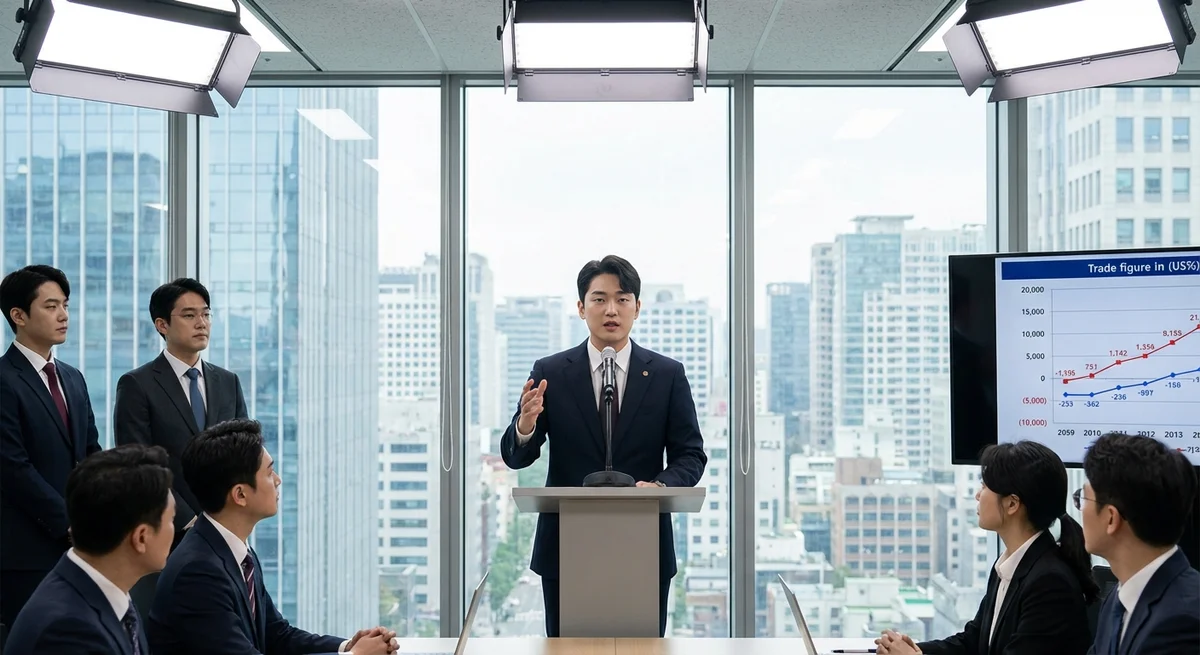
South Korea's President Lee Jae-myung made a statement designed to reassure investors and citizens concerned about the possible consequences of US threats to impose retaliatory tariffs on semiconductor imports. In his address, he emphasized that he sees no grounds for panic and that South Korea intends to adhere to existing trade agreements despite mounting pressure. This statement came against a backdrop of growing concerns about the future of the global semiconductor industry and its dependence on geopolitical factors.
Semiconductors play a key role in the modern economy, serving as the foundation for the production of electronics, automobiles, telecommunications equipment, and many other goods. South Korea is one of the world's leading semiconductor producers, and any change in US trade policy could have serious consequences for its economy. In recent years, the United States has expressed concern about its dependence on foreign semiconductor suppliers, particularly in light of growing competition with China and other countries.
The threats of imposing tariffs on foreign chips should be viewed in the context of a broader US strategy to strengthen its domestic semiconductor industry and reduce dependence on foreign suppliers. The US administration is actively promoting the development of domestic semiconductor production, offering tax incentives and other support measures. However, such measures could provoke discontent from other countries, which believe that they violate the principles of free trade.
President Lee Jae-myung's statement is aimed at demonstrating confidence in the resilience of the South Korean economy and its ability to adapt to changing conditions. He emphasized that South Korea will continue to strengthen its position as a leading semiconductor producer and develop new technologies. He also noted the importance of diversifying sales markets and reducing dependence on any single specific region.
For South Korean chip makers, this means being prepared for possible changes in US trade policy and adapting their strategies to new conditions. They will need to invest in new technologies, increase production efficiency, and seek new sales markets. For electronics consumers, this could lead to higher prices on some goods, especially those dependent on imported semiconductors. In the long term, this could stimulate the development of domestic semiconductor production in other countries, reducing dependence on South Korea and other major producers.
In conclusion, the statement by South Korea's president reflects the complex geopolitical situation in which the global semiconductor industry finds itself. US threats to impose tariffs on foreign chips create uncertainty and require semiconductor-producing countries to take measures to adapt to changing conditions. South Korea, as one of the leaders in this industry, will need to demonstrate its ability to adapt and remain competitive in the global market.
Want to stop reading about AI and start using it?
AI News is a curated feed of AI/tech news. Hamidun Academy teaches you to use AI systematically in your work.