Китай построил десятки тысяч интеллектуальных фабрик: что это значит?
China continues to actively invest in the digitalization of production capacity. At a press conference organized by the Press Bureau of the State Council of…
AI-processed from 36Kr (36氪); edited by Hamidun News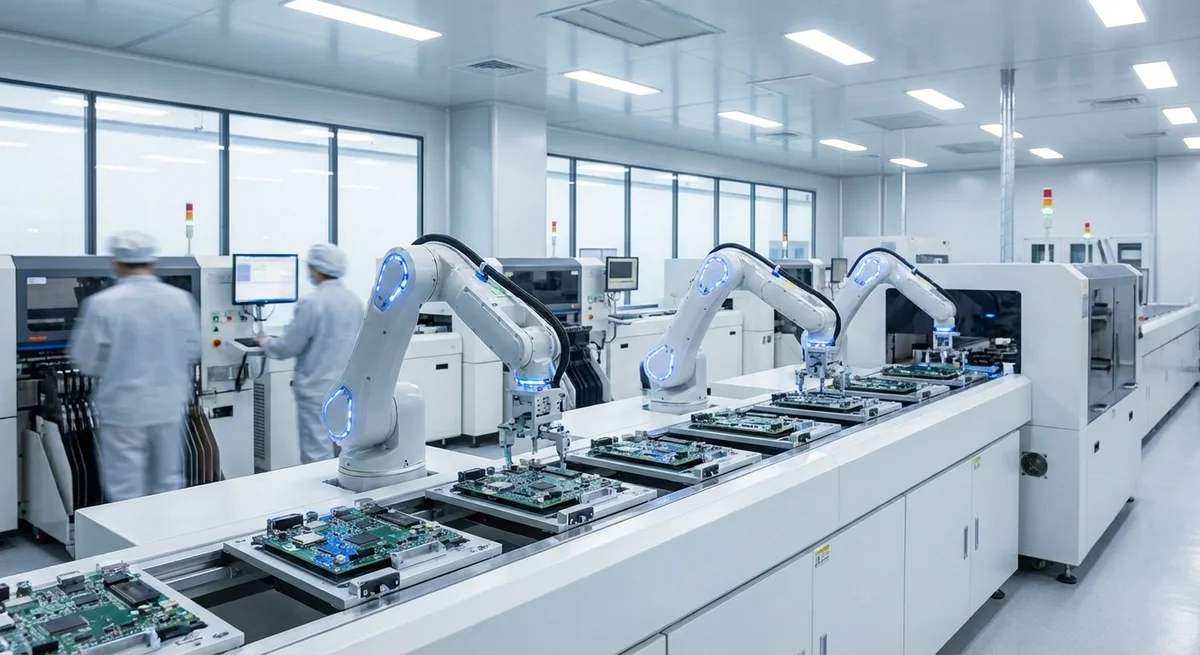
China continues to actively invest in the digitalization of production capacity. At a press conference organized by the Press Bureau of the State Council of the People's Republic of China, impressive achievements in the creation of intelligent factories were announced. According to the presented data, the country already has over 35,000 such enterprises with various levels of automation and digitalization.
In particular, it was noted that over 35,000 basic-level factories have been built, more than 8,200 advanced-level factories, over 500 excellent-level factories, and 15 factories classified as "leading." This initiative is part of a large-scale program to modernize China's industry and increase its competitiveness in the global market. What do these intelligent factories represent?
These are enterprises that actively use artificial intelligence, Internet of Things (IoT), big data, and cloud computing technologies to optimize production processes, increase efficiency, and reduce costs. Intelligent factories make it possible to automate routine operations, improve quality control, optimize logistics, and increase production flexibility. Different levels of intelligent factories reflect the degree of implementation of digital technologies and the level of automation.
The basic level involves the introduction of individual elements of automation and digitalization, while the advanced level is characterized by comprehensive use of digital technologies and a high level of automation. Excellent-level factories represent advanced enterprises with a high level of integration of digital technologies and automation, while leading factories are industry leaders and demonstrate best practices in the field of digitalization and automation. The implementation of intelligent factories has far-reaching consequences for the Chinese economy and global industry.
It allows China to increase its competitiveness in the global market, reduce dependence on technology imports, and create new jobs in the high-tech sector. In addition, it promotes the development of new industries such as robotics, artificial intelligence, and the Internet of Things. However, there are also certain challenges associated with the implementation of intelligent factories.
These include, in particular, the need for investments in infrastructure, personnel training, and ensuring cybersecurity. In addition, it is necessary to consider the social consequences of automation, such as job losses and the need for workers to retrain. In conclusion, the creation of tens of thousands of intelligent factories in China is an important step toward the digital transformation of industry.
This will allow China to strengthen its position as a global leader in manufacturing and high technologies. Further development in this direction will require solving a number of technical, economic, and social issues, but the prospects opened up by the implementation of intelligent factories look very promising.
Want to stop reading about AI and start using it?
AI News is a curated feed of AI/tech news. Hamidun Academy teaches you to use AI systematically in your work.