Heat in Europe overheats rivers and halts power plants — France sets a record unseen since 1947
Europe is under a record heat wave. On June 23, France experienced its hottest day since 1947, when the country began keeping meteorological records. People…
AI-processed from MIT Technology Review; edited by Hamidun News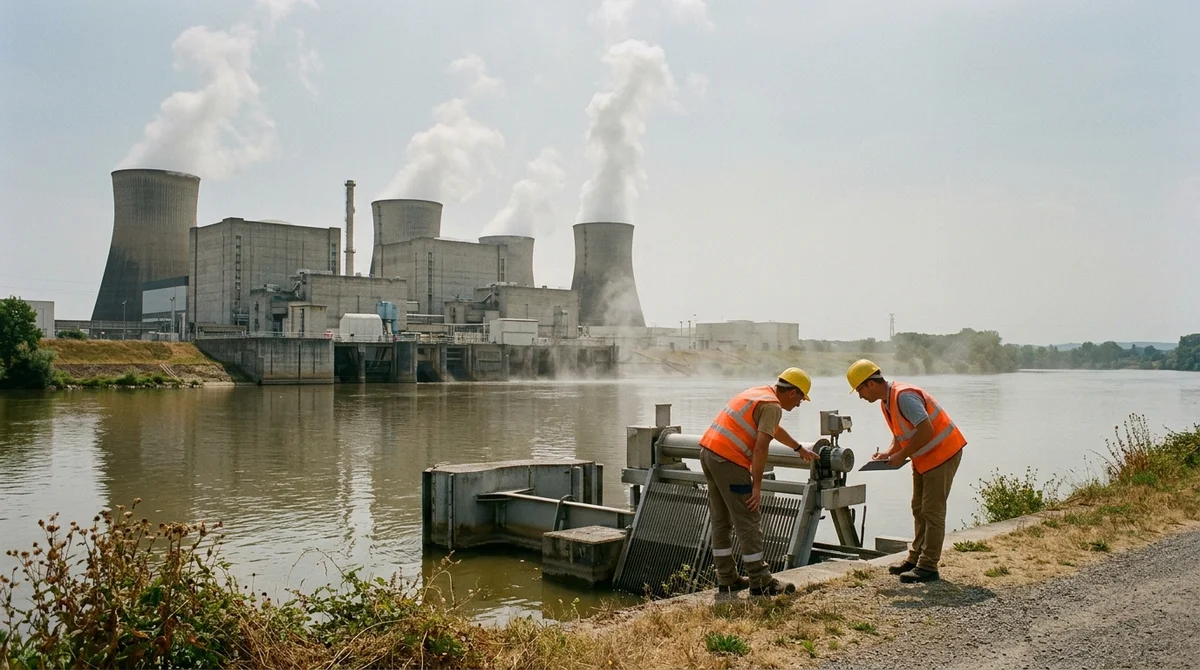
Europe is experiencing a record-breaking heat wave: on June 23, 2026, France recorded the highest temperature in the entire history of meteorological observations, which have been conducted since 1947. Power grids are operating at maximum capacity — the population is turning on fans and air conditioners — but at this very moment, part of the power plants is forced to shut down unexpectedly.
Heat kills power plants
At first glance, this is a paradox: the hotter it is outside, the harder it is for power plants to operate. But there is strict engineering logic behind it. Most thermal and nuclear power stations use water to cool reactors, turbines, and condensers — drawing it from rivers, reservoirs, or coastal sea areas.
Under normal conditions, water returns to the water body only slightly warm. But when the river temperature is already high due to heat, the cooling capacity is drastically reduced. Plants cannot discharge overheated water back — this violates environmental protection legislation and can destroy fish and aquatic ecosystems.
As a result, the operator is forced to reduce the unit's power or shut it down completely. In France, which provides about 70% of its electricity consumption from nuclear power plants, this scenario is particularly painful. Most French nuclear power plants are located on inland rivers — the Loire, Rhône, Rhine, Garonne — rather than on the seacoast, which makes them particularly sensitive to summer water warming.
Demand reaches records, supply shrinks
The heat wave creates a perfect storm for the energy system: electricity consumption is maximum precisely when generation is forced to decline.
- Air conditioners in residential buildings, offices, and shopping centers consume enormous amounts of power Industrial refrigeration units and freezers operate at full capacity Data centers — including those serving AI infrastructure — require significantly more cooling Metro, trams, and railways operate with above-standard loads Hospitals and social protection facilities cannot reduce consumption Energy operators resort to emergency measures: purchasing electricity from neighboring countries at high spot market prices, calling on major industrial consumers to voluntarily reduce their load, and in some cases introducing controlled restrictions for the population during peak hours.
Systemic vulnerability, not a one-time failure This heat wave is not a singular anomaly.
Climatologists and energy analysts have been warning about such a situation for years: extreme heat in Europe is becoming more frequent, prolonged, and intense, while energy infrastructure was designed for a completely different climate. Nuclear and thermal generation is particularly vulnerable to overheating of cooling water sources. Renewable sources respond differently: photovoltaics benefit from long sunny days, but during windless hot periods, wind turbines barely work.
This means that the transition to renewable energy sources does not by itself guarantee reliable energy supply during extreme climate events. European governments and energy companies are increasingly discussing adaptation measures: building closed-loop cooling systems for nuclear power plants that do not depend on river temperature; relocating future capacity closer to the seacoast; large-scale development of energy storage to smooth out peaks; integration of smart grids for flexible real-time load management. All of this requires years of investment and regulatory framework overhaul.
What this means
The record heat of 2026 has exposed a fundamental vulnerability of Europe's energy system: conventional generation loses reliability precisely when demand for it is maximum. Without large-scale infrastructure adaptation — cooling, storage, load management — each successive extreme summer will test the grids increasingly harshly.
Want to stop reading about AI and start using it?
AI News is a curated feed of AI/tech news. Hamidun Academy teaches you to use AI systematically in your work.