Not at any price: electricians refuse to build Big Tech data centers
Big Tech is investing trillions in building data centers, but not all workers are willing to build them. American electricians have found themselves at the…
AI-processed from Wired; edited by Hamidun News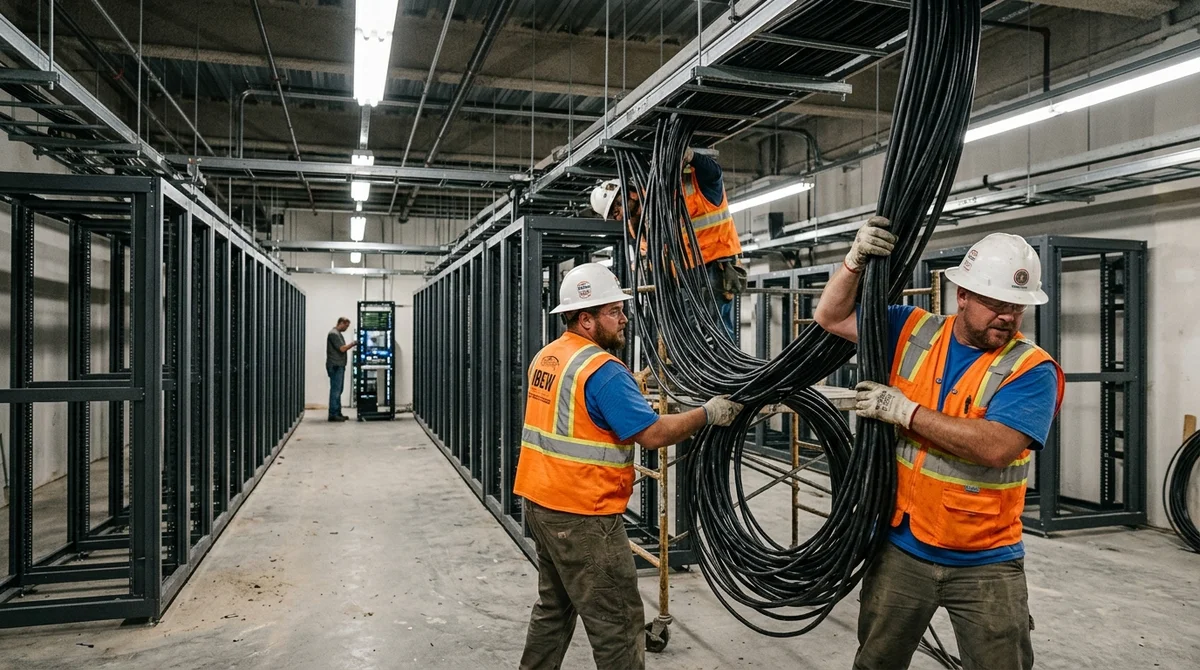
The rapid growth of data centers has brought American electricians years of stable, well-paid contracts. Now some of them are asking an uncomfortable question: is it worth it?
The Boom Everyone Was Waiting For
Amazon, Microsoft, Google, and Meta are investing hundreds of billions of dollars in building new data centers. Demand is fueled by explosive AI workload growth: ChatGPT, Gemini, Copilot require ever more computational power, which means server rooms, cooling systems, and kilometers of cable. For electricians, this translated into a stable pipeline of contracts and rates that were once only a dream. Union crews from dozens of states converged on growth hubs: Northern Virginia, Texas, Iowa, Georgia. Work was plentiful for years to come, and few asked difficult questions.
Protests That Won't Die Down
But as data centers grew, so did resistance. Local residents in different states began organizing against new facilities, and their complaints are specific:
- A large campus consumes two to five million liters of water per day just to cool servers
- New facilities strain local power grids more heavily than entire residential neighborhoods
- Around-the-clock equipment noise disrupts sleep for residents in neighboring homes
- Tax breaks for corporations reduce revenue to local budgets
- Despite the scale of construction, permanent local jobs are minimal
In Virginia, long considered the data center capital of the US, activists have won moratoriums on new facilities in several counties. In Iowa, environmental groups are suing companies over damage to water resources. In Texas, politicians are demanding a review of energy subsidies.
The Worker at the Center of the Scandal
This is where electricians found themselves in an awkward position. Their names don't make headlines, they're not on Big Tech boards of directors—but they're the ones laying cables and connecting server racks. And it's with them that neighbors chat at the store, fellow union members talk, relatives ask questions.
"I build these facilities, and then neighbors ask me why we have water
problems."
Some workers have begun taking a selective approach to contracts: preferring companies with public environmental commitments or refusing projects in areas with active opposition. Others continue working, separating their personal views from their professional role. Unions haven't yet developed a unified position—the economic incentives are too strong.
What This Means
The infrastructure boom in artificial intelligence has for the first time encountered serious resistance from within—not only from environmentalists or local activists, but from the builders themselves. When people who literally construct the foundation of AI begin asking uncomfortable questions about the cost of this growth, the nature of the conversation shifts. Big Tech has been accustomed to treating workers simply as resources—apparently, this calculation is beginning to fail.
*Meta is recognized as an extremist organization and is banned in the Russian Federation.
Want to stop reading about AI and start using it?
AI News is a curated feed of AI/tech news. Hamidun Academy teaches you to use AI systematically in your work.