Ford rehired laid-off engineers to fix failures in automated systems
Ford topped JD Power's initial quality ranking among mainstream automakers — and admitted it had to pay a high price for it. Automated systems in…
AI-processed from The Verge; edited by Hamidun News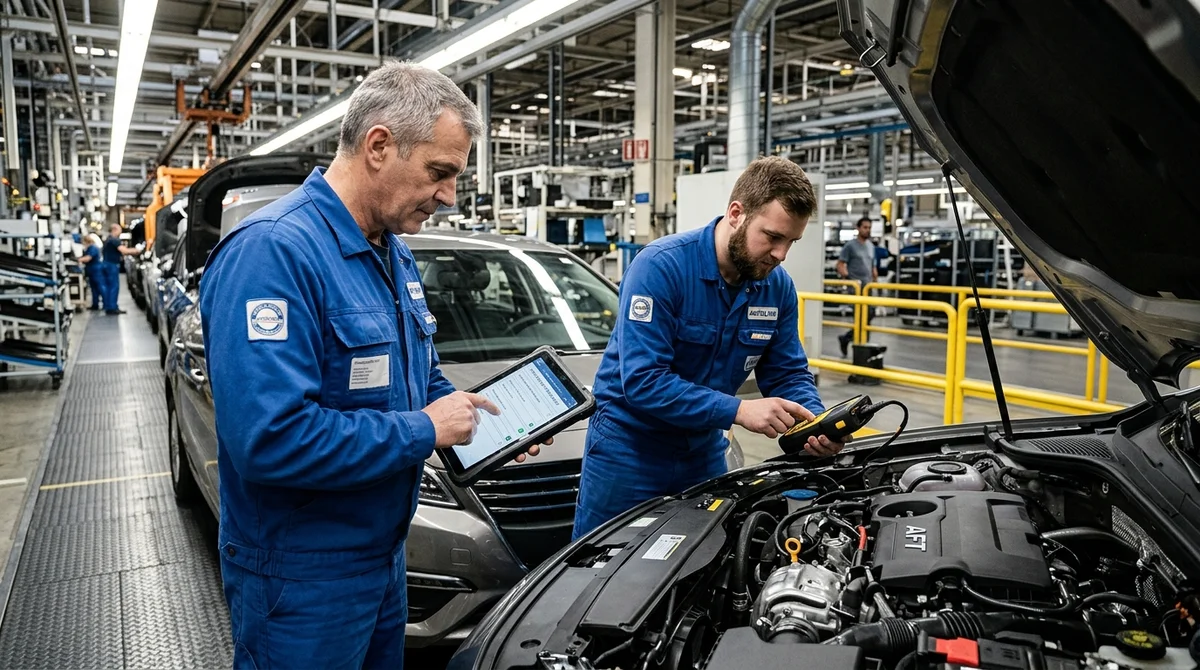
Ford took the top spot among mass-market automakers in the American JD Power initial quality ranking. The company used this occasion to openly discuss the difficulties it has faced in recent years — and above all, the problems with automation in manufacturing and design.
Robots Made Mistakes — People Were Brought Back
For several years, Ford actively implemented automated systems in automobile manufacturing and design. The logic was clear: robots and software algorithms should provide more stable quality than manual labor and reduce dependence on the human factor. This approach did not work as planned.
Automated systems proved less reliable than expected. They made mistakes both on the production line and in the design of parts and assemblies. Moreover, some of these mistakes only surfaced when cars reached consumers and caused problems in the first months of operation — exactly what the JD Power rating captures.
To fix the situation, Ford was forced to hire experienced technical specialists. In some cases, the company turned to former employees — those it had previously laid off precisely for the sake of automation. Their practical knowledge, accumulated through years of work on the assembly line, proved invaluable where algorithms failed: robots could not adapt to non-standard situations, but experienced engineers could.
Data Decides Everything
Ford has not abandoned AI and automation — but openly states a systemic limitation: the effectiveness of these technologies is entirely determined by the quality of the data on which the models are trained. A weak or incomplete dataset leads to a weak model, even if the technology itself is technically advanced. This means several practical conclusions for any manufacturing company:
- Incomplete or outdated data guarantee defects where the algorithm has not seen similar cases
- Robots handle repetitive operations well — but adapt poorly to non-standard situations
- The more complex the manufacturing operation, the more critical the quality of the training dataset
- Automation requires constant auditing — not one-time setup and neglect
- Internal expert knowledge of specialists cannot be fully replaced by algorithms
Ford's openness on this issue is rare for the industry: large manufacturers typically do not publicly discuss automation failures.
First Place as a Result of Rethinking
JD Power publishes an annual initial quality rating — it counts the number of problems reported by owners of new cars in the first 90 days after purchase. Fewer problems mean a higher ranking. First place among mass-market brands for Ford is a significant achievement given several years when the company fell behind competitors. It appears that the refusal to blindly bet on automation and the return to qualified specialists delivered tangible results. Those same engineers whom the company once laid off for robots ultimately helped it regain consumer trust and positions in the ranking.
What This Means
Ford's story is a practical lesson for any industry betting on AI and robotics in operational processes. The automation trend is understandable and generally justified — but it only works under the right conditions: quality and regularly updated data, constant auditing, and preserved internal human expertise. If any of these elements is missing, robots start making mistakes — and people still have to fix them. The JD Power ranking victory confirmed: a hybrid of human experience and technology is still more reliable than attempting to replace one with the other entirely.
Need AI working inside your business — not just in your newsfeed?
I build production AI for companies — custom CRM, internal tools, autonomous agents, workflow automation. Owned by you, shaped to your process, no per-seat tax. Built by Zhemal Khamidun, CPO of AlpinaGPT (AI platform, 6,000+ users).