Intercall created an AI for simultaneous interpreters: it complements the translator, not replaces them
Intercall has released a real-time AI assistant specifically for professional simultaneous interpreters. The principle is simple: human and machine work…
AI-processed from TNW; edited by Hamidun News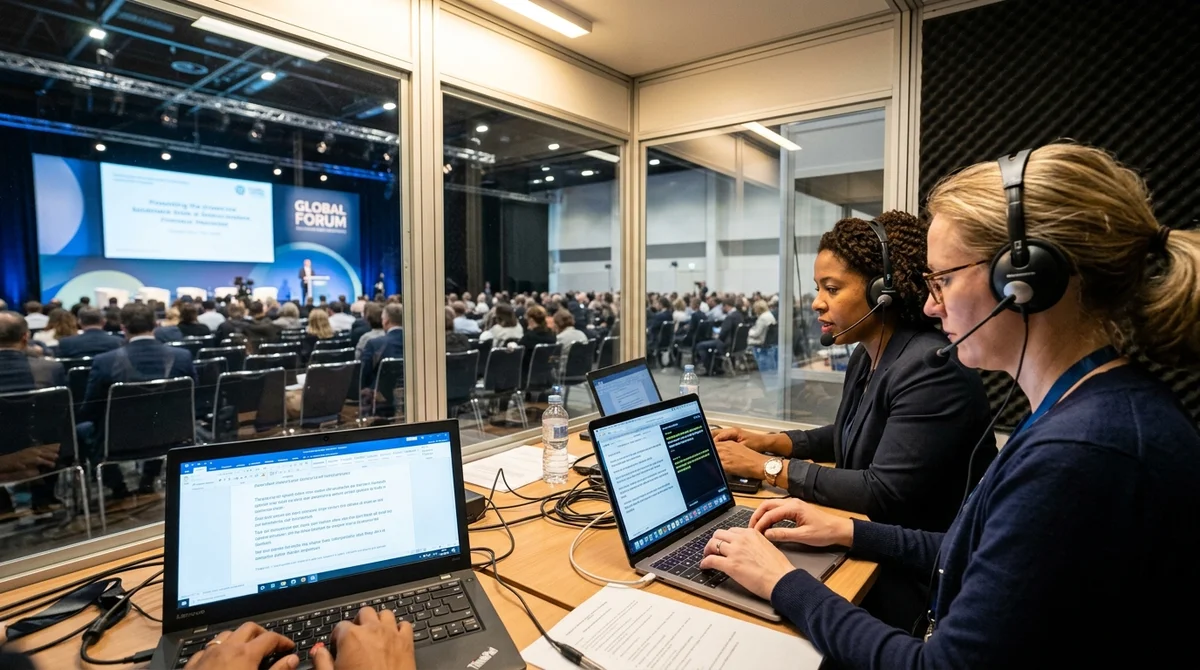
Simultaneous interpretation is one of the most complex cognitive tasks performed by humans in real-time. Startup Intercall created an AI assistant that helps professional interpreters handle the workload — without claiming their jobs. Translators already working with the tool give it unanimous praise: finally something built for how they actually work.
Why Simultaneous Interpretation Stands Apart
Simultaneous interpretation is multitasking at the limits of human capability. The interpreter simultaneously listens to the speaker, holds the meaning in working memory, constructs a grammatically correct sentence in another language, and speaks aloud — all of this with a delay of just several seconds. The brain literally works in two linguistic planes in parallel.
International standards recommend rotating interpreters every 20–30 minutes precisely for this reason: beyond that, without rest, translation quality inevitably declines. This is not a weakness of a specific specialist — it is physiology. Neural resources of working memory are limited and deplete quickly under such load.
The cost of error is high. At UN conferences, international court proceedings, state-level negotiations, a single mistranslated word can distort the entire meaning or provoke a diplomatic incident. This is precisely why any tool interfering in an interpreter's workflow must meet professional standards.
What Intercall Does Differently
Intercall developed the product together with active professional interpreters, not separately from them. This is a fundamental difference from most attempts to automate translation: most solutions are developed to replace live specialists. Intercall posed the opposite task — reduce cognitive load without changing the actual workflow. The system works alongside the interpreter in real-time: it doesn't dictate finished text, but offers suggestions — terms, proper names, numbers, abbreviations. Precisely those elements on which the brain spends especially large resources during fast speech.
- The tool integrates into the workflow without equipment replacement
- The system creates no noticeable delay — a critical requirement for simultaneous interpretation
- The interpreter retains full control: accepts or rejects suggestions themselves
- The product was developed with participation of active specialists, not around them
- Reduced load on working memory means fewer errors and less fatigue
Machines Will Not Replace Interpreters
Direct automation of simultaneous interpretation is a task that AI has not yet fully solved. Machine translation handles written texts, but live speech with accents, slips, pauses, cultural references, and non-standard grammatical constructions is a fundamentally different matter. A professional interpreter brings understanding of context, tone, and speaker intent. They notice when an orator intentionally pauses for effect or stammers from nervousness, and adapt the translation accordingly. Such nuances no neural network today reproduces stably. This is precisely why the format "AI alongside, not instead" looks not just ethically correct, but also technically honest. Promising complete replacement of interpreters today means promising something that doesn't yet exist.
What This Means
Intercall demonstrates a viable model of AI support for professions where any hint of "automation" traditionally provoked resistance. The unanimous positive response from interpreters — people who better than others understand what is lost in machine translation — speaks for itself. If the tool truly reduces fatigue and error count, the next question for the market: how quickly will it become standard equipment for international conferences, legal proceedings, and corporate negotiations.
Want to stop reading about AI and start using it?
AI News is a curated feed of AI/tech news. Hamidun Academy teaches you to use AI systematically in your work.