China Launches World's First Underwater Data Center Powered by Wind Energy
China has opened the world's first underwater data center powered by wind energy. With a capacity of 24 MW and seawater cooling, the solution saves on electrici
AI-processed from Wired; edited by Hamidun News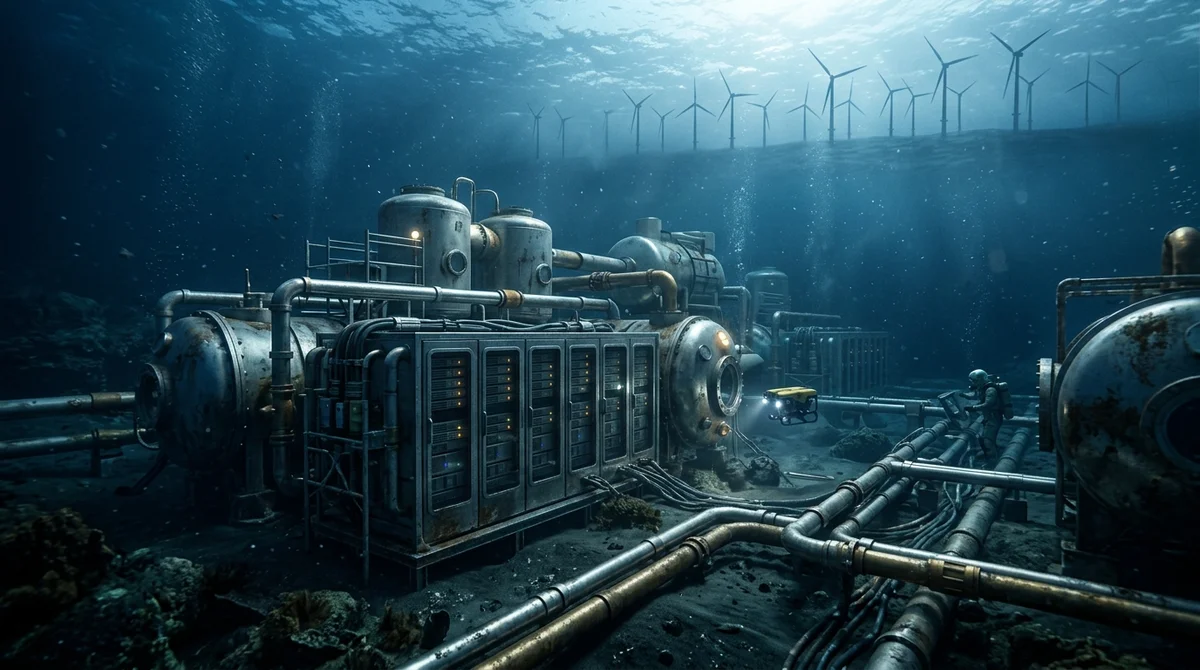
China has opened the world's first data center located underwater and powered by wind energy. With an initial capacity of 24 MW, the facility demonstrates an innovative approach to reducing the energy costs of massive server farms by turning seawater into the primary cooling mechanism.
How It Works
The underwater facility is located on the seabed and leverages two key advantages: wind energy and natural seawater cooling. Water absorbs heat from servers much more efficiently than air, which reduces electricity consumption for cooling—typically 30-40% of a data center's total energy budget. The infrastructure consists of sealed modules resistant to corrosion and high pressure. Wind turbines are positioned on the surface or on offshore platforms, transmitting energy to the underwater facilities through specialized cables. The technology enables a complete renewable energy cycle on-site.
A Climate Solution
The project aligns with China's ambitions to achieve carbon neutrality by 2060. The use of renewable energy sources—particularly offshore wind—is critical for the IT sector, where electricity demand is growing exponentially. Data centers today consume 1-2% of global electricity, and this figure continues to grow.
- 30-40% reduction in energy consumption through natural cooling
- Zero CO₂ emissions during the operational phase
- Reduced pressure on coastal power grids
- Scalability—numerous offshore wind farms are ready for connection
- Savings on building new power plants
Challenges and Future
Underwater infrastructure requires specialized equipment resistant to corrosion and extreme seawater pressure. Maintenance and repairs are more complex than on land—each service operation requires costly interventions with divers or underwater robotic systems. Additionally, regulatory frameworks for such facilities are still being developed in many countries. However, the success of the Chinese project could inspire European and American cloud operators. The North Sea, Atlantic coast, and Pacific zones could replicate this model within the next 5-10 years.
What This Means
Underwater data centers are not science fiction but a practical path toward sustainable IT infrastructure. As demand for computing continues to grow, yet land can no longer provide sufficient water and electricity for cooling, combining wind energy and seawater cooling becomes a logical solution. China has started; others will likely follow.
Want to stop reading about AI and start using it?
AI News is a curated feed of AI/tech news. Hamidun Academy teaches you to use AI systematically in your work.