Hair Transplants: How Turkey Created a Billion-Dollar Industry
Turkey has become the world leader in hair transplants—a market worth billions. Success is the result of engineering innovation: local companies developed speci
AI-processed from Wired; edited by Hamidun News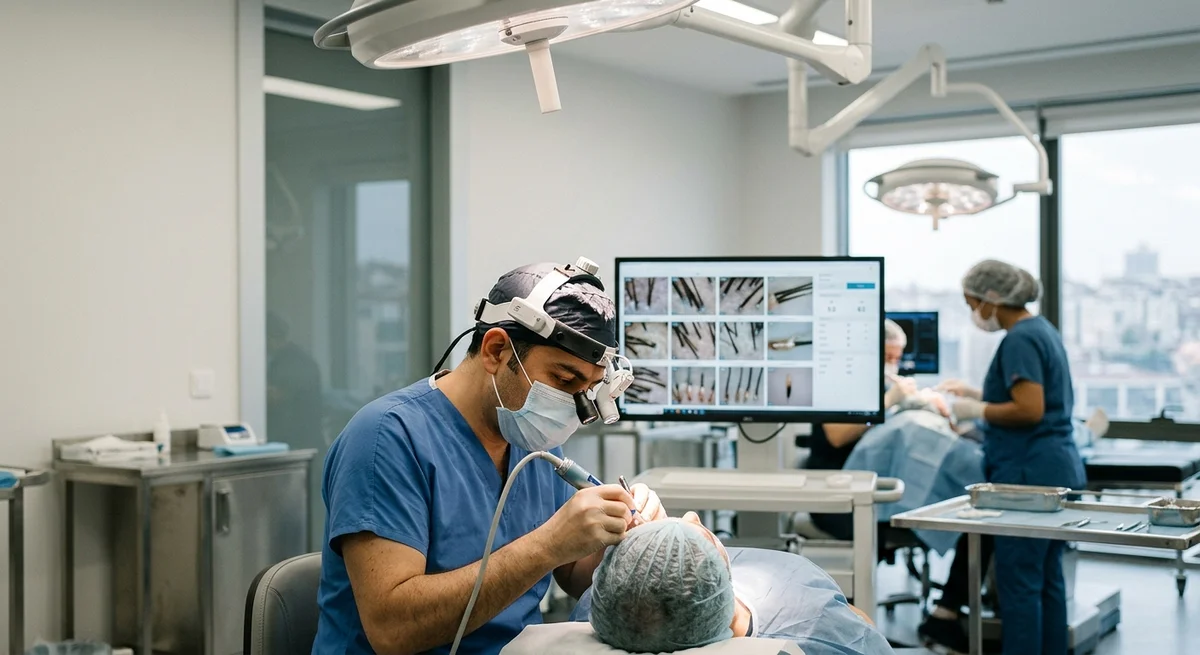
Turkey transformed hair transplants into a billion-dollar industry. And this happened not thanks to geography or cheap labor, but thanks to constant technological innovation—from specialized micromotors to sophisticated machine learning algorithms.
How Engineers Redesigned Hair Transplantation
Hair transplantation is a procedure known in medicine for half a century. For a long time, its improvement progressed slowly. But in the 1990s, Turkish companies decided to redesign the technology from scratch.
They developed specialized micromotors for FUE (follicular unit extraction)—a technique that works more precisely and faster than older methods. Engineers fine-tuned every parameter. Motor vibration frequency is critical. Too slow: follicles become damaged. Too fast: thin hairs don't come out intact.
Turkish companies found the sweet spot: 2000+ revolutions per minute with an optimal tip shape. Additionally, they added pressure sensors so surgeons wouldn't compress the skin.
In parallel, Turkish clinics began implementing machine learning. Algorithms now analyze photographs of follicles and predict which hairs will best take. The computer also optimizes the distance between implants—too close and they interfere with each other, too far and it looks sparse.
Clinics are introducing video systems for training young surgeons and standardizing surgical technique.
- Micromotors with 2000+ RPM frequency and pressure sensors
- ML models for analyzing follicle quality and predicting outcomes
- Video training systems and real-time technique monitoring
- Digital platforms for patient planning, record-keeping, and follow-up
Becoming a Global Hub
The scale is impressive. Turkey performs approximately 1 million hair transplant procedures per year. About 700,000 of them are performed on foreigners: Germans, British, Americans, Russians, Arabs.
People travel to Istanbul and Ankara for one to two weeks, have the procedure done, and return home to await results. Prices are 3-5 times lower than in the USA or United Kingdom, with quality comparable to the best London and New York clinics.
But the key thing is that Turkish companies began exporting the technologies themselves. They sell micromotors, software, and training modules to clinics around the world. Now equipment from Turkish manufacturers operates in hospitals in the USA, UAE, United Kingdom, and Germany.
Problems Behind the Rapid Growth
Of course, scale has led to complications. Some Turkish clinics operate almost on an assembly line—patients are scheduled in batches, with minimal personalized attention.
There are complaints of failed implants, low graft survival rates, and uneven hair distribution. Turkish regulators and international organizations are concerned that rapid growth has eroded quality control standards.
"Innovation in equipment is good.
But it doesn't compensate for a doctor's lack of experience and the absence of individualized patient care."
What This Means
Turkey has proven that a local engineering base, perseverance, and a focus on process can conquer a global market—even if nobody believed in you at first.
Hair transplants are not the most complex field in medicine, but they serve as a prototype: optimize the process, implement ML for outcome prediction, train doctors to unified standards—and scalability becomes a huge competitive advantage.
This same model can be applied to other medical specialties.
Want to stop reading about AI and start using it?
AI News is a curated feed of AI/tech news. Hamidun Academy teaches you to use AI systematically in your work.