AI will reshape the global economy — Mizuho chief on the future
At the Mizuho Technology Conference, the head of investment banking underscored: AI affects all sectors of the global economy — from finance to manufacturing. T
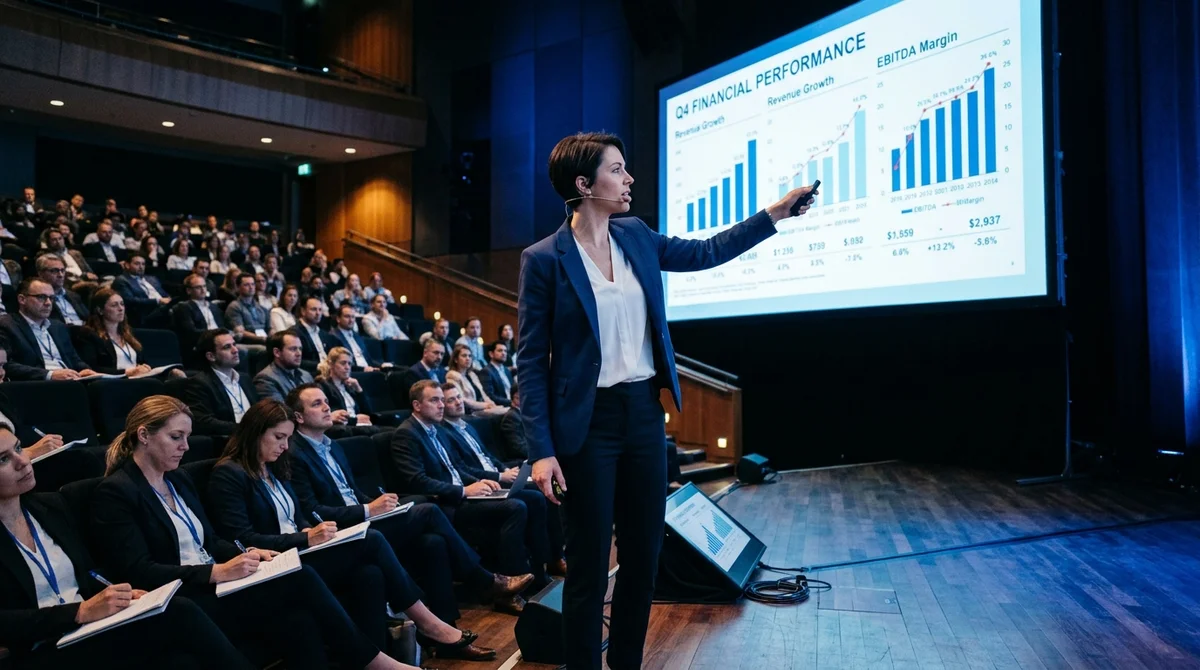
Michal Katz, head of investment banking at Mizuho Americas, made a strong case at the Mizuho Technology Conference: artificial intelligence is no longer just an optimization tool. It is a systemic factor that will reformat the competitive landscape of entire national economies and reshape the distribution of global capital.
AI is everywhere there is data
According to Katz, there are no sectors that haven't already felt the impact of AI today. From financial services to manufacturing, from healthcare to logistics and retail — the technology is embedding itself in business processes and decision-making at an accelerating pace. Banks use AI for call centers, fraud detection, and credit scoring. Manufacturers are deploying AI in supply chain management and demand forecasting, gaining competitive efficiency advantages. Medical institutions are beginning to rely on AI-based diagnostic systems. Retail networks are optimizing inventory forecasting and offer personalization. This isn't a future that should arrive — it's the present that industry leaders have already entered.
Geopolitical redistribution
But Katz's most significant conclusion concerns not companies, but countries. Countries that become AI leaders will gain an asymmetric advantage in the global economy. This isn't a scenario from a science fiction novel, but a perfectly pragmatic analysis that investors and policymakers already see.
What consequences await global economies:
- GDP grows faster in economies where AI is more deeply and earlier deployed
- Leading companies in each sector capture a larger market share, creating "winner-take-most" dynamics
- Countries lagging in AI innovation risk losing competitiveness in traditional export sectors
- Talent migration will intensify: developers will move to innovation hubs
- Currency exchange rates will begin to reflect differences in national economies' AI readiness
For investors, this means that a country without a strong AI industry finds it harder to offer shareholders returns. For policymakers, it means that ignoring AI development is ignoring long-term economic sovereignty.
Scale of adoption is accelerating
Another point Katz emphasized: the speed of AI adoption in business processes is growing exponentially. If corporations once tested and deployed new technologies over years, leaders now are using fresh models in production within months. This creates a chain reaction effect: early adopters gain an advantage, which forces competitors to accelerate deployment, which speeds up innovation cycles across the entire industry. Those who fall behind risk being left out of play on key markets.
What this means
If the impact of AI on the economy was once something that could be discussed as a cosmetic productivity improvement, it is now a systemic reclassifier of the global marketplace. Investors who don't account for companies' and economies' AI readiness in their valuation models risk missing key growth opportunities and underestimating requalification risks.
Хотите не читать про ИИ, а внедрить его?
«AI News» — это полезные новости из мира ИИ. Системно научиться работать с нейросетями и применять их в работе — в Hamidun Academy.