GM launches V2G: electric vehicles will power data centers
GM presented a comprehensive plan to adapt energy infrastructure to growing electricity demand from AI data centers. The company is activating V2G (vehicle-to-g
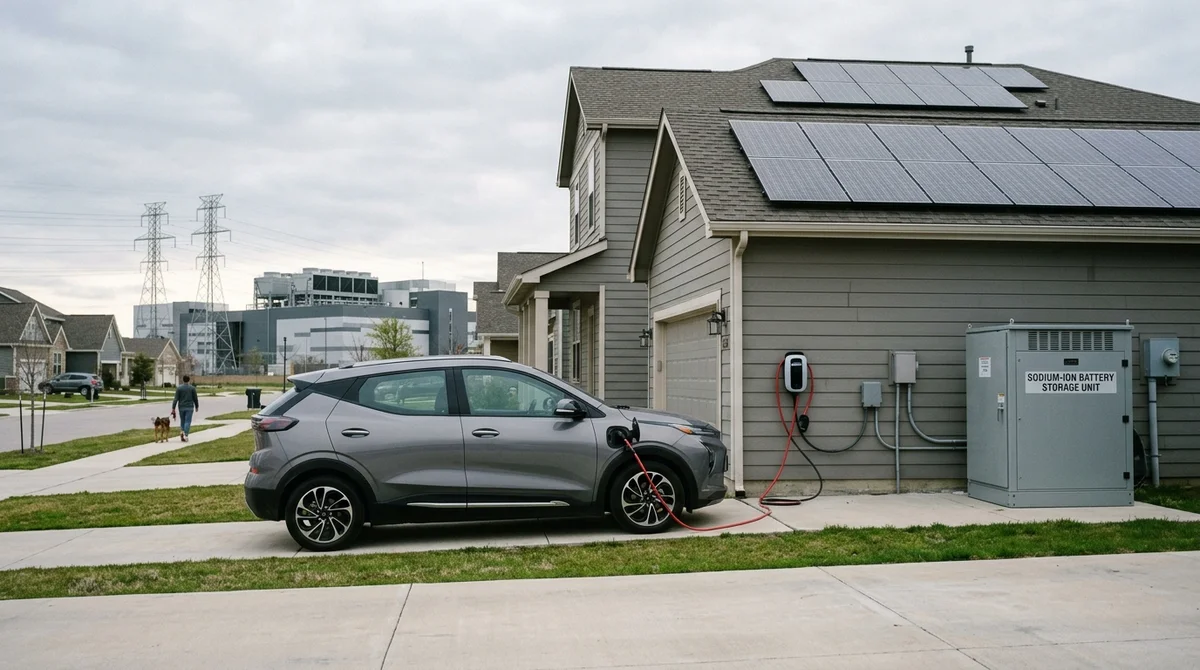
General Motors has announced a comprehensive strategy for adapting energy infrastructure in response to growing electricity demand from AI data centers. At a presentation in San Francisco, the company unveiled three key initiatives: activating Vehicle-to-Grid technology for current customers, launching new sodium-ion batteries for industrial energy storage, and simplifying the public EV charging scheme.
V2G: Electric Vehicles as Grid Backup
General Motors is beginning to activate Vehicle-to-Grid (V2G) technology for its current customers who own electric vehicles and home energy systems. The technology's essence is simple but powerful: a parked electric vehicle becomes not just a consumer of electricity, but an intelligent energy supplier to the power grid. When the car's battery is charged, it can return the accumulated electricity back to the home power grid or municipal energy distribution network during peak load moments.
Why is this critically important now? AI data centers require ever-increasing amounts of electricity, creating serious spikes in energy demand. Power grids are designed with specific peak demand in mind, and when demand exceeds this, problems arise: power outages, rising electricity costs, and increased strain on aging infrastructure. V2G technology offers an elegant solution: distributed energy reserves in the form of millions of parked electric vehicles can stabilize the grid precisely during critical peak load moments.
Sodium-Ion Batteries: Large-Scale Storage
General Motors' second initiative is the release of a commercial strategy for energy storage based on sodium-ion batteries. Unlike V2G, which operates at the level of individual vehicles and homes, sodium-ion batteries are designed for industrial scale: building large storage facilities at data centers, grid nodes, or utility company premises.
Why sodium-ion instead of traditional lithium-ion? Sodium-ion batteries offer several key advantages for large-scale deployment. First, they are cheaper to manufacture because sodium is far more abundant and affordable than lithium. Second, they require fewer rare materials like cobalt and nickel, which are in short supply and politically sensitive. Third, they offer better thermal stability at extreme temperatures, which is important for outdoor storage in various climatic conditions. GM positions this development as a solution for grid operators who manage the power network and need large energy storage capacity to handle uneven demand from data centers.
Simplifying the Charging Ecosystem
The third initiative is a new feature for GM electric vehicle owners that should significantly simplify the process of finding and paying at public charging stations. Although GM has not disclosed details of this innovation, it addresses a real problem: the public charging ecosystem in the United States remains fragmented. There are dozens of independent operators with different apps, payment methods, and service levels. EV owners often face the situation where they need to install five different apps to find an available charging station nearby.
What This Means
GM is demonstrating a new vision of the automaker's role in the AI era. The company sees electric vehicles not simply as an alternative to gasoline cars, but as a strategic asset of the energy system. If millions of vehicles simultaneously return electricity to the grid at the right moments, this could significantly ease the burden on the power grid and reduce the need for expensive construction of new generating capacity. Sodium-ion batteries expand this approach from the level of distributed vehicles to critical data center infrastructure.
Together, these initiatives form a vision where transportation electrification and energy storage become part of one integrated ecosystem, optimized for the new reality of high AI energy consumption. While for now the focus is on current GM customers, this is a clear signal that traditional automakers are beginning to view energy as part of their core business, not merely as a secondary service.
Хотите не читать про ИИ, а внедрить его?
«AI News» — это полезные новости из мира ИИ. Системно научиться работать с нейросетями и применять их в работе — в Hamidun Academy.