Google will retain Lens and Search Live data for AI training
Google is launching a new setting to retain data during searches. It saves photos from Lens, Search Live recordings, voice search, and Translate audio. All is u
AI-processed from The Verge; edited by Hamidun News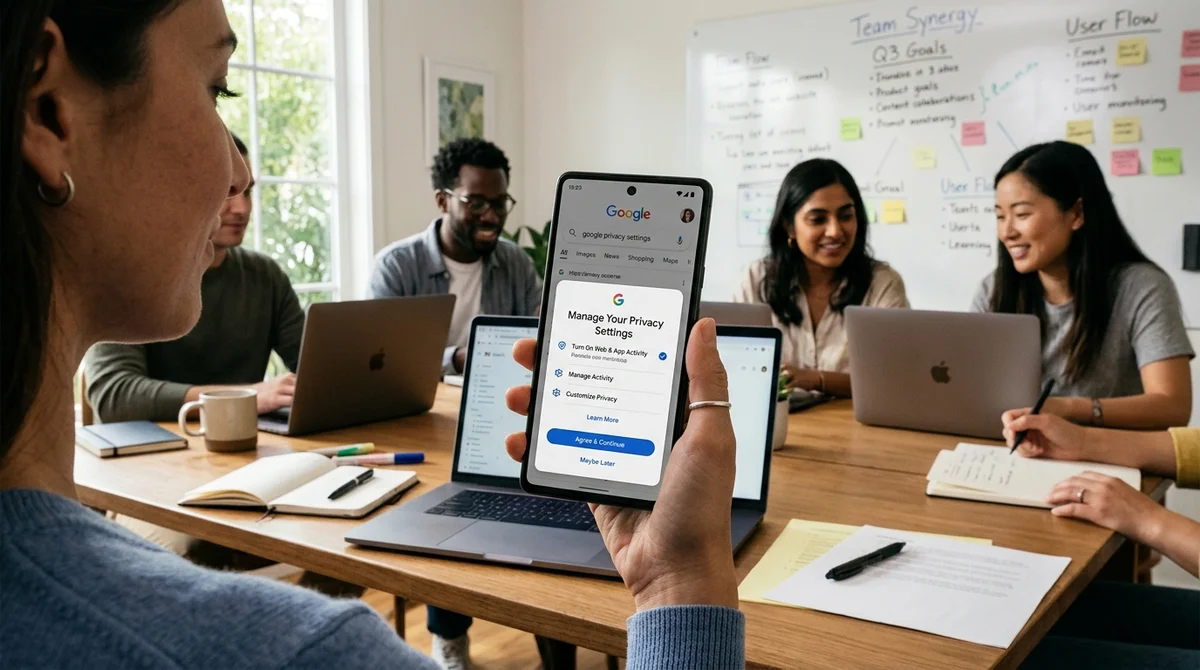
Google is changing how it stores your search data. The company announced a new "Search Services History" setting that will archive everything you do with its search tools — from uploading photos to Lens to speaking phrases in Translate. Information will be provided through support updates and emails to users.
What exactly Google saves
The new feature will record photographs you upload to Google Lens to search for similar images. Search Live recordings will also be saved — a feature that shows search results in real-time as you type. All your voice search commands and even audio tracks you send to Google Translate for translation or speech recognition will be included. In practice, this means Google will know not only what you search for with text, but also how you search — through voice, photos, or video. The company promises that this data will help improve result quality and recognition accuracy.
Full list of what is saved:
- Photographs from Google Lens
- Real-time search records (Search Live)
- Voice search and voice commands
- Audio files from Google Translate
- Any other files and videos uploaded during search
How it works and when you can turn it off
The new setting is enabled by default — you will simply receive a notification from Google about its launch. But the company has provided a way to opt out. In search settings there is a "Save Media" option that allows you to prohibit saving media files separately. If you are concerned about data storage altogether, you can disable the entire "Search Services History" feature, and Google will stop archiving your interactions. However, you should understand: if you disable saving, some features may work less effectively. Google doesn't state this explicitly, but the logic is clear — without data about your searches, AI models won't be able to adapt to your habits and preferences.
"We use your Search Services history to provide, protect, improve, and develop our products and services,"
Google says in the support update.
Why this matters now
The boom in language models has created enormous demand for quality data for training. Google, like OpenAI, Meta, and other companies, increasingly relies on real user behavior instead of synthetic datasets. Your real photos, voice, and word choices — that's exactly what modern AI lacks. Google Lens already uses ML to recognize objects in photos. Search Live relies on fast computations and correct predictions. Translate needs data on how people actually speak and write in different languages. All of this requires a huge volume of real examples.
On the one hand, this helps the company improve these services. Results will become more accurate, voice recognition will be better. On the other hand, this is another way Google collects data about your interests, habits, and even how you speak.
What this means
This is a reminder that free services are often paid for with data. Google has transparently indicated what it collects — and has given you a way to stop it through a simple checkbox in settings. The question is whether you will use it, or the convenience of future Lens and Search will outweigh privacy concerns.
*Meta is recognized as an extremist organization and is banned in the Russian Federation.
Want to stop reading about AI and start using it?
AI News is a curated feed of AI/tech news. Hamidun Academy teaches you to use AI systematically in your work.